
 Need help?
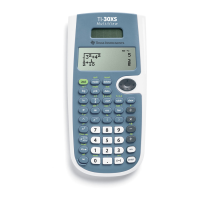
Do you have a question about the Texas Instruments MultiView TI-30XS and is the answer not in the manual?
Utilize the 'enter' key for calculations instead of the equals sign.
The 'clear' button is used to erase the calculator screen.
Employ arrow keys to move the cursor and access prior calculations.
Perform fundamental operations like multiplication, division, addition, and subtraction.
Distinguish between the negative number key and the subtraction key.
Convert numbers from fractional form to decimal form.
Use the x² key to square a number or raise it to the second power.
Utilize the exponent key to raise a base number to any power.
Use the 2nd key followed by x² to find the square root of a number.
Use the 2nd key, the exponent key, and 3 for cube root calculations.
Generate tables of values for functions using the calculator's table feature.
Input fractions using the dedicated fraction button and arrow keys.
Empty the calculator's memory by holding 'on' and pressing 'clear'.
Convert numbers to percentages using the percent function.
Input and work with numbers expressed in scientific notation.
Logarithms and trigonometric functions (sin, cos, tan) are not tested on the GED.
Most other calculator buttons are not relevant for the GED math section.
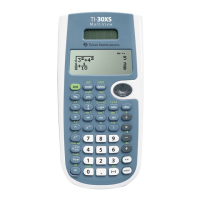
This document serves as a user guide for the TI-30XS MultiView calculator, specifically tailored for individuals preparing for the GED test. It outlines essential calculator functions and features relevant to the Math, Science, and Social Studies sections of the exam, where calculator use is permitted. The guide emphasizes becoming comfortable with the calculator to leverage it as a support tool during the test.
The guide begins by introducing fundamental calculator usage. To input numbers and operations, users will primarily interact with the numeric keypad and function buttons. A key instruction is to use the enter button to confirm inputs and calculations, rather than the equals sign, which is not present in the same way as on some other calculators. To clear the screen and prepare for a new calculation, the clear button is used.
Navigation within the calculator's display is achieved using the arrow keys. These keys are crucial for moving the cursor, editing existing calculations, and reviewing previous entries. This feature allows users to easily correct mistakes or reuse parts of earlier calculations without retyping everything.
The calculator supports all basic arithmetic operations: addition, subtraction, multiplication, and division. The corresponding buttons are clearly labeled on the keypad. A critical distinction highlighted is between the negative number key (-) and the subtraction key -. The negative number key is used to input a negative value (e.g., -5), while the subtraction key performs the subtraction operation between two numbers (e.g., 10 - 5). Understanding this difference is vital for accurate calculations, especially when dealing with signed numbers.
Converting between fractions and decimals is another important function. The guide indicates a specific button for this conversion, allowing users to express results in either format as required by the problem. This flexibility is particularly useful for math problems that might present answers in different forms.
The guide dedicates sections to handling exponents and roots, which are common in GED math problems.
For squaring a number (raising it to the second power), the x² key is used. The process involves first entering the base number, then pressing the x² key. For example, to calculate 13 squared, one would press 13 followed by x².
For raising numbers to other exponents (powers higher than two), a different sequence is required. Users first input the base number, then press the ^ (caret) button, and finally enter the exponent. For instance, to calculate 2 to the power of 6, the sequence would be 2, ^, 6.
The calculator also supports root operations. For square roots, the 2nd button is pressed first, followed by the x² button (which has the square root symbol √ above it in green), and then the number for which the square root is desired. For example, to find the square root of 144, the steps are 2nd, x², 144.
For cube roots, the process involves pressing the 3 button, then 2nd, followed by the ^ button (which has the cube root symbol ³√ above it in green), and finally the number. So, to find the cube root of 216, the sequence is 3, 2nd, ^, 216. The guide notes that the GED test is limited to square roots (2nd power) and cube roots (3rd power).
The TI-30XS MultiView calculator includes several advanced features, some of which are useful but not strictly necessary for the GED, and others that are explicitly stated as not needed.
One "useful, but not necessary" feature is creating in-out tables from functions, such as y = 2x + 1. This involves using the table button and inputting the function's parameters. While this can be helpful for understanding function behavior, the guide suggests focusing more on conceptual understanding of fractions rather than complex calculator operations for them.
Entering fractions directly into the calculator is another feature. This typically involves a dedicated fraction button (n/d), followed by inputting the numerator, navigating with the down arrow, inputting the denominator, and then moving the cursor to the right. The guide reiterates that a strong conceptual understanding of fractions is more important than relying solely on the calculator for these operations.
For maintenance, the guide mentions that holding the on button and simultaneously pressing clear will empty the calculator's memory. This can be useful for clearing out previous calculations or stored values before starting a new set of problems.
Converting numbers to percentages is also possible using the 2nd button followed by the % button. Scientific notation, accessed via the x10^n button, is another available feature.
The guide explicitly lists several functions that test-takers do not need to know for the GED exam. These include:
log, ln buttons)sin, cos, tan buttons)This guidance helps users focus their learning on the most relevant calculator functions, preventing them from spending time on features that won't be assessed.
Many buttons on the TI-30XS MultiView have a second function, indicated by green text or symbols above the button. To access these "2nd functions," the 2nd button must be pressed first, followed by the desired function button. For example, to turn off the calculator, the user presses 2nd and then the on button (which has "off" written above it in green). This 2nd button functionality is crucial for accessing square roots, cube roots, percentages, and other advanced operations.
In summary, this guide provides a comprehensive overview of the TI-30XS MultiView calculator's functions pertinent to the GED test. It covers basic operations, exponents, roots, and navigation, while also distinguishing between essential and non-essential features. The emphasis is on practical application and understanding how to use the calculator as an effective tool for the exam.
 General
| Power Source | Battery |
|---|---|
| Display | 4-line display |
| Key Features | MultiView™ display |
| Math Functions | Fractions, exponents, logarithms, trigonometric functions |
| Statistical Functions | 1- and 2-variable statistics |
| Battery Type | Solar cell with battery backup (LR44) |


 To Next Page