EasyManua.ls Logo

Thermal Arc ARCMASTER 300 AC/DC - User Manual

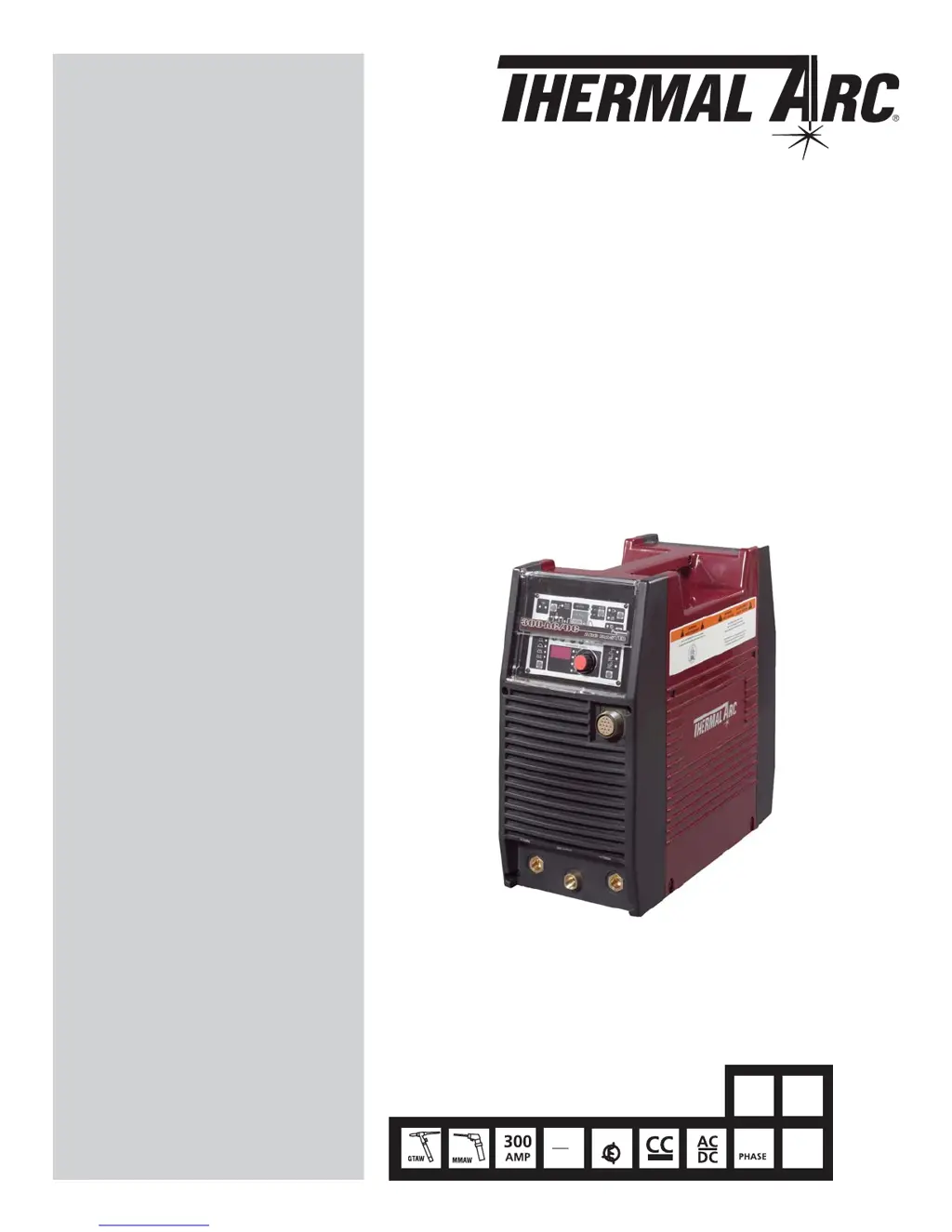
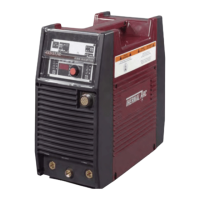
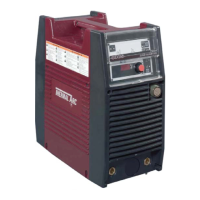
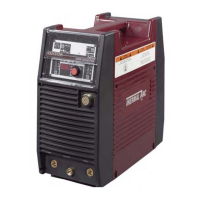
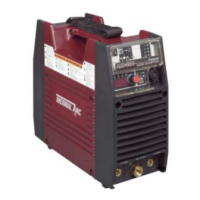
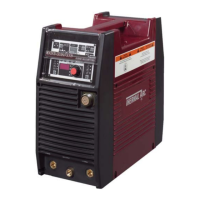
Thermal Arc ARCMASTER 300 AC/DC
80 pages
Print Icon
To Next Page IconTo Next Page
Loading...
208
V
230
V
460
V
1/3
50
60
Hz
INVERTER
Operating Manual
ARCMASTER
®
Version No: 1 Issue Date: February 22, 2006 Manual No.: 0-4863
Operating Features:
INVERTER ARC WELDER
300 AC/DC
Art # A-07238

Table of Contents

Other manuals for Thermal Arc ARCMASTER 300 AC/DC

Questions and Answers

  • K
    Kristy ClaytonSep 12, 2025
    Why arc flutters during TIG welding with Thermal Arc ARCMASTER 300 AC/DC Welding System?
    • J
      Jared FreemanSep 12, 2025
      If the arc flutters during TIG welding with your Thermal Arc Welding System, it could be due to a tungsten electrode that is too large for the welding current or the absence of oxides in the weld pool. To resolve this, select the right size electrode and refer to the Basic TIG Welding guide. Also, refer to the Basic TIG Welding Guide for ways to reduce arc flutter.
  • K
    Kristen HernandezAug 25, 2025
    What to do if my Thermal Arc ARCMASTER 300 AC/DC Welding System has gas pockets or voids in weld metal (Porosity)?
    • J
      Jason SnyderAug 25, 2025
      Porosity can be due to several factors: A) Electrodes are damp. Dry electrodes before use. B) Welding current is too high. Reduce welding current. C) Surface impurities such as oil, grease, paint, etc. Clean the joint before welding.
  • P
    porterangelAug 25, 2025
    What to do if my Thermal Arc Welding System welding current reduces when welding?
    • C
      Carlos DelgadoAug 26, 2025
      Several factors can cause this issue: A) Loose welding cable connections. Tighten all welding cable connections. B) Incorrect welding cable size. Use proper size and type of cable. C) Improper input connections. D) Poor electrode condition. Replace the electrode. E) Wrong welding polarity. Verify output torch connections. Also, A) a cut gas hose. Replace the gas hose. B) Gas passage contains impurities. Disconnect the gas hose from the rear of the Power Source then raise gas pressure and blow out impurities. C) Gas regulator turned off. Turn the gas regulator on. D) Torch trigger switch lead is disconnected or switch/cable is faulty. Reconnect lead or repair faulty switch/cable.
  • T
    Timothy HoustonNov 26, 2025
    What to do if Thermal Arc ARCMASTER 300 AC/DC has non-metallic particles are trapped in the weld metal (slag inclusion)?
    • J
      james69Nov 26, 2025
      Slag inclusion can occur due to several reasons: A) Non-metallic particles may be trapped in undercut from the previous run. If bad undercut is present, clean slag out and cover with a run from a smaller diameter electrode. B) Joint preparation is too restricted. Allow for adequate penetration and room for cleaning out the slag. C) Irregular deposits allow slag to be trapped. If very bad, chip or grind out irregularities. D) Lack of penetration with slag trapped beneath the weld bead. Use a smaller electrode with sufficient current to give adequate penetration. Use suitable tools to remove all slag from corners. E) Rust or mill scale is preventing full fusion. Clean the joint before welding. F) The wrong electrode for the position in which welding is done. Use electrodes designed for the p...
  • C
    Crystal SmithSep 12, 2025
    How to fix dirty weld pool in Thermal Arc ARCMASTER 300 AC/DC?
    • V
      Vincent RoseSep 12, 2025
      If you're experiencing a dirty weld pool with your Thermal Arc Welding System, it could be due to an electrode contaminated through contact with the work piece or filler rod material, or gas contaminated with air. To resolve this, clean the electrode by grinding off the contaminates and check gas lines for cuts and loose fitting or change the gas cylinder.
  • B
    bhawkinsSep 17, 2025
    What to do if weld bead is too wide with Thermal Arc ARCMASTER 300 AC/DC?
    • E
      Edwin HarrellSep 17, 2025
      If the weld bead is too wide, there's excessive bead build up, or excessive penetration in a butt joint when using your Thermal Arc Welding System, it indicates that the travel speed is too slow. To resolve this, increase the travel speed.
  • J
    James BatesSep 6, 2025
    How to improve penetration in Thermal Arc ARCMASTER 300 AC/DC Welding System?
    • V
      Victor GonzalezSep 6, 2025
      If you're experiencing excessive bead build-up, poor penetration, or poor fusion at the edges of the weld with your Thermal Arc Welding System, it's likely that the welding current is too low. Increase the weld current and/or ensure proper joint preparation.
  • G
    greenandreaSep 6, 2025
    Why welding current reduces when welding with Thermal Arc ARCMASTER 300 AC/DC?
    • K
      Kimberly JohnsonSep 6, 2025
      If you notice the welding current reducing while welding with your Thermal Arc Welding System, several factors could be responsible: loose welding cable connections, incorrect welding cable size, improper input connections, poor electrode condition or wrong welding polarity. Ensure to tighten all welding cable connections, use the proper size and type of cable, refer to Section 2.05 Electrical Input Requirements, replace the electrode, and verify output torch connections.
  • J
    James RoySep 18, 2025
    Why is weld bead too small on Thermal Arc ARCMASTER 300 AC/DC Welding System?
    • T
      Todd WhiteheadSep 18, 2025
      If the weld bead is too small, there's insufficient penetration, or ripples in the bead are widely spaced apart when using your Thermal Arc Welding System, it suggests that the travel speed is too fast. To correct this, reduce the travel speed.
  • P
    Peter ArroyoAug 30, 2025
    Why is my Thermal Arc ARCMASTER 300 AC/DC weld bead too wide and flat?
    • C
      Christopher VasquezAug 30, 2025
      This is because the welding current is too high. Decrease weld current.

Summary

Safety Instructions and Warnings

Arc Welding Hazards

Covers electrical shock, arc rays, noise, fumes, gases, and fire hazards associated with welding.

Principal Safety Standards

Lists key ANSI, OSHA, NFPA, and CGA standards for welding safety.

Introduction

Manual Usage and Equipment Information

Covers how to use the manual, identify equipment, and check for shipping damage.

Technical Overview

Explains symbols, machine description, block diagrams, and transporting methods.

Installation

Environment

Specifies suitable operating environments and adverse conditions to avoid.

Location

Guidelines for selecting an appropriate installation location for the welder.

Electrical Input Connections

Details on how to safely connect the welder to the primary power supply.

Electrical Input Requirements

Information on voltage, frequency, and connection types for proper power supply.

Input Power

Explains the inrush circuit, voltage sensing, and primary current recommendations.

High Frequency Introduction

Importance of correct installation for HF equipment and potential interference.

High Frequency Interference

Discusses sources and methods to prevent HF interference.

Duty Cycle

Defines duty cycle and its impact on operation and warranty.

Specifications

Technical specifications including rated output, dimensions, and input requirements.

Operator Controls

Control Panel Overview

Details the physical controls like knob, buttons, display, and remote socket.

Weld Process and Parameter Selection

Guide to selecting weld processes, modes, and adjusting key parameters.

Power Source Features

Highlights features such as digital controls, intelligent fan, and VRD.

Set-up for SMAW (Stick) and GTAW (TIG)

SMAW and GTAW Setup

Guidance on connecting work leads, electrode holders, and initial setup procedures.

Sequence of Operation

Stick Welding

Steps for setting up and commencing stick welding operations.

AC or DC HF TIG Welding

Procedure for setting up and initiating AC/DC HF TIG welding.

Slope Mode Sequence

Explains the sequence of operations for slope mode welding.

Slope Mode with repeat sequence

Describes the repeat function within the slope mode sequence.

Pulse Controls

Details how pulse controls affect heat input, penetration, and weld quality.

Basic TIG Welding Guide

Explanation of “Fluttery Arc”

Analysis of arc flutter phenomenon in AC TIG welding on aluminum.

Electrode Polarity

Correct connection for direct current straight polarity in DC TIG welding.

Tungsten Electrode Current Ranges

Table showing recommended current ranges for various tungsten electrode sizes.

Tungsten Electrode Types

Description of different tungsten electrode types and their applications.

Guide for Selecting Filler Wire Diameter

Recommendations for choosing filler wire diameter based on current ranges.

Shielding Gas Selection

Guidance on selecting appropriate shielding gases for different alloys.

TIG Welding Parameters for Low Carbon & Low Alloy Steel Pipe

Specific parameters for TIG welding steel pipe, including electrodes and filler rod.

Welding Parameters for Aluminum

Table of recommended AC TIG welding parameters for various aluminum thicknesses.

Welding Parameters for Steel

Table of recommended DC TIG welding parameters for various steel thicknesses.

Basic Arc Welding Guide

Electrode Polarity

Correct connection for stick electrodes to the '+' and '-' terminals.

Effects of Stick Welding Various Materials

Discusses welding considerations for high tensile steels, manganese steels, cast iron, and copper alloys.

Routine Maintenance

Maintenance Schedule and Tasks

Details maintenance checks required for each use, weekly, 3 months, and 6 months intervals.

Basic Troubleshooting

TIG Welding Problems

Common TIG welding issues, their possible causes, and remedies.

Stick Welding Problems

Common stick welding issues, their possible causes, and remedies.

Power Source Problems

Troubleshooting common power source issues like no arc or reduced current.

Voltage Reduction Device (VRD)

VRD Specification

Technical specifications for the Voltage Reduction Device (VRD).

VRD Maintenance

Routine inspection and testing procedures for the VRD.

Switching VRD On;Off

Step-by-step instructions for enabling or disabling the VRD function.

Power Source Error Codes

Error Code Descriptions

Lists error codes, their causes, remedies, and relevant remarks for troubleshooting.

Parts List

Equipment Identification

Information on identifying parts using specification or assembly numbers.

How To Use This Parts List

Guide on how to navigate and utilize the parts list for ordering.

Limited Warranty

Warranty Terms

Details the limited warranty coverage, exclusions, and claim procedures.

Warranty Schedule

Product Warranty Periods

Table outlining warranty periods and labor coverage for different Thermal Arc product categories.

Global Customer Service Contact Information

Company Contact Details

Contact information for Thermal Arc's global service centers and headquarters.

Thermal Arc ARCMASTER 300 AC/DC Specifications

General IconGeneral
BrandThermal Arc
ModelARCMASTER 300 AC/DC
CategoryWelding System
LanguageEnglish

Related product manuals