41 42
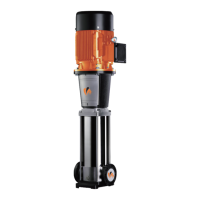
CD 32-85 process:
From model CD 32 and above, the pump is supplied with a fork shaped calibrated separator
that facilitates the motor coupling and replacement.
1. Remove the metallic coupling guards.
2. Untighten the bolts that hold the mechanical coupling.
3. Untighten the bolts that hold the motor in place and remove it.
4. Untighten the six screws that hold the seal into place (three on the shaft and three on the
top support). Extract the mechanic seal.
5. To install the new mechanic seal, insert it in the same position as the previous one.
6. Insert the three screws that hold the seal of the hydraulic pump head.
7. Tighten the screws that hold the mechanical seal of the pump shaft.
8. Lift the pump shaft and place the filler gauge below the seal collar.
9. Put the motor back into place and tighten the screws that secure the motor.
10. Position the mechanical coupling so that that there is the same gap on all the sides
(motor and hydraulic part).
11. Remove the filler gauge.
12. Place the metallic coupling guards and secure it by means of the side screws.
Installation, Operation and Maintenance Manual Installation, Operation and Maintenance Manual
6. MAINTENANCE
7. TROUBLESHOOTING
DANGER:
Make sure that the power supply has been switched off and that it cannot
be accidentally switched on before removing the terminal box cover and
before removing/dismantling the pump.
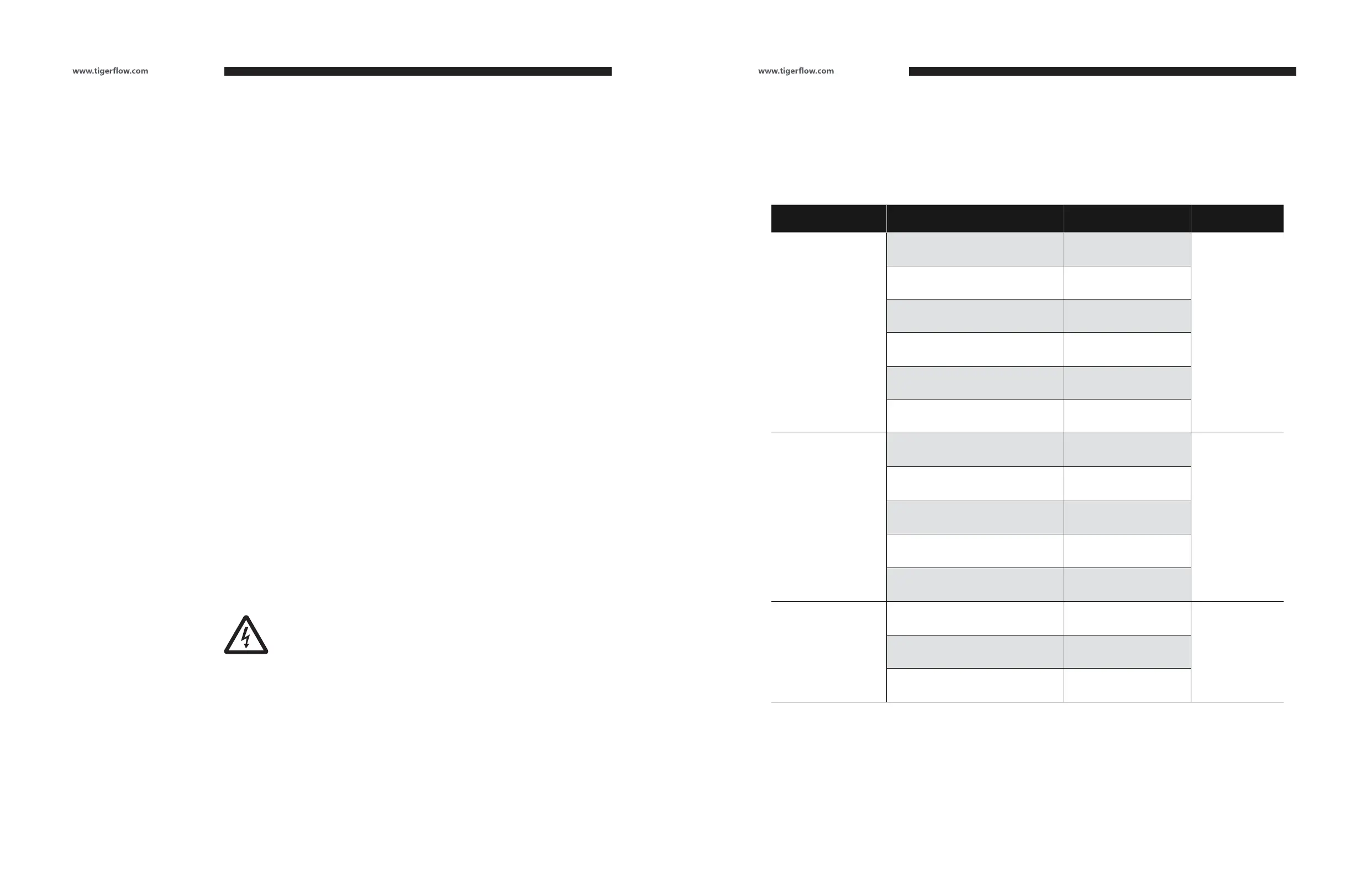
Fault
Cause Remedy Observations
a) Supply failure.
b) Fuses are blown.
c) Motor overloaded.
a) Check the power supply.
b) Replace fuses.
c) Check the system.
e) Repair the control circuit.
f) Replace the motor.
a) Replacefuses
b) Check power supply.
c) Add regulator.
e) Control circuit is defective.
f) Motor is defective.
a) Fuses are blown.
c) Cable connection is loose or faulty.
d) Motor winding is defective
e) Pump mechanically blocked.
d) Replace the motor.
b) Defects regular power supply.
c) Low voltage at peak times.
d) Main contacts in motor-protective circuit
breaker are not making contact or the coil
is faulty
In case d) and e),
the user should not
dismantle the pump
himself
2. Motor-protective circuit
breaker trips immediately
when power supply is
switched on.
3. Motor-protective circuit
breaker trips out occasion-
ally.
1. Motor does not run
when started.
b) Contacts in motor-protective circuit bre-
aker are faulty
d) Replace contacts or magnet-
ic oil.
b) Check the motor- protective
circuit breaker.
a) Set the motor- protective
circuit breaker correctly
c) Fasten or replace the cable
connection.
e) Remove the mechanical
blocking of the pump.
a) Motor-protective circuit breaker setting
is too low.


 To Next Page
 Loading...