Introduction
Overview
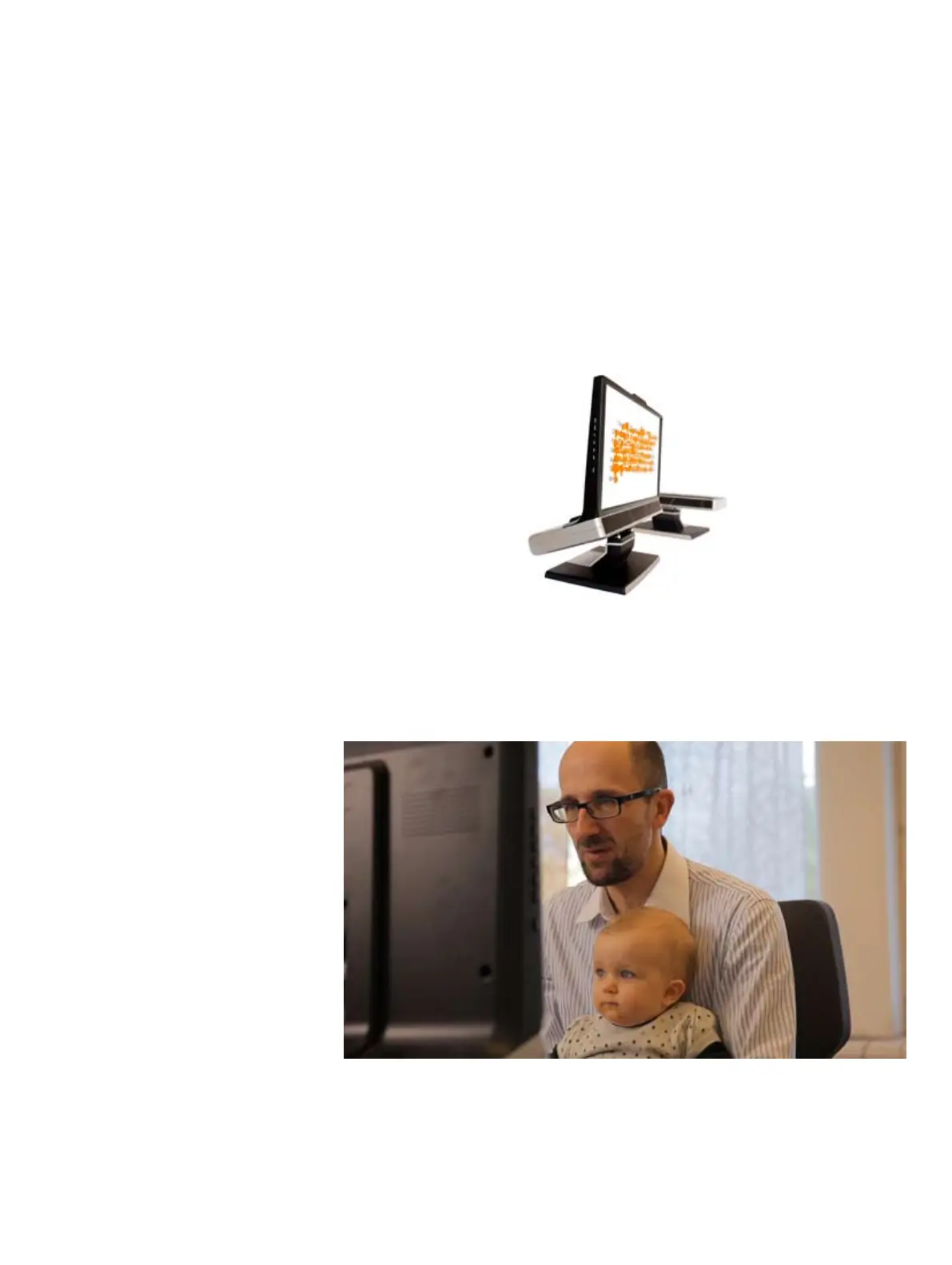
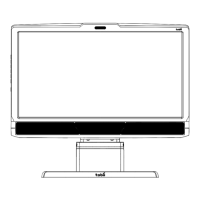
This document describes the features and functionality of the Tobii TX300 Eye Tracker. The TX300
Eye Tracker is an integrated eye tracker that is supplied with a removable 23’’ TFT monitor. Removing
the TFT monitor transforms the integrated eye tracker into a standalone eye tracker. The eye tracker
requires some assembly before first time use and after transport.
The Tobii TX300 Eye Tracker is an unobtrusive eye tracker for detailed research of natural behavior. Its
large head movement box allows the subject to move during tracking while maintaining accuracy and
precision at a sampling rate of 300 Hz. This means that eye movements such as saccades and short
fixations can be studied without using a chinrest. The TX300 has a built in user camera as well as a
speaker which allows for recording of subjects’ reactions to stimuli as well as playback of sounds. Tobii
TX300 offers maximum flexibility with numerous software and stimuli set-up options.
Application areas
Tobii TX300 Eye Tracker is suitable for use in areas such as:
Neuroscience studies, especially those combining eye tracking and EEG data•
Ophthalmology studies, especially those where large freedom of head movement is needed •
Reading studies, especially those where large freedom of movement is important•
Psychology research, especially developmental psychology and psycholinguistics•
A latency of less than 10 ms enables tests with a gaze-contingency paradigm.•
Basic Operating Principles
During tracking, Tobii Eye Trackers use infrared diodes to generate reflection patterns on the corneas
of the subject’s eyes. These reflection patterns, together with other visual data about the subject, are
collected by image sensors. Sophisticated image processing algorithms identify relevant features,
including the eyes and the corneal reflection patterns. Complex mathematics is used to calculate the
3D position of each eyeball, and finally the gaze point on the screen; in other words, where the subject
is looking.


 To Next Page