
 Need help?
Do you have a question about the Toro Recycler 21442 and is the answer not in the manual?
General safety instructions for operating the lawn mower.
Explains the purpose and meaning of various safety decals on the machine.
Warning regarding spark arresters and fire prevention requirements in California.
Step-by-step procedure for assembling and unfolding the mower handle.
Procedure for installing the recoil-starter rope in its guide for safe engine starting.
Instructions and precautions for adding engine oil to the mower.
Procedure for assembling the grass bag for the lawn mower.
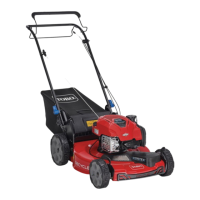
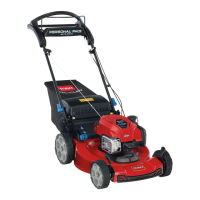
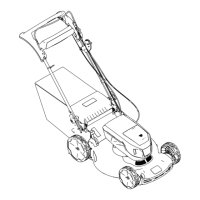
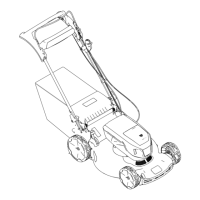
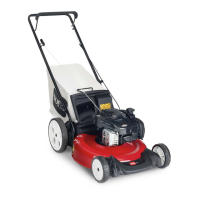
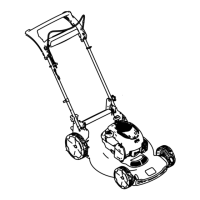
Identification of major parts of the lawn mower with a diagram.
Technical specifications including weight, length, width, and height of the mower.
Information on approved Toro attachments and accessories for the mower.
Crucial safety checks and procedures to perform before starting the mower.
Guidelines for safe handling and storage of gasoline to prevent fires and explosions.
Instructions on using the correct fuel type and additives for the mower's fuel tank.
Procedure and importance of checking the engine oil level before each use.
How to adjust the mower handle to one of two comfortable positions.
Instructions for setting the cutting height and safety precautions.
General safety guidelines and precautions to follow while operating the mower.
Safety advice for mowing on slopes, including direction and caution.
Step-by-step procedure for starting the mower engine.
How to engage and disengage the self-propel drive feature on the mower.
Procedure for safely shutting off the mower engine.
Information on how the mower recycles grass and leaf clippings.
Instructions for installing the grass bag to collect clippings.
Instructions for removing the grass bag from the mower.
Advice for effective and safe mowing, cutting grass, and handling leaves.
Safety measures for after use and when transporting the mower.
A schedule of maintenance tasks to perform at different intervals.
Essential safety precautions to follow during maintenance.
Steps to take before performing any maintenance on the mower.
Procedure for inspecting, cleaning, or replacing the air filter.
Instructions for draining and refilling the engine oil.
Procedure for inspecting, sharpening, or replacing the mower blade.
Safety guidelines for storing the lawn mower.
Steps to take to prepare the mower for long-term storage.
Steps to take when taking the mower out of storage.
The Toro 22in Recycler® Lawn Mower (Model No. 21442, Serial No. 400000000 and Up) is a rotary-blade, walk-behind lawn mower designed for residential homeowners to cut grass on well-maintained lawns. This manual provides comprehensive instructions for operating and maintaining the product safely and efficiently.
The lawn mower's primary function is to cut grass using a rotary blade. It is a walk-behind model, meaning the operator walks behind the machine to guide it. The mower is equipped with a self-propel drive system, which assists the operator in moving the machine across the lawn, reducing physical effort. It also features a recycling function, allowing grass and leaf clippings to be returned to the lawn as mulch, and a bagging function for collecting clippings. The engine is designed to shut off within 3 seconds of releasing the blade-control bar, a key safety feature.
Before operation, users must ensure the handle is properly assembled and unfolded, the recoil-starter rope is installed in its guide, and the engine oil level is checked and adjusted if necessary. The handle height is adjustable to 1 of 2 positions for operator comfort. The cutting height can also be adjusted to various settings, with all wheels needing to be set to the same height for an even cut.
To start the engine, the blade-control bar must be held against the handle while the recoil-start handle is pulled sharply. The self-propel drive is engaged by pulling the self-propel-drive bar to the handle. The speed of the self-propel drive can be reduced by increasing the space between the self-propel-drive bar and the handle. To shut off the engine, the blade-control bar is simply released.
For grass cutting, it is recommended to cut only about a third of the grass blade at a time and avoid cutting below 51 mm (2 inches) unless the grass is sparse or it's late fall. For grass over 15 cm (6 inches) tall, mowing at the highest cutting height first and then at a lower setting is advised. Mowing in wet conditions should be avoided as wet grass and leaves can clump and stall the engine. Alternating mowing direction helps disperse clippings for even fertilization. For cutting leaves, ensure half of the lawn shows through the cut leaf cover, which may require multiple passes.
Safety is paramount during operation. Operators should wear appropriate clothing, including eye protection, long pants, slip-resistant footwear, and hearing protection. Loose clothing or jewelry should be avoided, and long hair tied back. Bystanders and children must be kept out of the operating area. The machine should not be operated without all guards and safety devices in place and functioning. Operators should always look down and behind before moving in reverse and use extreme care near blind corners, shrubs, trees, or other objects. If the machine strikes an object or vibrates, the engine must be shut off, and the spark plug wire disconnected before inspecting for damage. Fueling should be done outdoors, with a cold engine, and away from open flames or sparks.
Regular maintenance is crucial for the machine's performance and longevity. Before each use or daily, the engine-oil level should be checked, and oil added as needed. The engine's shut-off mechanism (within 3 seconds of releasing the blade-control bar) should also be verified. After each use, grass clippings and dirt should be cleaned from under the machine.
Yearly maintenance includes servicing the air filter (more frequently in dusty conditions), changing the engine oil (if desired), and replacing or sharpening the blade (more frequently if dull). The engine should also be cleaned of dirt and debris. Every 100 hours, the spark plug should be replaced. Before yearly storage, the fuel tank should be emptied.
To clean under the machine, lower it to its lowest cutting-height setting, move it to a paved surface, and with the engine running and blade engaged, spray water in front of the right, rear wheel. After cleaning, run the engine for a few minutes to dry the underside to prevent rusting.
For storage, the handle can be folded forward by removing the handle knobs and carriage bolts, routing the cables to the outside of the handle, and then loosely reinstalling the knobs and bolts. Before storing for the season, fuel stabilizer should be added to the fuel, and the machine run until it shuts off from lack of fuel. The spark plug should be disconnected, and 30 ml (1 fl oz) of engine oil added through the spark-plug hole, pulling the starter rope several times to distribute oil and prevent cylinder corrosion. All nuts, bolts, and screws should be tightened. When removing from storage, check and tighten fasteners, remove the spark plug, spin the engine to blow out excess oil, reinstall and tighten the spark plug, check engine oil, fill the fuel tank, and connect the spark plug wire.
The manual emphasizes the importance of using genuine Toro replacement parts and accessories to ensure optimum performance and continued safety certification.
 General
| Cutting Width | 22 inches |
|---|---|
| Cutting Height Adjustment | 4-Point |
| Deck Material | Steel |
| Mulching Capability | Yes |
| Bagging Capability | Yes |
| Side Discharge Capability | Yes |
| Starter Type | Recoil |
| Cutting Height | 1.0 - 4.0 inches |
| Fuel Tank Capacity | 0.25 gallons |
| Warranty | 2-Year Full Coverage |




 To Next Page