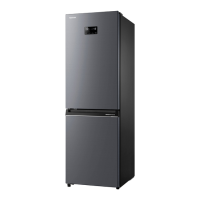
This document is the Owner's Manual for a Toshiba REFRIGERATOR FREEZER, model GR-RB308WE, intended for home use.
Function Description:
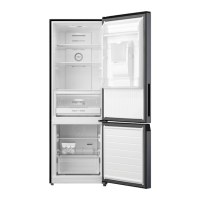
The Toshiba GR-RB308WE is a refrigerator-freezer combination appliance designed for household use. It features separate compartments for refrigeration and freezing, allowing for optimal storage of various food types. The refrigerating chamber is suitable for short-term storage of fruits, vegetables, beverages, and other perishable foods. Cooked foods should be cooled to room temperature before being placed in this chamber. The freezing chamber is designed for long-term storage of frozen foods, making ice, and is suitable for items like meat, fish, and rice balls that are not to be consumed immediately. The appliance utilizes an air-cooling principle and has an automatic defrosting function.
Important Technical Specifications:
The refrigerator-freezer operates within specific ambient temperature ranges depending on its climate category, as indicated on the rating plate. For example:
- SN category: +10°C to +32°C
- N category: +16°C to +32°C
- ST category: +16°C to +38°C
- T category: +16°C to +43°C
The display panel shows the set temperatures for the refrigerating and freezing chambers. Default settings are 5°C for the refrigerating chamber and -18°C for the freezing chamber upon first power-on. The refrigerating chamber temperature can be adjusted between 2°C and 8°C, while the freezing chamber temperature can be set from -24°C to -16°C. The appliance includes LED lighting.
Usage Features:
- Placement: Before initial use, the refrigerator should remain still for half an hour after placement. It should be positioned in a well-ventilated indoor area, on a flat and sturdy ground. A minimum of 30cm space above and 10cm from the wall at the rear is recommended for heat dissipation. The appliance should be kept away from heat sources and direct sunlight.
- Levelling: The appliance is equipped with levelling feet that can be adjusted clockwise to raise or counterclockwise to lower the refrigerator, ensuring a horizontal level.
- Initial Start-up: Before storing any food, the refrigerator should run for 2-3 hours, or over 4 hours in summer, to reach optimal operating temperature.
- Temperature Control: Users can adjust the temperatures of both the refrigerating and freezing chambers using dedicated buttons on the display panel. Each press of the button changes the temperature by 1°C.
- Special Modes:
- Quick Cool Mode: Activated by long-pressing a button for 3 seconds, this mode sets the refrigerating chamber to 2°C.
- Quick Freeze Mode: Activated by long-pressing a button for 3 seconds, this mode sets the freezing chamber to -24°C.
- Vacation Mode: This mode sets the freezing chamber to -18°C and turns off the refrigerating chamber display, suitable for periods when the user is away.
- Lock/Unlock Function: The display panel can be locked by long-pressing the lock button for 3 seconds to prevent accidental changes.
- Door Alarm: An alarm sounds if the refrigerator door is left open for more than two minutes.
- Food Storage: Foods are recommended to be sealed before placing them in the refrigerator. Glass shelves are adjustable for flexible storage. Raw meat and fish should be stored in suitable containers to prevent cross-contamination. Beer, beverages, or other fluids in bottles or enclosed containers should not be stored in the freezing chamber to prevent cracking due to freezing.
- Energy Saving Tips: Locate the appliance in the coolest part of the room, allow hot foods to cool before placing them inside, wrap foods properly, and avoid lining storage bins with materials that obstruct air circulation. Organize and label food to minimize door opening times.
Maintenance Features:
- Cleaning:
- Overall Cleaning: Dust behind the refrigerator and on the ground should be cleaned regularly to improve cooling efficiency.
- Door Gasket: Regularly check and clean the door gasket with a soft cloth dampened with soapy water or diluted detergent.
- Interior: The interior should be cleaned regularly to prevent odors. Before cleaning, unplug the appliance, remove all food, drinks, shelves, and drawers. Clean the inside with a soft cloth or sponge using a solution of two tablespoons of baking soda and a quart of warm water. Rinse with water and wipe clean, then leave the door open to air dry before reconnecting power.
- Hard-to-reach Areas: For narrow gaps or corners, use a soft rag or brush, possibly with auxiliary tools like thin sticks, to ensure no contaminants.
- Exterior: Wipe the outer surface with a soft cloth dampened with soapy water or detergent.
- Prohibited Cleaning Agents: Do not use soap, detergent, scrub powder, spray cleaner, hard brushes, steel wool, abrasives (like toothpaste), organic solvents (alcohol, acetone, banana oil), boiling water, acid, or alkaline items, as these can damage the appliance's surfaces or plastic parts. Do not rinse directly with water or other liquids to avoid electrical short circuits.
- Defrosting: The appliance has an automatic defrosting function. Any frost formed due to seasonal or temperature changes can be manually removed by unplugging the appliance or wiping with a dry towel.
- Out of Operation:
- Power Failure: During a power failure, minimize door openings and avoid adding fresh food to preserve existing contents for several hours.
- Long-term Non-use: Unplug, clean, and leave the doors open to prevent odors.
- Moving: Before moving, remove all internal items, secure glass partitions, vegetable holders, and freezer drawers with tape. Tighten levelling feet, close and tape the doors. The appliance should not be laid upside down or horizontally, and inclination during movement should not exceed 45°.
- Professional Maintenance: Any replacement or maintenance of LED lamps, door right-left change, or repairs to the refrigerant circuit must be performed by the manufacturer, its service agent, or qualified professionals.
- Disposal: The appliance contains flammable refrigerant and cyclopentane foaming material. When disposing of the refrigerator, it must be kept away from fire sources and recovered by a specialized recycling company, not by combustion, to prevent environmental harm. Doors, door gaskets, and shelves should be removed to prevent child entrapment.

 Need help?
 General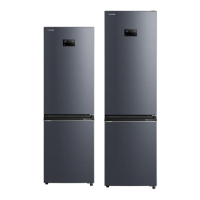



 To Next Page