
 Need help?
Do you have a question about the TP-Link AC5400 and is the answer not in the manual?
Steps include unplugging the modem, connecting the modem to the router via Ethernet, powering on the modem, and connecting the router's power adapter.
Check the router's LED to ensure it is solid on (red or white) before proceeding with configuration.
Download and use the TP-Link Tether app, log in, select your router model, and follow the on-screen instructions for setup.
Connect a device to the router, access the web interface via browser, create a password, and follow setup instructions for internet connection.
Explanation of LED states: Pulsing Orange (starting), Solid White (normal), Solid Red (no internet), Solid Orange (Wi-Fi off), Pulsing White (firmware/WPS/reset).
Details on the WPS, Wi-Fi, and LED buttons, including how to initiate WPS, toggle wireless, and control LED illumination.
Troubleshooting steps for accessing the router's web interface, including rebooting, checking IP settings, and trying different browsers.
Solutions for internet connectivity problems, such as rebooting devices, checking modem connection, and verifying network settings.
Instructions on how to reset the router to factory defaults, either via the physical reset button or the web management page.
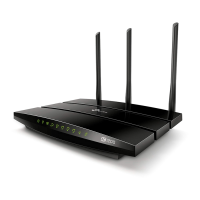
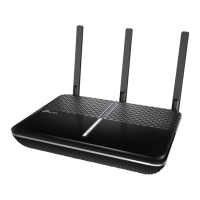
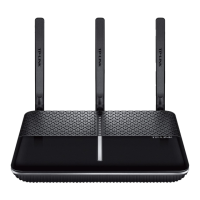
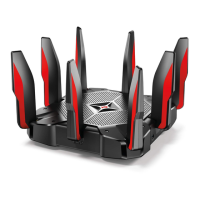
The TP-Link Archer C5400X is an AC5400 MU-MIMO Tri-Band Gaming Router designed to provide a robust and high-performance internet connection, particularly for gaming and demanding network activities. It facilitates internet access through both wired and wireless connections, offering multiple setup methods for user convenience.
The primary function of the Archer C5400X is to act as a central hub for your home network, distributing internet access from your modem to all connected devices. It supports high-speed wireless connectivity across three distinct bands (Tri-Band) to minimize congestion and maximize performance, especially in environments with numerous connected devices. The MU-MIMO (Multi-User, Multiple-Input, Multiple-Output) technology allows the router to communicate with multiple devices simultaneously, improving overall network efficiency and speed for each device. As a gaming router, it is optimized to prioritize gaming traffic, reducing lag and ensuring a smoother online gaming experience. It also offers robust security features and network management capabilities to control and monitor your internet usage. The router can be configured and managed through a dedicated mobile application or a web-based interface, providing flexibility in how users interact with their network settings.
The Archer C5400X offers a straightforward setup process, with two main methods: via the TP-Link Tether app or a web browser. For hardware connection, users begin by unplugging their modem and removing any backup battery. The router's antennas are designed to be pushed into slots for easy assembly. If the internet connection comes directly from the wall via an Ethernet cable, it should be connected to the router's Internet port. Otherwise, the powered-off modem is connected to the router's Internet port using an Ethernet cable. After connecting the modem, the power adapter is plugged into the router, and the router is turned on. Users should wait approximately two minutes for the modem to restart and verify that the LED on the top of the router is solid (red or white) before proceeding with software setup.
The Tether app setup method involves downloading the TP-Link Tether app from the App Store or Google Play. Users then open the app, log in with their TP-Link ID (or create one if they don't have an account), tap the '+' button, select "Archer C5400X," and follow the on-screen instructions to complete the setup and connect to the internet. This method is designed for ease of use and guided configuration.
Alternatively, the web browser setup method requires connecting a device to the router either wirelessly (using the default SSIDs and password printed on the router's label) or with an Ethernet cable. Users then launch a web browser and enter "http://tplinkwifi.net" or "http://192.168.0.1" in the address bar. Upon accessing the login page, they will be prompted to create a password. Following this, step-by-step instructions will guide them through setting up the internet connection and registering for the TP-Link Cloud service.
The router features several physical buttons for quick control:
The LED indicators provide visual feedback on the router's status:
The Archer C5400X includes features and guidelines to ensure its longevity and optimal performance. For troubleshooting internet access issues, users are advised to reboot the router and modem. If the internet connection is through a DSL/Cable/Satellite modem, checking the internet connection by directly connecting a computer to the modem via an Ethernet cable can help determine if the issue lies with the modem or the router. If the internet is not working directly from the modem, users should contact their internet service provider. If the web management page is inaccessible, users can try rebooting the router, ensuring their computer's IP settings are set to obtain an IP address automatically, verifying the correct web address (http://tplinkwifi.net or http://192.168.0.1) is entered, trying a different web browser, or disabling and re-enabling their network adapter. For cable modem users experiencing internet issues, logging into the router's web management page and navigating to Advanced > Network > Internet > MAC Clone, then selecting "Use Current Computer MAC Address" and saving, followed by rebooting both the modem and router, can resolve connectivity problems. If the router cannot be found via Bluetooth in the Tether app, it may require a factory reset. This can be done in two ways: either by pressing and holding the physical Reset button on the back of the router with a pin until the LED blinks, or by logging into the web management page (Advanced > System > Backup & Restore) and clicking "FACTORY RESTORE." A factory reset will enable the router's Bluetooth for 30 minutes, allowing for re-detection in the Tether app.
General safety and maintenance guidelines are also provided:
TP-Link also offers community support through their website (https://community.tp-link.com) for users to interact with other users and engineers. Technical support, replacement services, user guides, and more information are available at https://www.tp-link.com/support. For feedback on product guides, users can email techwriter@tp-link.com.cn. These resources contribute to the ongoing maintenance and support of the device, ensuring users can resolve issues and optimize their router's performance.
 General
| Wireless Standard | 802.11ac |
|---|---|
| Frequency Bands | 2.4GHz and 5GHz |
| Ethernet Ports | 8 x Gigabit LAN, 1 x Gigabit WAN |
| USB Ports | 1 x USB 3.0, 1 x USB 2.0 |
| Processor | 1.4 GHz Dual-Core |
| Antennas | 8 x External Antennas |
| MU-MIMO | Yes |
| Beamforming | Yes |
| Wi-Fi Speed | 5334 Mbps (1000Mbps at 2.4GHz + 2167Mbps at 5GHz + 2167Mbps at 5GHz) |
| Memory | 512 MB RAM |
| VPN Support | OpenVPN, PPTP, L2TP |
| Security | WPA, WPA2 |



 To Next Page