
 Need help?
Do you have a question about the TP-Link Archer MR505 and is the answer not in the manual?
Insert the Nano SIM card into the router's slot until it clicks for initial setup.
Connect the power adapter to the router to supply power for operation.
Verify Power, Internet, and Wi-Fi LEDs are on to confirm connection status.
Connect your computer to the router's LAN port using an Ethernet cable.
Find default SSIDs and password, then connect your device to the network.
Download the TP-Link Tether app from the App Store or Google Play.
Log in to the Tether app, tap '+', select 3G/4G Router, and follow setup steps.
Launch a web browser and navigate to http://tplinkmodem.net or http://192.168.1.1.
Follow the Quick Setup instructions to complete the initial router configuration.
Steps to resolve issues accessing the router's web interface.
Verify SIM card, network settings, and data limits for internet access.
Instructions on how to reset the router if the management password is forgotten.
Steps to retrieve or reset the Wi-Fi password via the management page.
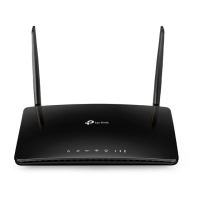
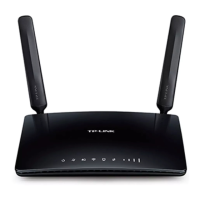
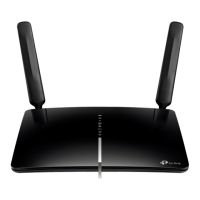
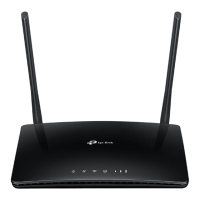
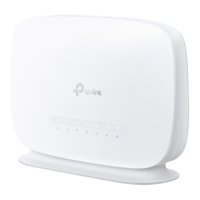
This document provides a comprehensive guide for setting up and managing your TP-Link Wireless 4G LTE Router, designed to offer a simple and intuitive internet experience. The router functions primarily as a gateway to the internet, utilizing a 4G LTE mobile network connection to provide both wired and wireless internet access to your devices.
The TP-Link Wireless 4G LTE Router is engineered to provide reliable internet connectivity by leveraging a mobile network. Its core function is to convert a 4G LTE signal into a Wi-Fi network and wired Ethernet connections, allowing multiple devices to access the internet simultaneously. This makes it an ideal solution for homes or offices where traditional broadband connections are unavailable or unreliable, or for temporary setups requiring portable internet access. The device supports Nano SIM cards, which are inserted directly into a dedicated slot to establish the mobile network connection. Once connected, it broadcasts a Wi-Fi signal and offers Ethernet ports for wired connections, ensuring versatile connectivity options for various devices such as computers, smartphones, tablets, and smart home devices. The router is also capable of operating in Wireless Router Mode, allowing it to function with DSL, Cable, or Fiber connections if needed, providing flexibility for different internet service types.
Setting up and using the TP-Link Wireless 4G LTE Router is designed to be straightforward, with clear instructions provided for both initial hardware connection and subsequent software configuration.
The TP-Link Wireless 4G LTE Router incorporates several features and guidelines to ensure its optimal performance and longevity, as well as to assist users in troubleshooting common issues.
By following these guidelines and utilizing the provided features, users can effectively manage and maintain their TP-Link Wireless 4G LTE Router for a consistent and reliable internet experience.
 General
| Frequency Bands | 2.4 GHz, 5 GHz |
|---|---|
| Type | 4G Router |
| Wireless Standards | IEEE 802.11a/n/ac |
| Wi-Fi Speeds | 300 Mbps at 2.4 GHz |
| Ethernet Ports | 1 x 10/100 Mbps |
| Ports | 1 x SIM card slot |
| Button | Power button, Reset button |
| Mobile Network | 4G LTE |
| Cellular Connectivity | 4G LTE |
| Operating Temperature | 0℃~40℃ (32℉ ~104℉) |
| Storage Temperature | -4℉ ~140℉ |
| Humidity | 10% to 90% non-condensing |

 To Next Page