EasyManua.ls Logo

TP-Link Archer VR400 - User Manual

TP-Link Archer VR400
119 pages
Print Icon
To Next Page IconTo Next Page
Loading...
REV3.0.0 1910012826
User Guide
AC1200 Wireless MU-MIMO VDSL/ADSL Modem Router
Archer VR400

Table of Contents

Other manuals for TP-Link Archer VR400

Questions and Answers

  • L
    Lucas SmithJul 27, 2025
    What to do if TP-Link Wireless Router cannot access the Internet?
    • C
      Catherine Hudson MDJul 28, 2025
      If you cannot access the Internet using your TP-Link Wireless Router, verify that all connectors, including the telephone line, Ethernet cables, and power adapter, are securely connected. Check if you can log in to the web management page of the router. Ensure that your VLAN ID (VDSL), VPI/VCI (ADSL), Connection Type, account username, and password are correct by consulting your ISP. If problems persist, restore the router to its factory default settings and reconfigure it using the Quick Setup Wizard.
  • D
    David TateAug 1, 2025
    Why can't I find or connect to my TP-Link Wireless Router's Wi-Fi network?
    • J
      James CurtisAug 1, 2025
      If you cannot find or connect to your TP-Link Wireless Router's network, ensure the wireless function is enabled on your device. Verify that the wireless adapter driver is properly installed and enabled. Check the Wi-Fi LED indicator on your router. Make sure your device is within the router's range; move closer if needed. On the Basic > Wireless page, check your wireless settings and ensure the SSID is not hidden. If you encounter a network security key mismatch, confirm the wireless password on your router. If the wireless signal is weak, move the router closer. Try changing the wireless channel to 1, 6, or 11 to reduce interference. Reinstall or update the driver for your computer's wireless adapter.
  • A
    Angela GoodmanAug 6, 2025
    What to do if I forgot my TP-Link Wireless Router password?
    • H
      Heather QuinnAug 6, 2025
      If you forgot your TP-Link Wireless Router password, restore the router to its factory default settings and then set a new password. The default Wireless Password/PIN is printed on the product label of the router. If the default wireless password has been changed, log into the router’s web management page and go to Basic > Wireless to retrieve or reset your password.
  • J
    jacobslauraAug 11, 2025
    How to fix TP-Link Wireless Router login issues?
    • A
      Austin AndersonAug 11, 2025
      If you cannot log in to your TP-Link Wireless Router's web management page, ensure the router is correctly connected to your computer and the LED indicators are lit. Verify that your computer's IP address is configured to obtain an IP address and DNS server address automatically. Double-check that you're correctly entering the default access address: http://tplinkmodem.net or http://192.168.1.1. Try using a different web browser or computer. If all else fails, reset the router to its factory default settings.
  • J
    Joan FranklinAug 16, 2025
    How to reset TP-Link Wireless Router to factory settings?
    • S
      sarakempAug 16, 2025
      To restore your TP-Link Wireless Router to its factory default settings, use the Reset button, referring to the button description for details. Alternatively, use the Backup & Restore page, following the instructions to reset the router to factory default settings.
  • E
    Eric MayAug 21, 2025
    How can I set my computer to automatically obtain an IP address for my TP-Link Wireless Router?
    • B
      benjamindeanAug 21, 2025
      To set your computer to automatically obtain an IP address for your TP-Link Wireless Router, select both 'Obtain an IP address automatically' and 'Obtain DNS server address automatically' in your network connection properties.

Summary

Chapter 2. Connect the Hardware

2.2. Connect Your Modem Router

Provides step-by-step instructions for connecting the modem router hardware, including wired and wireless methods.

Chapter 3. Log In to Your Modem Router

Logging into the Web Management Page

Explains how to access and log into the modem router's web interface for configuration.

Chapter 4. Set Up Internet Connections

4.1. Use Quick Setup Wizard

Guides users through an automated setup process for connecting to the internet using a wizard.

4.2. Manually Set Up an Internet Connection

Details the manual configuration steps for establishing an internet connection, including ISP specific settings.

Chapter 6. OneMeshTM with Seamless Roaming

6.1. Set Up a OneMeshTM Network

Instructions for establishing a unified Wi-Fi network using TP-Link OneMesh routers and extenders.

Chapter 8. Guest Network

8.1. Create a Network for Guests

Instructions on setting up a separate Wi-Fi network for guests to enhance security and control.

Chapter 10. Parental Controls

Setting Up Parental Controls

Describes how to block websites and limit internet access for specific devices based on time schedules.

Chapter 11. QoS

11.1. Prioritize Internet Traffic with QoS

Explains how to configure Quality of Service (QoS) rules to prioritize specific applications or devices for better network performance.

Chapter 12. Network Security

12.1. Firewall & DoS Protection

Covers the configuration of SPI Firewall and DoS Protection to safeguard the network against cyber threats.

12.4. IP & MAC Binding

Details how to bind IP addresses to MAC addresses to prevent ARP spoofing and enhance network security.

Chapter 13. NAT Forwarding

13.1. Speed Up Internet Connections through NAT Boost

Describes how to enable NAT Boost to improve internet connection speed and router throughput.

Chapter 14. VPN Server

14.1. Use OpenVPN to Access Your Home Network

Instructions for setting up an OpenVPN server on the router to allow secure remote access to the home network.

14.3. Use IPSec VPN to Access Your Home Network

Details the setup process for IPSec VPN connections, offering high security for remote access between networks.

Chapter 15. Specify Your Network Settings

15.1. LAN Settings

Covers managing the Local Area Network (LAN) settings, including changing the IP address and DHCP server configuration.

15.3. Wireless Settings

Guides on customizing wireless network settings, including SSID, password, security, and advanced parameters.

Chapter 16. Administrate Your Network

Update the Firmware

Guides on updating the router's firmware via online or local methods for improved features and security.

Back up and Restore Configuration Settings

Details how to back up current router settings and restore them, or reset to factory defaults.

TP-Link Archer VR400 Specifications

General IconGeneral
Ethernet WANYes
SIM card slotNo
WAN connection typeRJ-45
Wi-Fi bandDual-band (2.4 GHz / 5 GHz)
Wi-Fi standards802.11a, Wi-Fi 5 (802.11ac), 802.11b, 802.11g, Wi-Fi 4 (802.11n)
Top Wi-Fi standardWi-Fi 5 (802.11ac)
WLAN data transfer rate (max)867 Mbit/s
WLAN data transfer rate (first band)300 Mbit/s
VPN supportPTP, L2TP, IPSec Passthrough
Cabling technology10/100/1000Base-T(X)
Networking standardsIEEE 802.11a, IEEE 802.11ac, IEEE 802.11b, IEEE 802.11g, IEEE 802.11n
VPN tunnels quantity10
Ethernet LAN data rates10, 100, 1000 Mbit/s
Ethernet LAN interface typeGigabit Ethernet
USB 2.0 ports quantity1
Ethernet LAN (RJ-45) ports5
3G-
Security algorithms64-bit WEP, 128-bit WEP, WPA, WPA-PSK, WPA2, WPA2-PSK
Supported network protocolsIPv4, IPv6
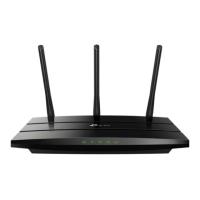
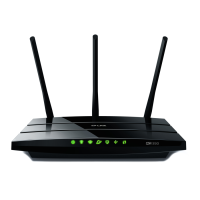
Antennas quantity3
Product typeTabletop router
Product colorBlack
LED indicatorsLAN, Power, WLAN
Windows operating systems supportedWindows 10 Education, Windows 10 Education x64, Windows 10 Enterprise, Windows 10 Enterprise x64, Windows 10 Home, Windows 10 Home x64, Windows 10 Pro, Windows 10 Pro x64, Windows 7 Enterprise, Windows 7 Enterprise x64, Windows 7 Home Basic, Windows 7 Home Basic x64, Windows 7 Home Premium, Windows 7 Home Premium x64, Windows 7 Professional, Windows 7 Professional x64, Windows 7 Starter, Windows 7 Starter x64, Windows 7 Ultimate, Windows 7 Ultimate x64, Windows 8, Windows 8 Enterprise, Windows 8 Enterprise x64, Windows 8 Pro, Windows 8 Pro x64, Windows 8 x64, Windows 8.1, Windows 8.1 Enterprise, Windows 8.1 Enterprise x64, Windows 8.1 Pro, Windows 8.1 Pro x64, Windows 8.1 x64, Windows Vista Business, Windows Vista Business x64, Windows Vista Enterprise, Windows Vista Enterprise x64, Windows Vista Home Basic, Windows Vista Home Basic x64, Windows Vista Home Premium, Windows Vista Home Premium x64, Windows Vista Ultimate, Windows Vista Ultimate x64, Windows XP Home, Windows XP Home x64, Windows XP Professional, Windows XP Professional x64
Output current1.5 A
Output voltage12 V
Power source typeAC
Storage temperature (T-T)-40 - 70 °C
Operating temperature (T-T)0 - 40 °C
Storage relative humidity (H-H)5 - 90 %
Operating relative humidity (H-H)10 - 90 %
CertificationCE, RoHS
Cables includedLAN (RJ-45)
Package typeBox
Package depth240 mm
Package width350 mm
Package height82 mm
Package weight850 g
Weight and Dimensions IconWeight and Dimensions
Depth124.6 mm
Width215.6 mm
Height31.6 mm

Related product manuals