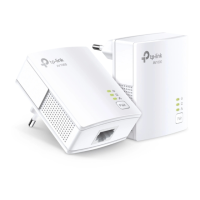
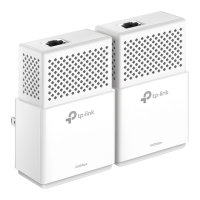
This document describes the TP-Link TL-PA7010P KIT, a Powerline adapter kit designed to extend your home network using existing electrical wiring. The kit includes two TL-PA7010P adapters, which are used to create or expand a Powerline network.
Function Description:
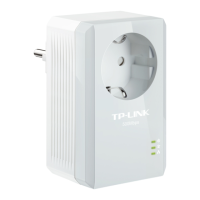
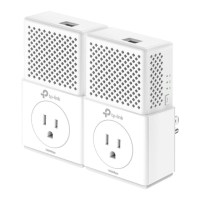
The primary function of the TL-PA7010P KIT is to provide a stable and high-speed internet connection to areas of your home where Wi-Fi signals may be weak or unreliable, or where running Ethernet cables would be impractical. It achieves this by transforming your home's electrical outlets into network connection points. One adapter connects to your router and an electrical outlet, while the other adapter connects to an electrical outlet in another room, providing an Ethernet port for devices like computers, smart TVs, or gaming consoles. The "P" in TL-PA7010P indicates that the adapter features an integrated electrical socket, allowing you to plug in other electrical devices without losing an outlet. This pass-through design also helps to filter out electrical noise that could potentially interfere with Powerline performance. The Powerline network operates on the same electrical circuit, ensuring reliable communication between the adapters.
Usage Features:
Quick Installation:
The installation process is designed to be straightforward and plug-and-play.
- Connect the First Adapter: Plug one TL-PA7010P adapter into a wall outlet near your router. Connect an Ethernet cable from your router's LAN port to the Ethernet port on this adapter.
- Connect the Second Adapter: Plug the second TL-PA7010P adapter into a wall outlet in the room where you need network access.
- Wait for Powerline LED: Wait until the Powerline LED on both adapters turns on. This indicates that a Powerline connection has been established. If the LED is red or off, troubleshooting may be required.
- Connect Devices: Connect your desired network device (e.g., computer, game console) to the Ethernet port of the second adapter using an Ethernet cable.
- Expand the Network: To add more Powerline adapters or extenders, simply plug them into wall sockets on the same electrical circuit. They should automatically connect with the default settings.
Secure Network Setup (Pairing):
For enhanced security and to create a private Powerline network, you can use the pairing function. This is recommended to prevent unauthorized access and ensure optimal performance.
- Initial Setup: Plug both Powerline devices into wall outlets, ideally near each other for the initial pairing process.
- Initiate Pairing on First Device: Press the Pair button on one Powerline device for 1 second. Its Power LED will start blinking.
- Initiate Pairing on Second Device: Within 2 minutes, press the Pair button on the second Powerline device for 1 second. Its Power LED will also start blinking.
- Confirmation: The Powerline LED on both devices will turn solid on, indicating that a secure Powerline network has been successfully established.
Joining an Existing Secure Network:
If you have an existing secure Powerline network and want to add a new adapter:
- Initiate Pairing on Existing Device: Press the Pair button on any existing Powerline device in your network for 1 second. Its Powerline LED will start blinking.
- Initiate Pairing on New Adapter: Within 2 minutes, press the Pair button on the new Powerline adapter for 1 second. Its Powerline LED will start blinking.
- Confirmation: The Powerline LED on the new adapter will turn solid on, indicating it has successfully joined the existing secure network.
LED Indicators:
The adapters feature several LED indicators to provide status information:
- Power LED: Indicates if the adapter is on or off. A blinking Power LED can indicate pairing in progress or Power-Saving Mode.
- Powerline LED:
- Yellow-green: Good signal strength.
- Red: Poor signal strength, suggesting a different wall socket might be better.
- Off: Not connected to any Powerline network.
- Ethernet LED: Indicates if the Ethernet port is connected or disconnected.
Power-Saving Mode:
To conserve energy, the Powerline adapters automatically switch to Power-Saving Mode approximately five minutes after the connected device is turned off or becomes inactive.
Integrated Electrical Socket:
Each TL-PA7010P adapter includes an integrated electrical socket. This allows you to plug other electrical appliances or power strips directly into the adapter, ensuring that you don't lose access to an electrical outlet. This pass-through design also helps to filter out electrical noise that might otherwise affect Powerline performance.
Attention on Usage:
It is crucial to plug Powerline devices directly into wall outlets rather than power strips. Power strips, especially those with surge protection, can interfere with the Powerline signal and degrade performance.
Maintenance Features:
Resetting the Powerline Adapter:
If you encounter issues or wish to clear the current network settings, you can reset a Powerline adapter:
- With the adapter plugged into an electrical outlet, press and hold the Pair button for more than 6 seconds.
- The Power LED will momentarily go off and then come back on, indicating a successful reset.
Troubleshooting Poor Powerline LED Status:
- Red Powerline LED: If the Powerline LED is red, it indicates a poor signal strength. Try plugging the adapter into a different wall socket to improve the connection.
- Off Powerline LED: If the Powerline LED is off, it means the adapter is not connected to any Powerline network.
- Ensure all Powerline devices are on the same electrical circuit.
- Attempt to set up a Powerline network by pairing the devices as described above.
- If the problem persists, contact technical support.
Troubleshooting No Internet Connection:
If there is no internet connection through your Powerline network:
- Verify that all Powerline devices are on the same electrical circuit.
- Check that the Powerline LEDs are lit on all your Powerline devices. If not, re-pair the devices.
- Ensure all devices (router, adapters, end devices) are correctly and securely connected with Ethernet cables.
- Confirm that your computer has an internet connection when connected directly to the modem or router, bypassing the Powerline network.
Troubleshooting Relocated Device Not Reconnecting:
If a successfully paired Powerline device does not reconnect after being moved to a new location:
- Try a different socket and ensure it is on the same electrical circuit as the rest of your Powerline network.
- Re-pair the device with the existing network, ensuring the Powerline LED turns on.
- Check for potential interference from household appliances (e.g., washing machines, air conditioners) that might be too close to the Powerline device. If the appliance has an integrated electrical socket, plug it into the Powerline adapter's integrated socket to help filter out electrical noise.
Easy Management with tpPLC Utility:
For advanced configuration and management of your Powerline network, TP-Link provides the tpPLC utility.
- Visit the TP-Link website (www.tp-link.com) and search for your specific product model (TL-PA7010P KIT).
- Download the compatible version of the utility from the product's Support page.
- Install and launch the utility to access advanced settings and monitoring features for your Powerline devices.
This comprehensive set of features and troubleshooting guidelines ensures that users can effectively set up, manage, and maintain a robust and secure Powerline network using the TL-PA7010P KIT.

 Need help?
 General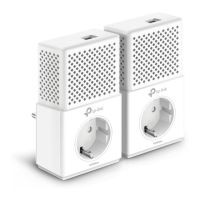






 To Next Page