EasyManua.ls Logo

Trane XV95 - User Manual

Trane XV95
16 pages
Print Icon
To Next Page IconTo Next Page
Loading...
Contents
Safety Section 1
General Information 3
To Start the Furnace 4
Proper Maintenance 6
The Problem Solver 8
Regular Dealer Maintenance 9
Warranty 11
WARNING
!
EXPLOSION HAZARD
DO NOT USE THIS UNIT IF ANY PART HAS BEEN UN-
DER WATER. A FLOOD DAMAGED UNIT IS EXTREME-
LY DANGEROUS. ATTEMPTS TO USE THE FURNACE
CAN RESULT IN FIRE OR EXPLOSION. A QUALIFIED
SERVICE AGENCY SHOULD BE CONTACTED TO IN-
SPECT THE FURNACE AND TO REPLACE ALL GAS
CONTROLS, CONTROL SYSTEM PARTS, ELECTRICAL
PARTS THAT HAVE BEEN WET OR THE FURNACE IF
DEEMED NECESSARY.
FAILURE TO FOLLOW THIS WARNING COULD RESULT
IN PROPERTY DAMAGE, PERSONAL INJURY OR
DEATH.
WARNING
!
EXPLOSION HAZARD
IN THE EVENT THAT ELECTRICAL, FUEL OR MECHANI-
CAL FAILURES OCCUR, SHUT OFF THE GAS SUPPLY
AT THE MANUAL GAS SHUT OFF VALVE, LOCATED
ON THE SUPPLY GAS PIPING COMING INTO THE FUR-
NACE, BEFORE TURNING OFF THE ELECTRICAL POW-
ER TO THE FURNACE. CONTACT SERVICER.
FAILURE TO FOLLOW THIS WARNING COULD RE-
SULT IN PROPERTY DAMAGE, PERSONAL INJURY OR
DEATH.
WARNING
!
FIRE OR EXPLOSION HAZARD
If the information in this manual is not followed
exactly, a fire or explosion may result causing
property damage, personal injury or loss of life.
Do NOT store or use gasoline or other
flammable vapors and liquids or combustible
materials in the vicinity of this or any other
appliance.
WHAT TO DO IF YOU SMELL GAS
Do not try to light any appliance.
Do not touch any electrical switch;
do not use any phone in your building.
Immediately call your gas supplier from a
neighbor’s phone. Follow the gas supplier’s
instructions.
If you cannot reach your gas supplier,
call the fire department.
DO NOT RELY ON SMELL ALONE TO DETECT
LEAKS. DUE TO VARIOUS FACTORS, YOU MAY
NOT BE ABLE TO SMELL FUEL GASES.
U.L. recognized fuel gas and CO detectors are
recommended in all applications, and their
installation should be in accordance with the
manufacturer's recommendations and/or local
laws, rules, regulations, or customs.
Installation and service must be performed by a
qualified installer, service agency or the gas
supplier.
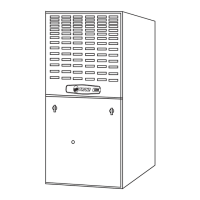
Condensing Gas Furnaces
Fan Assisted Combustion System
Upflow/ Horizontal and Downflow/ Horizontal
User’s Information Guide
SAFETY SECTION
IMPORTANT: Users MUST read all instructions in the manual. All manuals MUST be kept for future reference.
Safety signal words are used to designate a degree
or level of seriousness associated with a particular
hazard. The signal words for safety markings are
WARNING and CAUTION.
a. WARNING indicates a potentially hazardous situa-
tion which, if not avoided, could result in death or
serious injury.
b. CAUTION indicates a potentially hazardous situa-
tion which, if not avoided, may result in minor or
moderate injury. It is also used to alert against
unsafe practices and hazards involving only prop-
erty damage.
Available in French Canadian (FC)
WARNING
!
CARBON MONOXIDE POISONING HAZARD
FAILURE TO FOLLOW THE INSTALLATION AND OPER-
ATION INSTRUCTIONS FOR THE VENTING SYSTEM’S
OPERATION COULD RESULT IN CARBON MONOXIDE
POISONING OR DEATH.
32-5035-16

Questions and Answers

Summary

Safety Section

Fire and Explosion Hazards

Covers fire, explosion risks, and emergency procedures for gas leaks.

Carbon Monoxide Poisoning Hazard

Warning about carbon monoxide poisoning risk from venting system operation.

Explosion Hazard (Flood Damaged Unit)

Explosion risk from using a unit damaged by water, requires qualified service.

Explosion Hazard (Mechanical Failures)

Procedure for shutting off gas and electrical supply during mechanical failures.

General Information

Airflow and Ventilation Requirements

Ensures proper airflow for efficient combustion and safe ventilation.

Carbon Monoxide Safety

Recommends CO detectors due to risks from gas appliances.

Professional Servicing Needs

Installation and repair must be done by qualified personnel.

Homeowner Maintenance Tasks

Basic maintenance like filter replacement can be done by homeowners.

To Start the Furnace

Automatic Ignition System

Furnace uses a hot surface ignition device, no manual lighting needed.

Burn Hazard Warning

Do not attempt to manually light the furnace; risk of injury or death.

Furnace Startup Procedure

Step-by-step guide for starting the furnace, including safety checks.

Complete Furnace Shutdown

Instructions on how to properly shut down the furnace completely.

Proper Maintenance

Air Filter Cleaning and Replacement

Monthly cleaning of air filters is crucial for efficiency and preventing damage.

Filter Replacement Guidelines

Use high-velocity type filters of the same size as originally supplied.

Filter Location Details

Describes filter locations in upflow furnace blower compartments (bottom or side).

Caution: Operate with Filters

Never operate the unit with filters removed for heating or cooling.

The Problem Solver

Troubleshooting Furnace Issues

Provides a table of common furnace problems, possible causes, and remedies.

No Heat - Blower Not Operating

Troubleshooting steps for when the furnace has no heat and the blower isn't running.

Insufficient Heating Issues

Addresses problems like dirty filters or blocked registers causing insufficient heat.

Unusual Noise Troubleshooting

Guidance for diagnosing and resolving unusual noises from the furnace.

Regular Dealer Maintenance

Annual Dealer Inspection Points

Details annual inspection points recommended for a qualified service professional.

Furnace Installation Checks

Covers checks for flue, vent connector, duct connections, and physical support.

Burner and Igniter Maintenance

Covers cleaning burners, checking igniter fragility, and flame appearance.

Heat Exchanger and Circuit Protection

Inspect heat exchanger for corrosion and check circuit protection for failures.

Base Limited Warranty Gas Furnace

Warranty Coverage Terms

Details warranty coverage for residential applications in the US and Canada.

Registration and Eligibility Requirements

Outlines requirements for product registration and eligibility for warranty.

Warranty Exclusions

Lists items and conditions not covered by the limited warranty.

Additional Warranty Terms

Specifies warranty limitations, liabilities, and legal rights.

Important Product Information

Product Registration Benefits

Explains how registering products provides stronger limited warranties.

Product Information Recording

Fields to record furnace serial, model, coil info, installation date, and dealer.

Service Information Checklist

Pre-call checks for unit inoperability: power switch, fuses, thermostat.

Overview

This document is a user's information guide for Condensing Gas Furnaces with a Fan Assisted Combustion System, designed for Upflow/Horizontal and Downflow/Horizontal installations. It provides crucial information for safe operation, maintenance, and troubleshooting of the furnace.

Function Description

The furnace is a heating appliance designed to provide warm air for residential or commercial spaces. It utilizes a fan-assisted combustion system, meaning a fan helps draw air into the combustion chamber and expel exhaust gases. The "condensing" aspect refers to its high efficiency, achieved by extracting additional heat from the exhaust gases by condensing water vapor within them. This process makes the furnace more energy-efficient than non-condensing models. The furnace operates with an automatic ignition system, employing a hot surface igniter to light the burners each time the comfort control (thermostat) signals a need for heat, eliminating the need for a continuously burning pilot flame. It is designed to circulate and filter air throughout the home, contributing to both heating and air quality.

Usage Features

The guide emphasizes safety as a primary concern for users. Before operating the furnace, users are instructed to read all safety information, particularly regarding fire, explosion, and carbon monoxide hazards. In case of a gas smell, specific steps are provided, including not attempting to light any appliance, avoiding electrical switches, not using a phone in the building, and immediately contacting the gas supplier or fire department. The manual warns against relying solely on smell to detect leaks and recommends U.L. recognized fuel gas and CO detectors.

To start the furnace, users must first ensure all safety information has been read. The comfort control (thermostat) should be set to its lowest setting, and all electric power to the furnace turned off. The furnace front panel is then removed to access the main gas valve. The external main gas shutoff valve and the toggle switch on the main gas valve inside the unit must be turned to the "OFF" position. A five-minute waiting period is required to allow any gas within the unit to escape. If LP gas is used, forced ventilation may be necessary. If no gas smell is detected after this period, the external main gas shutoff valve and the toggle switch are turned to the "ON" position. The front access panel is replaced, and the main electrical supply is turned on. Finally, the comfort control is set to the desired temperature. The combustion blower will start, followed by the igniter heating up. After approximately 15 seconds, the main gas valve will open, and the burners will ignite. If the main burners fail to ignite, users are instructed to turn off the main electrical supply or lower the comfort control setting and wait five minutes before repeating the process. If the furnace still does not light, all gas and electricity to the unit should be turned off, and a servicer or gas supplier contacted.

For complete shutdown, the external main gas shutoff valve and the toggle switch on the main gas valve inside the unit should be turned to the "OFF" position, and the electrical supply to the unit disconnected. The furnace is equipped with a manual resetting flame roll-out switch located near the burners. If flame roll-out occurs, this switch automatically trips, shutting off gas flow, and must be manually reset by pressing its red button.

The guide also provides general information about the furnace's operation. It highlights the importance of unobstructed combustion and ventilating airflow, advising against blocking air openings on or around the furnace. Users are cautioned not to store gasoline, combustible materials, or other flammable liquids or vapors near the furnace. The manual stresses that the combustion air for the furnace must be fresh and uncontaminated, warning against storing products like paints, varnishes, laundry bleaches, detergents, and household cleaners nearby, as their fumes can lead to heat exchanger and vent system deterioration. For horizontally vented furnaces, the vent and inlet terminals must be located at least 12 inches (18 inches in Canada) above the expected snow accumulation level.

Maintenance Features

Proper maintenance is crucial for the furnace's efficiency and longevity. The guide recommends cleaning the air filter once a month, with a visual inspection of the furnace also recommended monthly. During seasons of frequent use, the filter should be cleaned twice a month. Users are warned never to operate the unit for heating or cooling with filters removed, as this can lead to dust and dirt buildup, blocking airflow and forcing the unit to work harder, thus increasing energy consumption. Filters can be cleaned with a vacuum or household detergent, though users should check the aftermarket filter manufacturer's instructions if applicable.

To remove the filter, users must first disconnect power to the unit before removing the blower door to avoid electric shock. Filters may be located in the furnace blower compartment (bottom or side return air inlet) and secured with retaining brackets or in a filter rack. After cleaning, the filter must be securely replaced. When replacing filters, only high-velocity types of the same size as originally supplied should be used.

The manual also outlines "Regular Dealer Maintenance" steps, which should be performed annually by a qualified service professional before the heating season. These steps include:

  1. General Inspection: Examining all flue product carrying areas (chimney, vent connector) for obstructions, ensuring the vent connector is properly installed and free of corrosion, checking the return air duct connection for physical soundness and sealing, verifying the furnace's physical support for stability and seals, looking for obvious signs of deterioration, ensuring burner flames are in good adjustment without erratic behavior, and confirming that fresh air inlet and vent are not blocked.
  2. Blowers: While blower motor bearings are factory lubricated and typically do not require servicing under normal conditions, annual cleaning of the blower wheel and housing is recommended for maximum air output. This must be performed by a qualified servicer.
  3. Igniter: The hot surface igniter is fragile and should be handled with care during servicing.
  4. Burner: Gas burners do not typically require scheduled servicing, but yellowing flames or delayed ignition indicate a need for service. For best operation, burners should be cleaned annually using brushes and a vacuum cleaner. Users are cautioned to turn off gas and electric power before cleaning and to be careful not to break the igniter when removing burners. For LP (propane) units, some light yellow tipping of the outer mantle is normal, but natural gas units should not have yellow-tipped flames.
  5. Heat Exchanger/Flue Pipe: These components must be inspected for signs of corrosion and/or deterioration at the beginning of each heating season by a qualified service technician and cleaned annually.
  6. Circuit Protection: If the blower or gas valve fails, the cause could be a tripped circuit breaker or a blown fuse, which should be replaced or reset.
  7. Operation: The furnace should not be operated in a corrosive atmosphere, and substances like paint solvents, cleaning chemicals, and bleaches should not be used in its vicinity.
  8. Condensate Drains: If a cooling coil is installed, condensate drains should be checked and cleaned periodically to ensure free drainage and prevent water damage. The furnace drain should also be checked and cleaned at the start of each heating season.
  9. Air Circulation: The blower can be operated continuously for both heating and cooling to ensure constantly filtered air and more even temperatures. However, in humid climates (above 60% relative humidity), the fan should be used in "AUTO" mode during cooling.

The "Problem Solver" section provides a table of common problems, possible causes, and remedies, encouraging users to check these before calling for service. It also advises against "do-it-yourself" repairs on in-warranty units, as this could void the warranty. For cleaning the furnace's enamel finish, ordinary soap and water are recommended, with household detergent for stubborn grease spots, and a warning against lacquer thinner or other synthetic solvents.

Trane XV95 Specifications

General IconGeneral
Blower MotorVariable-speed
Fuel TypeNatural Gas
Ignition SystemHot Surface Ignition
Heating Capacity40, 000 to 120, 000 BTU/h
Gas ValveModulating
WarrantyLimited lifetime warranty on heat exchanger, 10-year parts warranty
StagesTwo-stage heating

Related product manuals