45
CABLE INSPECTION AND MAINTENANCE
One of the most critical areas that require frequent inspection on any weight machine is the cable or belt system that
lifts the weight stack if the machine is equipped with those items. Sudden failure of a worn cable can, in some instances,
result in injury to the user. It is the responsibility of the facility to inspect the cables frequently. Cables are components that
wear over time. This means that the more often a piece of equipment is used, the greater the likelihood that cable wear
will occur. This holds true for equipment made by any manufacturer and applies to urethane belts as well as wire rope
cables. Listed below are the areas of the cable that require inspection.
IMPORTANT! TRUE recommends that all cables be replaced on an annual basis to maintain the safety of all users.
CABLE WEAR
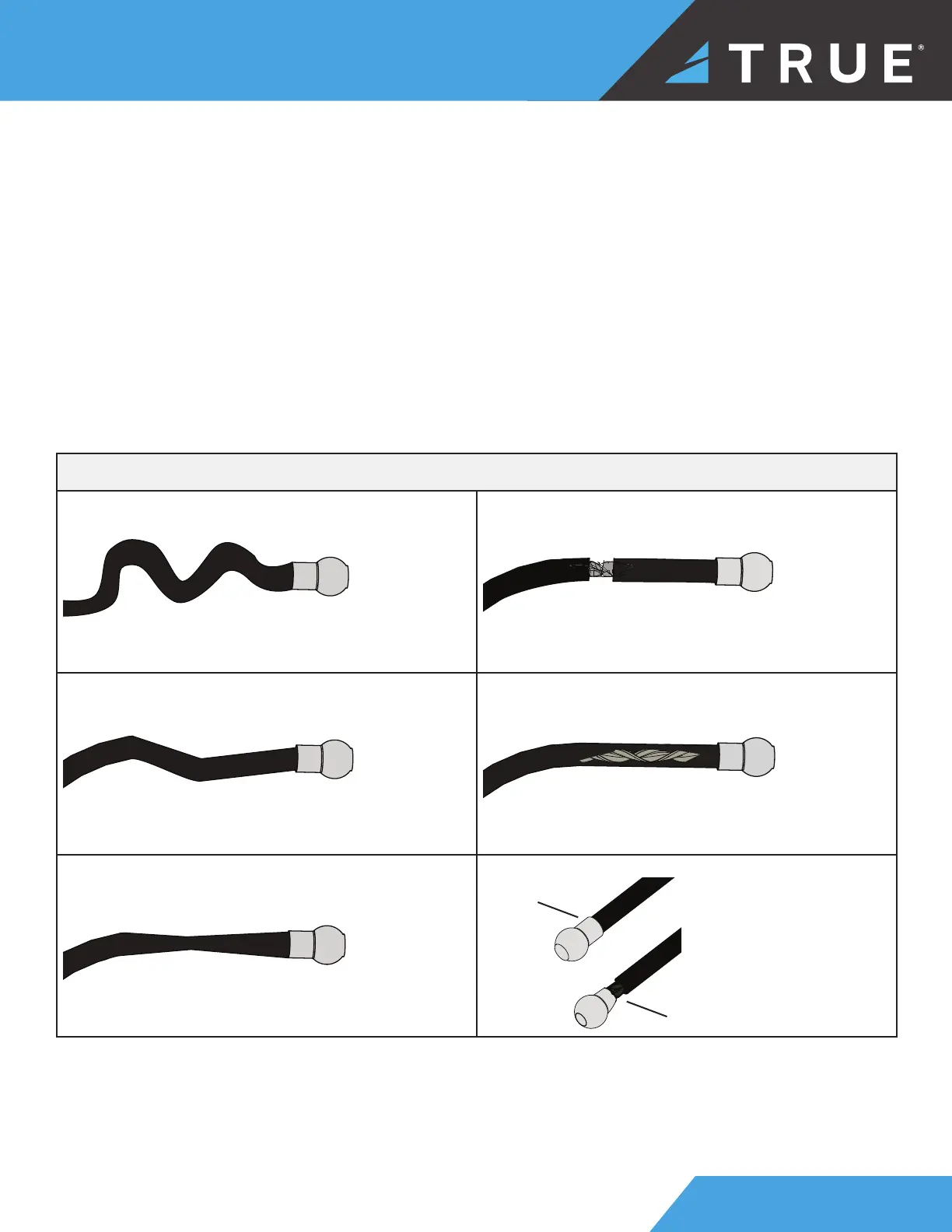
Inspect all cables for any signs of wear. Pay close attention to the cable in the area of the end fi ttings and attachment
points. Inspect the areas around the pulleys and/or cams. Shown below are examples of cables that exhibit signs of
potential failure. If any of these conditions are apparent, the machine should immediately be taken out of service and
repaired. Be sure to use only cables supplied by TRUE. DO NOT use cables that have fi ttings attached with hand-crimp
tools.
Examples of Cable Wear
Twisted Cable (Zig-Zag Pattern) Break in the Cable Cover
Break or Bend in the Cable Tear in the Cable Cover
Stretched Cable Covering Crimp Connector Dislodged
Bad
Good


 To Next Page