28
34020-01190 - 01 - 03/2022
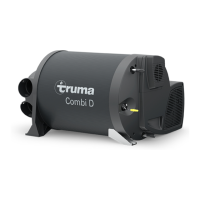
Installation Combi D
EN
WARNING
Risk of fire due to installation on flamma-
ble materials
Do not install the Combi D on highly flamma-
ble floor coverings.
DANGER
Risk of suocation due to exhaust inside
the vehicle
Risk of suocation due to exhaust gases be-
cause of incorrect installation or use of parts
other than original Truma parts for the exhaust
gas system.
Use only original Truma parts for the exhaust
gas system.
Observe the installation instructions for the
exhaust gas system.
•
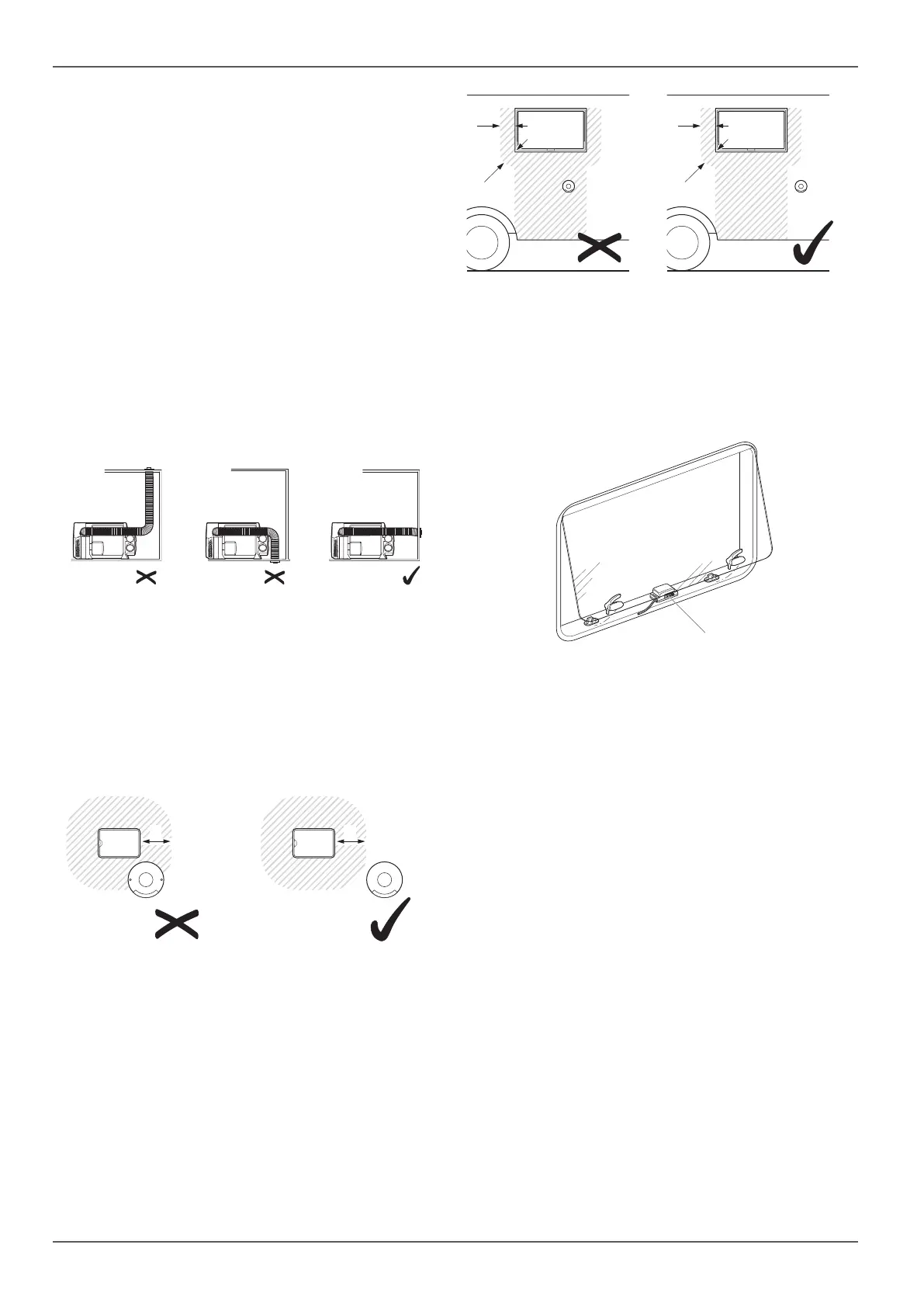
The cowl must be a wall cowl. Roof and floor cowls
are forbidden (Fig. 2).
Fig. 2
So as not to damage components inside the heater, do
not fasten any cables or water pipes to the housing of
the heater.
Install the wall cowl so that there is no fuel tank filler
neck or fuel tank breather opening within 500 mm (R).
(Fig. 3). There must also be no living area ventilation
openings or window openings within 300 mm (Fig. 4).
R R
Diesel Diesel
Fig. 3
R = 500mm
a
a
a
a
Fig. 4
a = 300mm
•
When installing the wall cowl below a window that
can be opened, an electric window switch must be
installed (Fig. 5-1) (part no. 34000-85800).
1
Fig. 5
•
Position the wall cowl so that exhaust gases cannot
enter the vehicle.
•
In a van, install the wall cowl so that the open sliding
door cannot obstruct the wall cowl.
•
The gap between the exhaust gas system and neigh-
bouring heat-sensitive components must be at least
10mm.
•
Install the wall cowl only in a vertical side wall (not a
sloping wall).
•
If a bike rack is installed at the back of the vehicle,
the wall cowl must not be installed on the rear of the
vehicle.
•
Do not install the wall cowl beneath a slide-out.
The minimum distance to the side of a slide-out is
300mm.
•
Keep flammable objects away from the heater.
•
To not install any objects or fixtures (cables) above
the heater that could become loose during operation
and fall onto the heater.
•
Protect the top of the heater with a cover (Fig. 6-1)
so that no objects can be placed directly on the
heater.


 To Next Page