
 Need help?
Do you have a question about the U.S. Solid USS-FX and is the answer not in the manual?
Lists practical uses such as mixing, cell disruption, and catalyzing reactions.
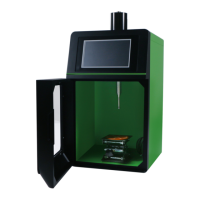
The U.S. Solid Ultrasonic Processor, model USS-FX, is a versatile and multi-purpose instrument designed to induce cavitation in liquids using intense high-frequency sound. This process is highly effective for a range of applications, from biological sample preparation to chemical reactions. The core function of the device is to generate powerful ultrasonic waves that create and collapse microscopic bubbles (cavitation bubbles) within a liquid medium. The collapse of these bubbles releases significant shearing energies, which can disrupt various materials at a molecular level.
In biological applications, the ultrasonic processor is adept at disrupting animal and plant tissues, lysing yeast, bacteria, and spores. This makes it an invaluable tool in laboratories for cell disruption, DNA fragmentation, and protein extraction. Beyond biology, its capabilities extend to non-biological applications such as emulsification, where it can create stable mixtures of immiscible liquids. It is also highly effective for nanoparticle dispersion, ensuring uniform distribution of particles in a solution, and for intense washing processes. Furthermore, the device can accelerate chemical reactions, a field known as sonochemistry, by providing the necessary energy for molecular transformations.
The operational principle of the USS-FX involves an ultrasonic power supply and an ultrasonic transducer assembly, which includes a generator and a probe. The power supply converts standard single-phase electricity (110 VAC, 60 Hz) into an alternating electrical signal in the 20-25 kHz range. This conversion is managed by a sophisticated circuitry comprising a power rectifier, power switcher, a frequency conversion system, power amplifier, a phase-locked frequency automatic tracking device, power regulator, power detector, power protector device, and a microcomputer controller. This intricate system ensures precise control over the ultrasonic output.
The transducer subassembly, driven by the appropriate impedance and power from the supply, generates mechanical energy. This is achieved through a piezoelectric resonator, which converts electrical energy into mechanical vibrations. These vibrations are then focused and amplified by a tuned titanium metal horn, or probe. When the probe tip is immersed in a sample solution, it emits intense, high-frequency sound waves. These waves induce cavitation, leading to the formation and rapid collapse of bubbles. The resulting high shear forces are powerful enough to break or tear open cells and even cleave covalent bonds, making the device suitable for fragmenting high molecular weight DNA.
The USS-FX is designed with several user-friendly features to enhance its functionality and ease of use. It boasts automatic frequency tracking, which routinely scans and tracks within the 20 kHz frequency range, ensuring consistent performance. An auto-tuning function further simplifies operation by optimizing processing efficiency. The device includes a temperature indicator and controller, allowing users to monitor and manage the sample temperature, which is crucial for heat-sensitive materials. A 99-hour total working time controller, adjustable from 1 second to 99 hours, with a count-down time display, provides precise control over processing duration. Automatic amplitude compensation ensures stable and repeatable results, while a power-emitted display offers accuracy and variable power output.
For user comfort and safety, the USS-FX integrates a soundproof box to significantly reduce the cavitation sound emitted during processing. This feature is particularly beneficial in laboratory environments where noise reduction is important. The device is equipped with a 7-inch color industrial touch screen, which integrates all functions into a clear and intuitive display, making it easy to navigate and set parameters.
When it comes to operation, the device offers various modes and settings. Users can adjust the power output using intuitive up and down buttons on the touch screen. The ON/OFF button allows for easy starting and pausing of the working process. The settings menu provides access to advanced controls, including total working time, pulse-on time (time the machine produces ultrasound), pulse-off time (time the machine is on but stops producing ultrasound), power percentage, and shutdown temperature. The shutdown temperature feature ensures that the machine stops working if the sample reaches a predefined temperature, protecting sensitive samples from overheating. Settings can be saved for future use, and a "Back" button allows navigation to previous interfaces.
The USS-FX offers three distinct operating modes: Continuity Mode, Time Mode, and Pulse Mode. In Continuity Mode, the machine works continuously until manually stopped, ideal for processes requiring prolonged sonication. Time Mode allows users to set a specific working duration, after which the process automatically stops. Pulse Mode is particularly useful for heat-sensitive samples, as it alternates between periods of ultrasound production (pulse-on) and pauses (pulse-off), allowing for cooling and preventing excessive heat buildup. This pulsed operation has been proven to yield better effects than continuous long-time operations for many applications.
Maintenance and proper usage are critical for the longevity and effective performance of the USS-FX. Users are strongly advised never to start ultrasonic output when the probe tip is exposed to air, as this can damage the energy converter and ultrasonic wave generator. The apparatus switches the power supply without an industrial frequency transformer, so users should avoid randomly touching internal components after opening the generator housing to prevent electric shock. The device does not require warm-up and should always be properly grounded. It should be operated in an environment free from moisture, direct sunshine, and corrosive gases.
Ensuring the ultrasonic probe is correctly positioned is vital. The platform must be tightly fixed to the rod, and the ultrasonic probe should be immersed in the liquid, not touching the container walls. The probe tip should be inserted 5 mm to 10 mm beneath the liquid surface. For larger sample volumes, a distance greater than 30 mm between the probe tip and the container's bottom is recommended. For smaller samples or lower power settings, the probe tip can be as close as 10 mm from the bottom. When holding the transducer unit manually, it should only be held at the SLEEVE position; other positions are not allowed.
Due to the cavitation effect, liquid temperature can increase rapidly during crushing. Users must monitor temperatures, especially for different cell types, and are advised to adopt multiple short-time crushing cycles (not longer than 5 seconds each time) combined with ice bath cooling. Multiple short-interval operations (e.g., 1-2 seconds working time, 1-2 seconds interval time) are often more effective than continuous long-time operations, as the long interval time helps prevent liquid heating. Continuous long-time operations can also lead to no-load operations, shortening the apparatus's service lifetime.
Over time, the horn end may become rough due to cavitation corrosion. It is important to smooth it with an oil stone or rasper, as a rough surface can negatively influence working effects. For homogenization, the volume of homogenization media should generally be 3 to 10 times the net volume of the solid sample. Pre-chopping solid samples into pieces less than 1 mm in cross-section can significantly reduce homogenization time.
Heating of the sample during long runs can be minimized by nesting the sample vessel in an outer vessel containing ice, selecting longer interval (gap) times in pulse mode, or using a specially fabricated leptosomatic ultra-sonication vessel (available as an accessory). Users should be aware that transient (millisecond) heating and free radical formation in the immediate vicinity of the ultrasonic probe tip are unavoidable. This should be considered when working with samples sensitive to heat or free radical damage. To prevent overload when using smaller ultrasonic probes (2, 3, and 6 mm tip diameters), the ultrasonic power wheel should be rotated to a lower power setting.
For small liquid volumes (less than 5 ml), an ultrasonic probe with a tip diameter of 2 to 3 mm is recommended. These smaller probes should be inserted into the liquid at a depth of about 1 cm. The distance between the tip of the ultrasonic probe and the container bottom will vary with the power setting but should not be less than 0.5 cm.
The USS-FX also features specific procedures for removing and installing amplitude components. When removing the amplitude, the energy converter should be placed on a bench covered with soft materials. A small wrench is inserted into the wrench hole on the horn, and a big wrench into the wrench hole on the energy converter. The big wrench should be positioned to the left and the small wrench to the right. Facing the horn, with the big wrench in the left hand and the small wrench in the right, both wrenches are turned downwards simultaneously to loosen the component. If the M10 screw is attached to the horn when changing it, the screw should be manually unscrewed from the lever and screwed halfway into the energy converter. If the screw cannot be manually unscrewed, lightly knocking it on wooden materials can help.
For installing amplitude, the amplitude is screwed on manually. The energy converter is again placed on a soft-covered bench. Wrench1 and wrench2 are placed on buckle2. Facing the horn, with wrench1 in the left hand and wrench2 in the right, both wrenches are turned downwards simultaneously to tighten the component. These detailed instructions ensure proper handling and maintenance of the device's critical components.
 General
| Category | Function Generator |
|---|---|
| Model | USS-FX |
| Manufacturer | U.S. Solid |
| Output Impedance | 50Ω |
| Waveforms | Sine, Square, Pulse, Triangle |
| Display | LCD |

 To Next Page