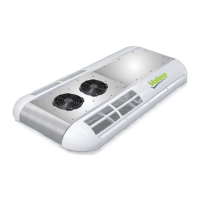
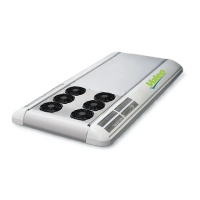
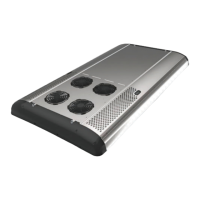
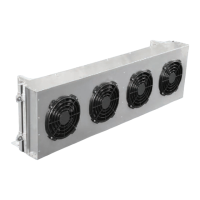
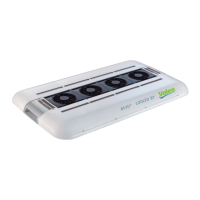
This document is a comprehensive owner's manual and warranty certificate for Valeo air conditioning systems designed for mini-buses and micro-buses. The manual covers several models, including CC 140S, CC 150S, CC 160S, CC 160WCT MPHE, CC 165W, CC 165WCT MPHE, CC 175W, and CC 175WCT MPHE. It provides essential information for the proper use, maintenance, and identification of these air conditioning units.
Function Description
The Valeo air conditioning systems are designed to provide comfortable and tranquil conditions for passengers in vans, micro, and midi buses, commuter vehicles, articulated buses, and double-decker buses. These systems utilize modern and high-quality components to ensure effective air conditioning. The manual emphasizes the importance of proper installation and maintenance to guarantee optimal performance and longevity of the equipment.
The air conditioning system operates through a series of interconnected components. Refrigerant fluid (R134a) circulates through the system, absorbing heat from the interior of the vehicle via the evaporator and releasing it to the outside through the condenser. The compressor is responsible for increasing the pressure and temperature of the refrigerant, facilitating its circulation. Drier filters remove impurities and moisture from the refrigerant, while expansion valves regulate the flow of refrigerant into the evaporator. Fans, both in the evaporator and condenser units, ensure adequate airflow for heat exchange. The system is controlled by SBU400/410 controllers, which allow users to manage various functions such as temperature, fan speed, and operating modes.
Important Technical Specifications
The manual provides detailed technical specifications for each model, covering aspects such as cooling capacity, refrigerant type and quantity, and electrical characteristics.
Cooling Capacity:
- CC 140S: 40,000 BTU/h (11.5kW)
- CC 150S: 50,000 BTU/h (14.5kW)
- CC 160S: 60,000 BTU/h (17.5kW)
- CC 165W: 75,000 BTU/h (21kW)
- CC 175W: 75,000 BTU/h (21kW)
- CC 160WCT MPHE: 60,000 BTU/h (17.5kW)
- CC 165WCT MPHE: 75,000 BTU/h (19kW)
- CC 175WCT MPHE: 75,000 BTU/h (21kW)
Refrigerant:
All models use R134a refrigerant.
- CC 140S: 2.0 kg
- CC 150S: 2.5 kg
- CC 160S: 3.0 kg
- CC 165W: 3.5 kg
- CC 175W: 3.5 kg
- CC 160WCT MPHE: 2.0 kg
- CC 165WCT MPHE: 2.5 kg
- CC 175WCT MPHE: 2.5 kg
Compressor Displacement:
- SP16: 163 cm³
- SP22: 212 cm³
- SP32: 313 cm³
Maximum Allowed Rotation:
- SP16: 6,000 RPM
- SP22: 4,500 RPM
- SP32: 4,500 RPM
Lubricating Oil:
- SP16: 150 ml (without Defroster), 250 ml (with Defroster)
- SP22: 180 ml (without Defroster), 350 ml (with Defroster)
- SP32: 180 ml (without Defroster), 500 ml (with Defroster)
Clutch Type: Electromagnetic 12V / 24V.
The electrical system is managed by SBU400/410 controllers, which include various inputs for sensors (high pressure, low pressure, temperature, etc.) and outputs for controlling components like fans, solenoid valves, and the clutch. A relay board (SBF2XX) is used for power distribution to fans and other components.
Usage Features
The SBU400/410 controllers offer a user-friendly interface with several operational modes and settings:
- Display: Shows current room temperature and error warnings.
- Status Light: Indicates if the system is enabled.
- On/Off Button: Toggles the system on or off.
- Auto Button: Activates the Evaporator Fan Automatic Start Up.
- AC Button: Enables or disables the cooling function.
- Evaporator Fan Speed Button: Allows manual control of the evaporator fan speed, with options for increasing (UP) or decreasing (DOWN) the speed.
- Temperature Desired UP/DOWN Buttons: Adjusts the desired room temperature.
- Ventilation Button: Controls the ventilation and recirculation functions.
- Free Button: Reserved for future functions.
Operating Modes:
- Auto Mode: When enabled, the system automatically controls evaporator fans and shuts off evaporator fans automatically.
- Heating Mode: Controlled by set-point and parameters P23 and P24, allowing for temperature adjustment.
- Desired Temperature Level SET POINT: Temperature can be adjusted between 17°C and 28°C through 0.5°C gaps.
- Evaporator Fan Speed Configuration: The automatic fan control mode can be turned off, and the desired room temperature (set point value) can be kept the same. Fan speed can be manually increased or decreased.
- Enabling/Disabling Ventilation Function: The ventilation function can be enabled or disabled, which affects external air intake and recirculation.
Safety Precautions:
The manual outlines several safety precautions:
- Personal Protection: Use IPE (Individual Protection Equipment) when handling refrigerant, refrigerant oil, battery acid, waste launched, engine high temperature, and noise.
- High Pressure: Refrigerant is in liquid state and high pressure can cause potential risk.
- Hoses: Check manometer hoses for good conditions.
- Hot Surface: Compressor discharges, exhaust pipes, and other engine components can be extremely hot.
- Rotation Components: Fans, pulleys, and belts are visible and can cause injury.
- Welding: Welding can cause burns and spray toxic gases.
- Toxic Gases: Refrigerant gas can cause serious breathing illness.
Maintenance Features
The manual provides a detailed preventive maintenance schedule to ensure the longevity and efficient operation of the air conditioning system.
Preventive Maintenance Frequency Check List:
Weekly:
- Clean or change the return air filter.
- Check the belt stretchiness condition and compressor with alternator alignment.
- Check the water level of the radiator reservoir.
Monthly:
- Accomplish the weekly check list.
- Clean the condenser capillary tube coil.
- Check if the evaporator hatches are closed to avoid air intake into the equipment.
- Check the refrigerant charge.
- Check the compressor oil level.
- Test the equipment operation functions (cool/fan high and low speed/heat/dry/air renewing).
- Lubricate the components of the compressor support (articulation (elbows), axles, bushing and pulleys).
- Operate the heating system (if any) for at least 30 minutes.
Trimestral:
- Accomplish the monthly check list.
- Measure the exhaust suction pressure, temperature, and suction line condition.
- Check the tightening of alternator potency cables fuses in general, electric board, and start motor.
- Measure the condenser and evaporator fan flow consumption.
- Measure the electromagnetic clutch coil.
- Measure the Voltage and Current from alternator.
Semester:
- Accomplish the trimestral check list.
- Clean the evaporator capillary tube coil.
- Clean the evaporator drain.
- Check out the oil retainer felt of the compressor sealing part.
- Look carefully if there is any leakage at coupling spots (oil leakage, refrigerant leakage).
- Check if there are any loose, free, damaged, broken, worn parts, rusty, melting, cracked or bad fractioning to the bus body.
Yearly:
- Accomplish the semester check list.
- Test the compressor efficiency at 1500 RPM.
- Make notes about the compressor oil pressure at 1000 RPM.
- Check the opening and closing pressures of high and low pressure switches.
- Check the screws or bolts that attach the compressor support and equipment.
- Clean the air conditioning body, getting rid of any dust/scrap at components (evaporator, condenser, clutch compressor, alternator, alternator, relay, and control board).
Specific Maintenance Tasks:
- Refrigerant Gas R134a: Prevent refrigerant from being spoiled at the atmosphere.
- Dry Filter: Change the drier filter every 3 years or when needed.
- Compressor Sealing Part: Check for leakage and replace if necessary. The sealing part is lubricated by compressor oil.
- Heating System: Operate the heating system frequently to prevent buildup of solid system particles.
- Oil: Periodically change the air system oil every two years or 10.000 working hours.
- Ducts: Clean the air ducts every three months.
- Pulley Belts: Increase the lifetime of belts by checking their strength/stretchiness. Replace worn belts to avoid damage to the pulley.
Warranty Terms:
The warranty is valid for a period specified in the warrant certificate, provided the equipment is installed and maintained correctly. The warranty covers manufacturing defects and parts, but not damages caused by improper use, neglect, accident, or unauthorized maintenance. The manual also specifies that the warranty does not cover displacement for repair, costs for authorized service providers, or lack of preventive maintenance.
Sustainability:
Valeo is committed to sustainability and proper disposal of products. The manual encourages customers to use their authorized service network to discard products in an environmentally sound and safe manner. It also states that the environmentally adequate destination of components (parts, oil, refrigerant) is required according to Law 12,305 / 2010.
This comprehensive manual serves as a vital resource for owners and technicians, ensuring the safe, efficient, and long-lasting operation of Valeo air conditioning systems in mini-buses and micro-buses.

 Need help?
 General

 To Next Page