25
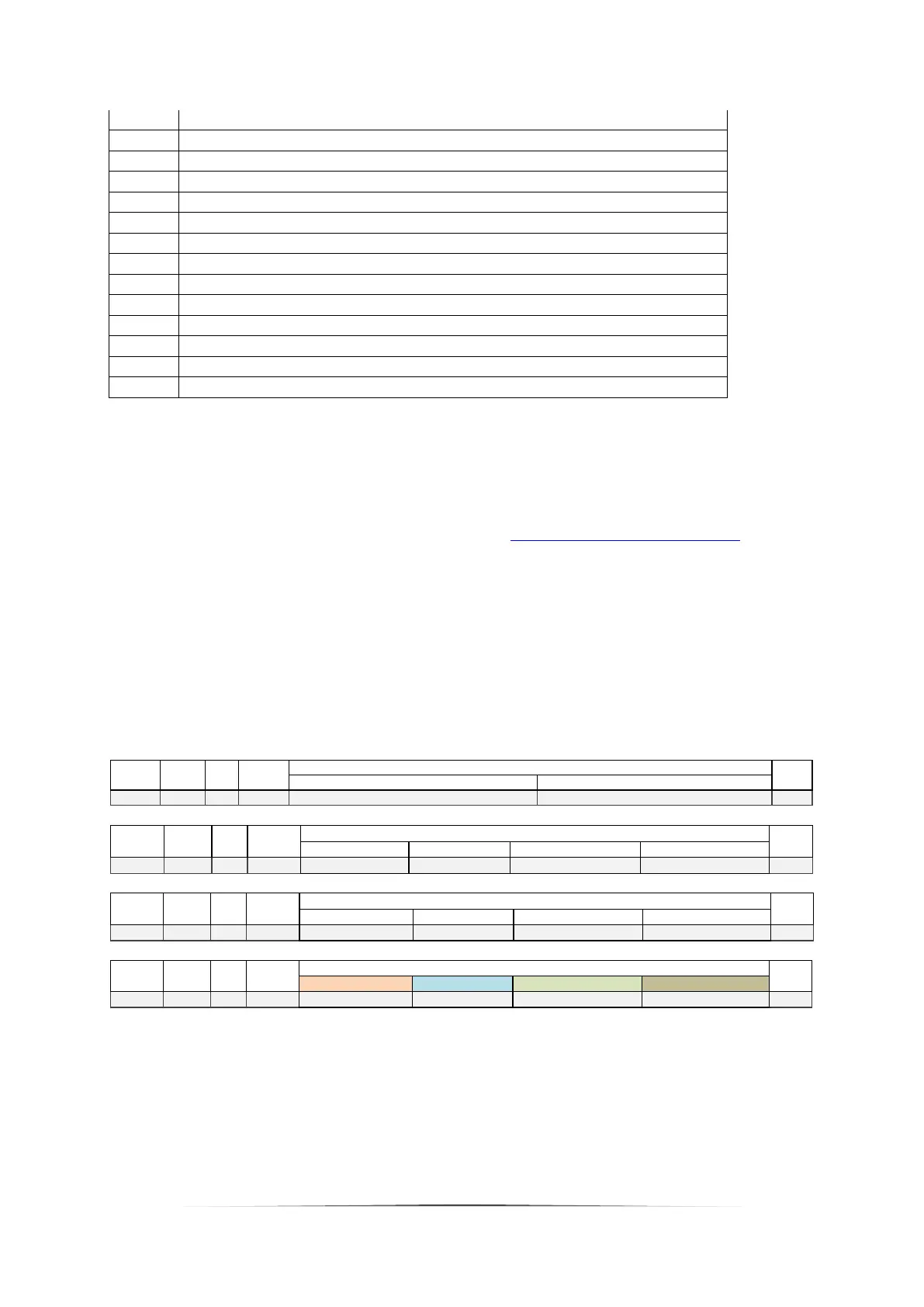
ERROR_NR_ADC_I_DISCHARGE_MIN_SCALE
ERROR_NR_ADC_I_DISCHARGE_MAX_SCALE
ERROR_NR_I_DISCHARGE_FET_ERROR
ERROR_NR_I_CHARGE_FET_ERROR
ERROR_NR_I_DISCHARGE_CHARGE_FET_ERROR
ERROR_NR_TEMP_DISCHARGE_ERROR_LOCK
ERROR_NR_TEMP_CHARGE_ERROR_LOCK
ERROR_NR_OVER_CHARGE_CURRENT_ALARM_RECUPERATION
ERROR_NR_OVER_CHARGE_CELL_VOLTAGE_ALARM_RECUPERATION
ERROR_NR_24V_SPN_MIN_ERROR
ERROR_NR_24V_SPN_MAX_ERROR
ERROR_NR_CAN_NETWORK_NOT_CONF_NODE_ID
ERROR_NR_CAN_NETWORK_DOUBLE_NODE_ID
ERROR_NR_PARAMETER_CONFIGURATION_ERROR
12 The CAN Protocol
The communication between all batteries in the system, the charger and the application (optional) is
done via the standardized CANopen protocol. For more detailed information about CANopen please
visit the official website from “CAN in Automation” (CiA) at https://www.can-cia.org/canopen/.
At normal operation, all necessary data is transmitted via PDOs in cyclic intervals. If the application
needs more information in addition, more data can be accessed via SDO request to the master
battery.
12.1 Communication within the battery system
All data, which is needed to operate a battery system, is transferred via Process Data Objects (PDOs).
Each battery transmits data in cyclic intervals with the following definition based on Node ID 1. PDOs
sent by other Node IDs increase the CAN-ID, e.g. TPDO_1 sent by Node ID 4 has CAN-ID 0x184.
12.2 Communication sent by the battery master (for application)
The battery, which is configured as the master, sends cyclic data of the complete system. Every state
of each module is summarized in TPDO_8. In this way only one PDO needs to be checked in case of
monitoring the system for faults and errors.


 To Next Page