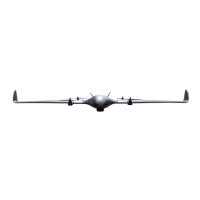
The Validator will check your mission for feasibility, sanity and safety. It will also check weather conditions,
terrain altitudes and no-fly zones. The DeltaQuad Mission Validator can not be used as an authoritative
validation, it is provided as an additional verification system and all validations should be verified manually.
A vertical takeoff or landing consumes significantly more energy than a fixed wing flight. For maximum
efficiency an altitude between 20 and 30 meters is recommended for landing. A takeoff altitude should
be at minimum 60 meters for all safety systems to function.
The altitude in a VTOL LAND command defines the expected touch down altitude, the back transition
(fixed wing to quadcopter flight) in this command is performed at the altitude of the last waypoint.
Most wind forecasts are based on ground level wind. Even 10 meters above the ground the wind can be
significantly stronger. The will indicate estimated wind levels at transition
and cruise altitude.
DeltaQuad Mission Validator
During the transition phase of the VTOL TAKEOFF the vehicle has limited navigational abilities and
could drift from its intended direction. The transition should therefore always be performed at an altitude
where it is safe for the vehicle to perform the transition in any direction.
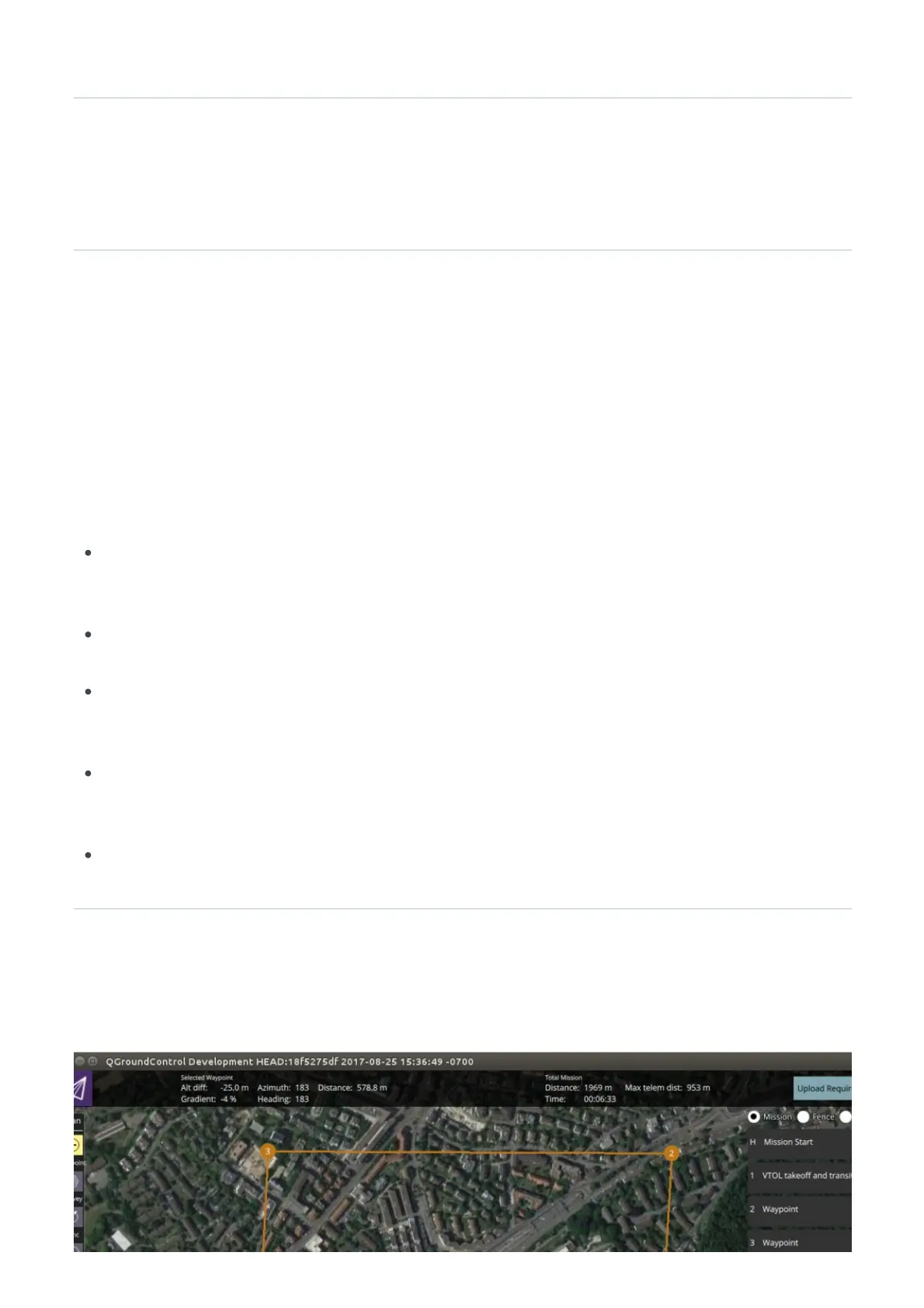
Validate your mission in the DeltaQuad Mission Validator


 To Next Page
 Loading...