
 Need help?
Do you have a question about the Volkswagen CC 2014 and is the answer not in the manual?
Details the engine configuration, displacement, and compression ratio for both models.
Lists horsepower, torque, and fuel requirements for each engine variant.
Covers engine arrangement, block, crankshaft, cylinder head, and valvetrain.
Specifies the drive type for each model variant (Front-wheel drive vs. 4MOTION).
Covers brake specifications, ABS, and stability control systems.
Lists the estimated fuel economy for city and highway driving.
The 2014 CC is a sophisticated sedan designed to offer a blend of performance, comfort, and advanced technology. It is available in two primary configurations: the CC 2.0T and the CC V6 4MOTION, catering to different driving preferences and needs.
The CC serves as a versatile passenger vehicle, capable of comfortably transporting up to five occupants. Its primary function is to provide reliable and enjoyable transportation, whether for daily commutes, long-distance travel, or leisure drives. Both models are engineered to deliver a refined driving experience, characterized by responsive handling, a smooth ride, and efficient power delivery.
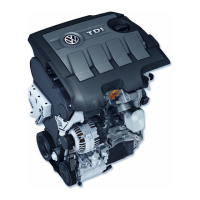
The CC 2.0T, with its turbocharged inline four-cylinder engine, is designed for drivers who appreciate a balance of spirited performance and fuel efficiency. The turbocharger and intercooler enhance the engine's power output, providing brisk acceleration and ample passing power, while the FSI (Fuel Stratified Injection) technology optimizes fuel combustion for improved economy. This model is primarily front-wheel drive, making it suitable for a wide range of driving conditions, particularly in areas where all-wheel drive is not a primary concern.
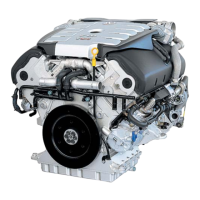
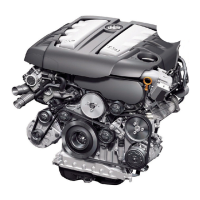
The CC V6 4MOTION, on the other hand, is tailored for those seeking higher performance and enhanced traction. Its VR6 engine, a compact V6 design, delivers a more robust power output, providing a more exhilarating driving experience. The 4MOTION permanent all-wheel-drive system, featuring a Haldex center differential, automatically distributes power between the front and rear wheels as needed. This system significantly improves traction and stability, especially in adverse weather conditions like rain or snow, or on challenging road surfaces. The all-wheel drive also contributes to a more confident and controlled feel during spirited driving.
Both models incorporate advanced braking systems designed for safety and control. Power-assisted, dual-circuit disc brakes on all four wheels provide strong and consistent stopping power. The Anti-Lock Braking System (ABS) is standard, preventing wheel lock-up during hard braking and allowing the driver to maintain steering control. This is crucial for avoiding obstacles in emergency situations. Furthermore, the Electronic Stability Control (ESC) system is a key safety feature, continuously monitoring vehicle dynamics and intervening by selectively applying brakes or reducing engine power to help prevent skids and maintain the driver's intended path.
The steering system in both CC models is a rack-and-pinion design with electric power assist. This system provides precise and responsive steering, making the vehicle easy to maneuver in various driving scenarios, from tight parking lots to winding roads. The electric power assist adapts to driving speed, offering lighter steering effort at low speeds for easy parking and a firmer feel at higher speeds for enhanced stability and control.
The CC is designed with a focus on driver and passenger comfort, convenience, and safety.
The cabin is configured to accommodate five occupants, offering a comfortable and refined environment. The seating is designed for support during long journeys, and the overall interior layout is ergonomic, placing controls within easy reach of the driver. The passenger volume and cargo volume are generous for a compact sedan, allowing for comfortable travel with luggage or groceries. The interior dimensions, including headroom, shoulder room, and legroom, are carefully optimized to provide ample space for occupants in both the front and rear seats.
The CC 2.0T offers flexibility with both manual and automatic (DSG) transmission options. The manual transmission provides a more engaging driving experience for those who prefer direct control over gear changes. The DSG (Direct Shift Gearbox) is an advanced automatic transmission that combines the efficiency of a manual with the convenience of an automatic, offering quick and smooth shifts. The CC V6 4MOTION comes exclusively with a 6-speed automatic transmission with Tiptronic®, allowing for both fully automatic operation and manual gear selection for a sportier feel.
Both models are equipped with an 18.5-gallon (70 L) fuel tank, providing a substantial range between fill-ups. The CC 2.0T requires premium fuel, which is typical for turbocharged engines to ensure optimal performance and prevent knocking. The CC V6 4MOTION also requires premium fuel for its higher-performance engine.
The CC offers various wheel and tire configurations to suit different aesthetic and performance preferences. The CC 2.0T can be equipped with either 17-inch or 18-inch aluminum-alloy wheels, paired with all-season tires. These tires are designed to provide good performance in a variety of conditions, including dry, wet, and light snow. The CC V6 4MOTION typically comes with 18-inch aluminum-alloy wheels and all-season tires, complementing its higher performance capabilities and all-wheel-drive system.
The CC features a sleek and aerodynamic exterior design, contributing to both its aesthetic appeal and its efficiency. The low drag coefficient of 0.30 for both models helps reduce wind resistance, which can improve fuel economy and reduce wind noise at higher speeds. The ground clearance is consistent across both models, providing adequate clearance for most urban and highway driving conditions.
Beyond ABS and ESC, the CC is built with a unitary construction body, meaning the body and chassis are integrated into a single structure. This design enhances rigidity and crashworthiness, providing a strong safety cage for occupants. The body material is steel stampings, chosen for its strength and ability to absorb impact energy in a collision.
The 2014 CC is designed with several features that contribute to ease of maintenance and long-term reliability.
Both engines are designed with durability in mind. The 2.0T engine features a cast-iron cylinder block and a forged steel crankshaft, known for their robustness. The aluminum-alloy cylinder head is lightweight and efficient for heat dissipation. The valvetrain, with double overhead camshafts and hydraulic lifters, is designed to be maintenance-free, eliminating the need for periodic valve adjustments. The variable intake timing further optimizes engine performance and efficiency.
The V6 4MOTION engine also utilizes a cast-iron cylinder block and a cast-iron crankshaft with seven main bearings, ensuring strength and smooth operation. Its aluminum-alloy cylinder head and double overhead camshafts, along with maintenance-free hydraulic lifters, contribute to its reliability. The variable intake and exhaust timing systems are designed to optimize engine breathing across the RPM range, enhancing both power and efficiency without requiring frequent adjustments.
The suspension systems in both models are designed for durability and minimal maintenance. The front suspension is a strut-type design with lower control arms, coil springs, and telescopic dampers. This robust setup provides a good balance of ride comfort and handling. The rear suspension is a multilink design, also with coil springs and telescopic dampers. Multilink suspensions are known for their ability to provide precise wheel control and a comfortable ride. Anti-roll bars are included in both front and rear suspensions to reduce body roll during cornering, improving stability and handling. These components are generally long-lasting, with routine inspections for wear and tear being the primary maintenance requirement.
The brake system, while critical for safety, is also designed for straightforward maintenance. The use of disc brakes on all four wheels means that brake pad and rotor replacement is a relatively simple procedure when wear occurs. The electronic brake force distribution system, integrated with ABS, ensures optimal braking performance by distributing braking force efficiently to each wheel, which can also contribute to more even wear of brake components.
The electro-mechanical parking brake is a modern convenience that also simplifies maintenance compared to traditional cable-operated parking brakes. It eliminates the need for cable adjustments and is generally more reliable, requiring less intervention over the vehicle's lifespan.
The unitary construction of the body and chassis means that the entire structure acts as a single, strong unit. This design not only enhances safety but also contributes to the vehicle's long-term structural integrity, reducing the likelihood of rattles or structural issues over time.
The fuel tank capacity is consistent across both models, simplifying refueling logistics. Regular checks of other fluid levels, such as engine oil, coolant, and brake fluid, are standard maintenance procedures that are easily performed.
Overall, the 2014 CC is engineered to be a reliable and enjoyable vehicle, with features that support both its performance capabilities and its long-term usability. Its design incorporates advanced technologies for safety and comfort, while also considering the practical aspects of ownership and maintenance.
 General
| Displacement | 2.0 L |
|---|---|
| Horsepower | 200 hp |
| Torque | 207 lb-ft |
| Cylinders | 4 |
| Aspiration | Turbocharged |
| Horsepower RPM | 5100 rpm |
| Torque RPM | 1700-5000 RPM |
| Displacement CC | 1984 cc |
| Compression Ratio | 9.6:1 |
| Fuel System | Direct Injection |
| Fuel Type | Gas |



 To Next Page