Zircon Master S En 230V v11 2
USER MANUAL
ATTENTION!
Please refer to the SCHUPP heater manufacturer's
brochure as well as the NACERA detergent
manufacturer's brochure.
You will find them at the end of the user guide.
It is extremely important for the initial protection of the
heaters to comply with the requirements described here
for the initial start-up and operation of the furnace.
The SCHUPP brochure describes the dangers that
endanger molybdenum heaters in the sintering process.
When sintering zirconia, especially super translucent
zirconia, it is important to work without contamination.
In sintering furnaces with molybdenum two-silicate
heaters, silicon forms glass protective layer that protects
the molybdenum from oxidation (see Pict 1).
ATTENTION!
Be sure to familiarize yourself with the operating
instructions of the zirconium blocks you work with and
follow them.
In order to increase the resistance of heaters against
corrosive gases, it is necessary to train them properly.
The best protection is to build a high-quality solid oxide
layer on their surface. This is accomplished by initially
doing several cleaning cycles.
Until the protective surface layer on the heaters is fully
created, it is necessary to use NACERA powder during
each sintering cycle (put on 10gr). After each sintering, it
is necessary to evaluate the condition of the heaters and
their surface.
Figure 1 shows the desired state of the heaters. It should
be considered as a benchmark. If small black spots are
observed on the heaters, this indicates that the
protective layer has begun to break.
If the heaters look like in picture 2 they should be
replaced with new ones.
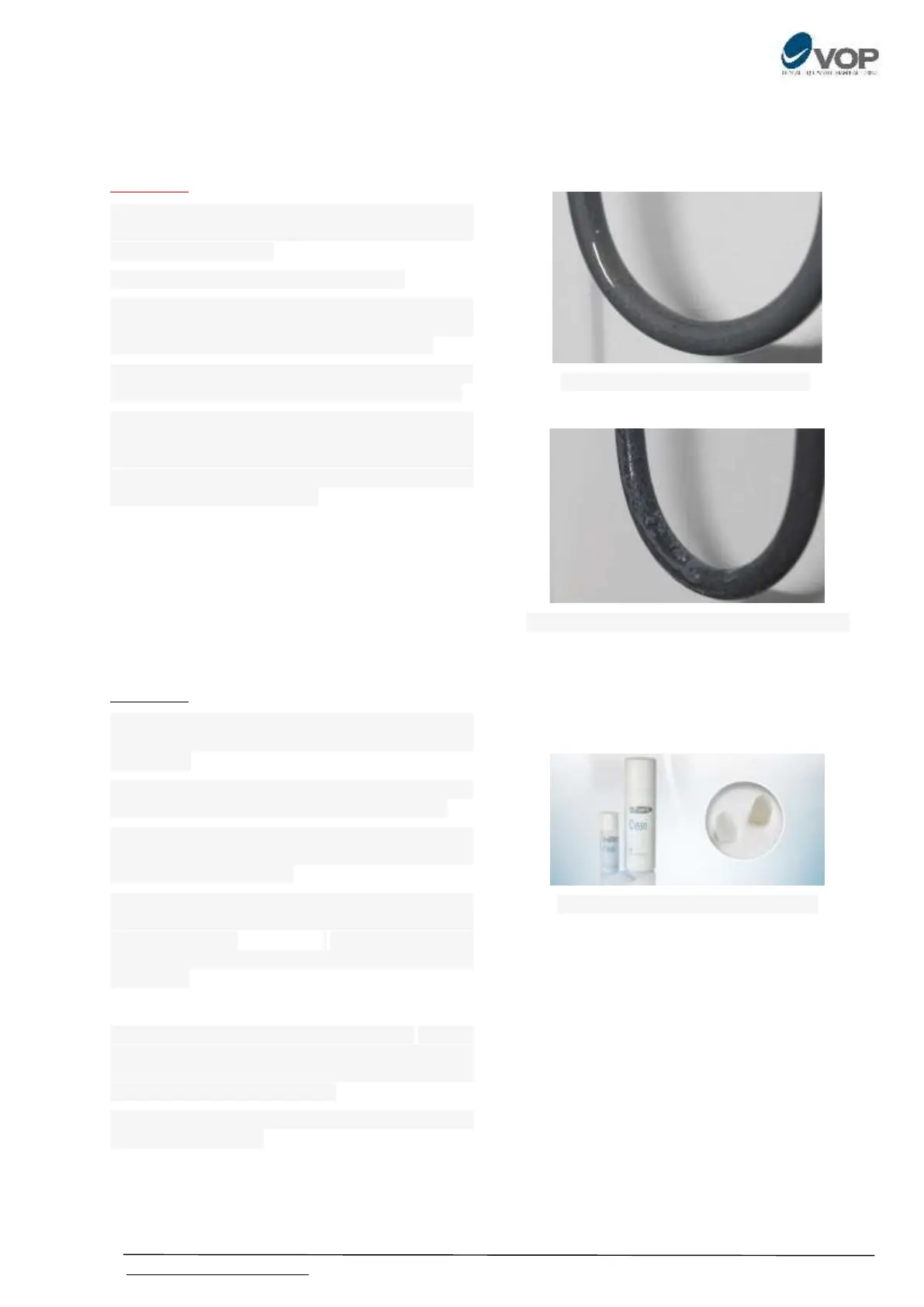
Figure 1. Heater with protective layer!
Figure 2. Heater with defective protective coating!
Figure 3. Difference when using NACERA



 To Next Page