How the Helicopter Flies...
A Simplified Description of How Main Rotor Blades Work
Flight of a helicopter is governed by the pitch or angle of its rotor blades as they sweep
through the air. For climbing and descending, the pitch of all the blades is changed at
the same time and in the same degree. To climb, the angle or pitch of the blades is
increased. To descend, the pitch of the blades is decreased. Because all blades are
acting simultaneouly. or collectively, this is known as collective pitch. For forward,
backward and sideways flight an additional change of pitch is povided. By this means
the pitch of each blade increases at the same selected point in its circular pathway.
This is known as cyclic pitch.
With these two controls in mind let us make an imaginary flight. With the engine
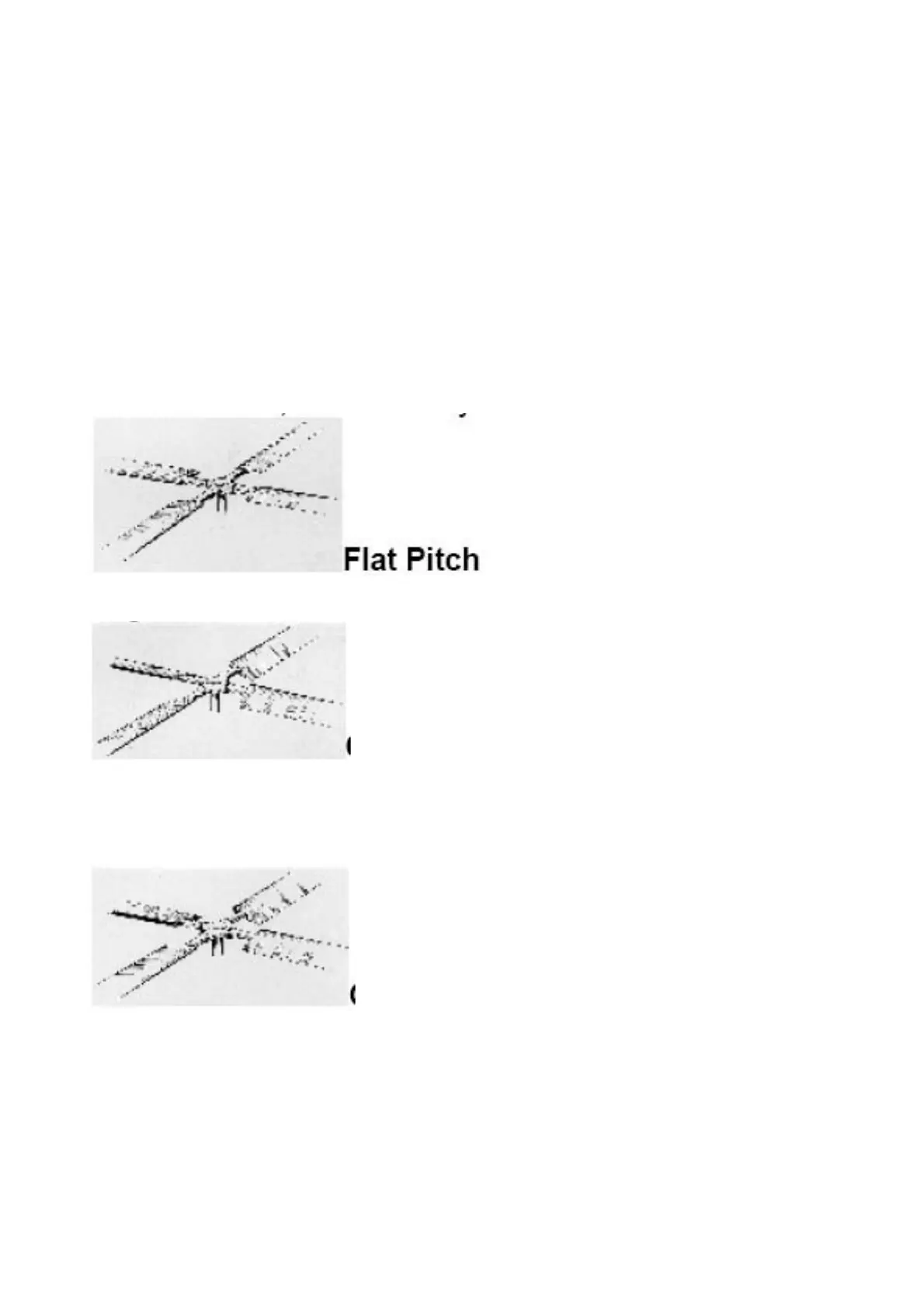
warmed up and the rotor blades whirling above us in flat pitch, that is, with no angle or
bite on the air, we are ready
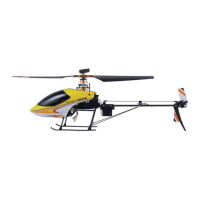
We increase the collective pitch. The rotor blades bite into the air, each to the same
degree, and lift the helicopter vertically.
Collective pitch
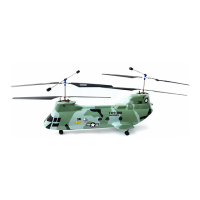
Now we decide to fly forward. We still have collective pitch so that as each blade
passes over the tail of the helicopter, it has more bite on the air than when it passes
over the nose. Naturally the helicopter travels forward.
Cyclic Pitch
Now we decide to stop and hover motionless so we put the cyclic pitch in neutral the
rotor blades now have the same pitch throughout their cycle, and the collective pitch
holds the helicopter suspended in space without moving in any direction.
In short, it is the cyclic and collective pitch which gives the helicopter its unique ability to
fly forward, backward, sideways, rise and descend vertically and hover motionless in
the air making it one of the most versatile vechicles known to man.


 To Next Page