Need help?
Do you have a question about the Welbilt ABM 7500 and is the answer not in the manual?
Essential safety guidelines to prevent injury and damage when operating the appliance.
Guidelines for safe use of extension cords and proper handling of polarized plugs.
Diagram identifying key parts of the Welbilt bread machine for user familiarity.
Explanation of ON/OFF, Bread Type, Loaf Size, Timer, and Start/Pause buttons.
Descriptions of the eight available cycles for making various breads and doughs.
Detailed breakdown of time segments for each bread making cycle.
Explanation of the automatic keep warm feature after baking is completed.
Instructions for proper insertion, removal, and cleaning of the bread pan.
Guidelines for cleaning the baking chamber, exterior surfaces, and lid.
Comprehensive instructions for operating the bread machine from setup to completion.
Solutions for issues like the machine not starting or improper ingredient mixing.
Troubleshooting for dough rising problems, bread collapse, and baking quality.
Addressing issues related to loaf size, shape, and inconsistent browning.
Details on bread flour, yeast, and other essential ingredients for successful baking.
Ingredients and instructions for making basic white bread in various sizes.
Recipes for Whole Wheat, French, and Cinnamon Raisin breads.
Recipes for Onion, Sunflower Oatmeal, and Egg breads.
Recipes for Shredded Wheat, Cheddar Bacon, and Potato breads.
Recipes for Crusty Rye, Irish Soda, and Maple Walnut breads.
Instructions for dough cycle use with recipes for bagels and pizza.
Recipes for Pumpernickel Rolls and Croissants using the dough cycle.
Recipes for Hot Cross Buns and Jewish Challah Loaf using the dough cycle.
Details on what the Welbilt product warranty covers and its limitations.
Procedure for contacting customer service and obtaining repair or replacement.
Key technical details including model, power requirements, and flour capacity.
Contact details for the Welbilt Customer Satisfaction Center for assistance.
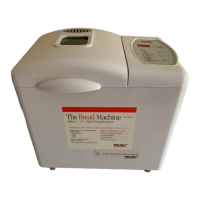
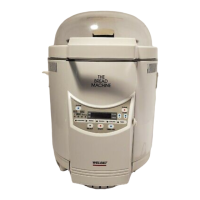
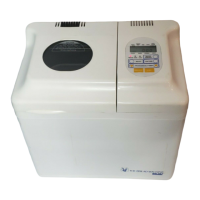
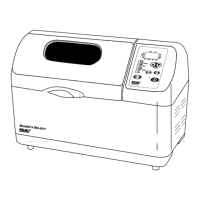
The Welbilt ABM 7500 is an automatic convection bread machine designed for home use, offering a revolutionary convection baking system for even and efficient bread making. This appliance allows users to prepare various types of breads and doughs with ease, featuring multiple cycles and programmable options.
The primary function of the Welbilt ABM 7500 is to automate the bread-making process, from kneading and rising to baking. It is equipped with a convection baking system that ensures uniform heat distribution for consistent results. The machine offers eight distinct cycles: three Basic Bread cycles (Light, Medium, Dark Crust), two Whole Wheat cycles (Light, Medium), a Rapid Medium cycle, a French Medium cycle, and a Dough program.
The Basic Bread cycles are suitable for most bread varieties, including rye and white breads, and involve two kneading sessions, two rising periods, shaping, and baking. The Whole Wheat cycles are designed for heavier flours, requiring more rising time, and also include two kneading sessions, two rising periods, a rest period, shaping, and baking. The Rapid Medium cycle is for recipes where a shorter, denser loaf is desired, reducing the overall time. The French Medium cycle is specifically for breads with crispier crusts, like French and Italian breads, incorporating two kneading sessions, two rising periods, a rest period, shaping, and baking. The Dough program is unique as it only performs kneading and rising (twice for kneading, once for rising) without baking, allowing users to hand-shape and bake the dough in a conventional oven for items like pizza, dinner rolls, or croissants.
The bread machine features a user-friendly control panel with several buttons:
A notable feature is the Pause Function, which allows users to add ingredients like fruits and nuts during the kneading program. By pressing and holding the START/PAUSE button for a few seconds about 5 minutes before the end of the second kneading, the machine pauses for 2 minutes. During this time, 4 beeps sound every 30 seconds as a reminder. If no action is taken, the machine automatically resumes its cycle. This function helps control the size and shape of added ingredients, preventing them from breaking into very small pieces if added too early.
For optimal results, ingredients should be at room temperature and measured carefully. Liquids should be added first, followed by dry ingredients, and yeast last. When using the programmable timer, yeast should be placed in a small well in the dry ingredients to prevent contact with liquids until kneading begins. The bread pan is inserted into the baking chamber by centering it and pushing it into the locking springs. The dough blade is placed on the drive shaft before adding ingredients.
After baking, a beep signals the end of the cycle, and the machine automatically switches to a "Keep Warm" cycle for 30 minutes. This circulates warm air to reduce condensation. For best results, bread should be removed from the machine and pan as soon as baking is complete. The pan and dough blade will be hot, so potholders or oven mitts are necessary. To remove the bread, turn the pan upside down and shake gently. If the dough blade remains in the bread, a narrow non-metal object should be used to remove it carefully. The bread should cool on a rack for at least 5 minutes before slicing with an electric knife, or 20 minutes with a bread knife. After use, the machine should be unplugged and allowed to cool for three hours before starting another cycle.
Proper cleaning and care are essential for the longevity and performance of the Welbilt ABM 7500:
The manual also provides a troubleshooting guide to address common issues such as the machine not starting, ingredients not mixing, dough blade turning slowly, bread not baking, soggy bread, or burnt bread. It offers solutions like ensuring proper plugging, canceling programs, correctly placing the dough blade, adjusting liquid amounts, selecting appropriate programs, and removing bread promptly. Issues with bread not rising or collapsing are also addressed, with advice on sugar and salt measurement, yeast activation, and adjusting for high altitude or warm weather conditions.
 Power
Power| power requirement | 120V, 60Hz |
|---|---|
| heater power consumption | 600 Watts |
| motor power consumption | 100 Watts |
 Capacity
| maximum flour capacity for bread | 4 cups |
|---|---|
| maximum flour capacity for dough | 4.25 cups |

 To Next Page