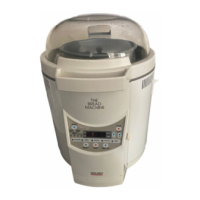
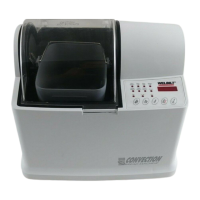
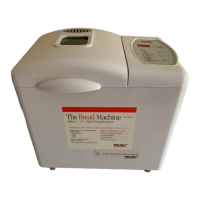
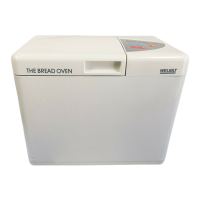
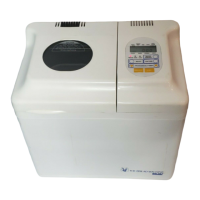
The Welbilt ABM-100-4 is an automatic bread machine designed to simplify the bread-making process, offering a range of features for both novice and experienced bakers. Its primary function is to mix, knead, rise, and bake various types of bread, from simple sandwich loaves to more specialized varieties, all within a single appliance. The machine is designed for household use, bringing the convenience of fresh, homemade bread directly to your table.
Function Description
The core function of the ABM-100-4 is its ability to automate the entire bread-making cycle. Users simply add ingredients to the inner pot, select the desired bread type, and press start. The machine then takes over, performing all the necessary steps:
- Kneading: A dough blade rotates to mix and knead the dough. The machine performs both primary and secondary kneading cycles to ensure proper dough development. During the secondary kneading, a beeper sounds, indicating the optimal time to add optional ingredients like raisins or nuts.
- Rising: After kneading, the dough undergoes several rising periods within the temperature-controlled environment of the inner pot. The temperature sensor adjusts to optimize the rising process for different bread types.
- Baking: Once the dough has risen sufficiently, the heater turns on to bake the bread. The baking temperature is automatically adjusted based on the selected bread type, ensuring a consistent and well-baked loaf.
- Cooling: After baking is completed, the machine initiates a cooling phase, drawing in air through an air duct to remove heat and steam from the bread. This helps prevent the bread from becoming soggy and preserves its aromatic flavor.
The ABM-100-4 supports both "Full Auto Cycle" for completely automated bread making and "Manual Cycle" for preparing dough only, which can then be shaped and baked in a conventional oven. This flexibility allows users to create a wider variety of baked goods beyond just loaves.
Usage Features
The Welbilt ABM-100-4 incorporates several user-friendly features to enhance the bread-making experience:
- Microcomputer Control Panel: The operations are centrally controlled by a microcomputer, making the process largely unsupervised once set. The control panel includes indicator lights for various modes (Sweet Bread, Manual Mode, AM/PM, Timer Standby, Clock Mode, Timer Set, Cooling, Baking, Rising, Kneading, French Bread, White Bread) and buttons for setting the clock, timer, selecting menus, and starting/stopping the process.
- Transparent Glass Lid: The glass lid allows users to observe the entire bread-making process, from mixing to baking, without interrupting the cycle.
- Program Timer: A key feature is the programmable timer, which allows users to set the machine to finish baking up to 12 hours in advance. This means you can wake up to fresh bread or have it ready for dinner. However, the timer cannot be set for periods less than 4 hours and 20 minutes, nor should it be used with ingredients that spoil easily (e.g., egg, milk, fresh vegetables).
- Menu Selection: The "SELECT" button allows users to choose between different bread types (White Bread, French Bread, Sweet Bread) for full auto cycle baking, or to select a manual dough-making cycle for other yeast dough items.
- Temperature Sensors: The machine is equipped with oven and temperature sensors that automatically adjust the baking and kneading temperatures according to the selected bread type. There's also a "Temperature Sensor Adjuster" for fine-tuning the degree of baking, allowing users to achieve lighter or darker crusts.
- Easy Ingredient Addition: The instructions emphasize adding dry yeast first, followed by flour, other ingredients, and finally lukewarm water, to keep the yeast active.
- Error Prevention: The machine includes safeguards such as not operating if the oven's interior temperature is too high (above 122°F/50°C) immediately after a previous baking cycle, to protect the microprocessor and ensure optimal results.
- Power Outage Handling: In case of a power cut, the bread-making process will be discontinued. The clock display will flash, indicating that the process cannot be resumed, and ingredients should be removed and replaced to start fresh.
Maintenance Features
Proper maintenance is crucial for the longevity and performance of the Welbilt ABM-100-4. The manual provides clear guidelines for cleaning and care:
- Inner Pot and Dough Blade: These are the primary components in contact with ingredients. They should be cleaned thoroughly after each use with a soft sponge and lukewarm water. All bread crumbs must be removed from the dough blade and shaft. The inner pot and dough blade have a fluorine resin-coating, so plastic utensils should be used to prevent scratching.
- Shaft: The shaft, which rotates the dough blade, should be kept free of crumbs. If the packing around the shaft is damaged, it may cause water leaks and should be replaced by service personnel.
- Packing: The packing is important for preventing leaks from the inner pot. It should be checked for normal condition and replaced if damaged.
- Oven: The interior of the oven should be cleaned regularly to remove flour and bread crumbs. This prevents burning and smoke generation during baking. A vacuum cleaner crevice tool or soft brush can be used for the air intake filter.
- Air Intake: The air intake, located on the bottom of the unit, controls cooling and heat removal. It should be kept clear of obstructions to ensure proper temperature regulation.
- Main Unit: The main unit should never be washed with water to prevent electrical shock or malfunctions. It should be wiped clean with a soft, damp cloth.
- General Care: The unit should not be dropped or subjected to strong shocks. It is exclusively designed for bread making, and no other ingredients or items should be placed inside.
- Power Cord and Plug: The power cord should be unplugged when the unit is not in use or during cleaning. The polarized plug is a safety feature and should not be defeated. If the plug does not fit, a qualified electrician should be consulted.
- Storage: When not in use for an extended period, the unit should be unplugged.
- Troubleshooting Guide: The manual includes a "Before Asking for Service" section with a comprehensive troubleshooting guide that helps users identify and resolve common issues, such as the unit not starting, water leaks, dough not kneading or rising properly, smoke during baking, or timer setting problems. This empowers users to perform basic diagnostics and solutions before contacting service personnel.

 Need help?
 General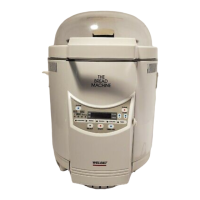

 To Next Page