EasyManua.ls Logo

West Bend L5231 - User Manual

West Bend L5231
21 pages
Print Icon
To Next Page IconTo Next Page
Loading...
1
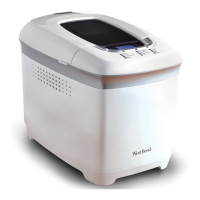
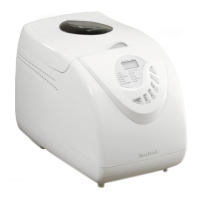
WEST BEND - AUTOMATIC BREAD & DOUGH MAKER
RECIPES AND INSTRUCTIONS – L5231
REGISTER THIS AND OTHER WEST BEND® PRODUCTS THROUGH OUR WEBSITE
www.westbend.com
TO PREVENT PERSONAL INJURY OR PROPERTY DAMAGE, READ AND FOLLOW THE INSTRUCTIONS AND
WARNINGS IN THIS CARE/USE INSTRUCTIONAL MANUAL
IMPORTANT INFORMATION ON PROTECTING ELECTRONIC CONTROL - To protect bread maker’s
electronic control against possible damage caused by surges in electrical power line, we recommend using a surge protector device,
available in the electronic department of most discount/hardware stores. Simply plug surge protector into the electrical outlet, then
plug bread maker cord into receptacle of surge protector.
IMPORTANT SAFEGUARDS- When using electrical appliances, basic safety precautions should always be followed to
reduce the risk of fire, property damage, electrical shock and/or personal injury, including the following:
Read all instructions before using.
Do not touch hot surfaces. Use handles or knobs. Always use potholders or oven mitts to handle hot bread pan or hot bread.
Do not put hand inside oven chamber after bread pan is removed. Heating unit will still be hot.
To protect against electric shock, do not place cord, plug or appliance in water or other liquid.
Close supervision is necessary when any appliance is used by or near children.
Unplug from outlet when not in use and before cleaning. Allow to cool before putting on or taking off parts and before
cleaning appliance.
Avoid contacting moving parts.
Do not operate appliance with a damaged cord or plug or after the appliance malfunctions or has been damaged in any
manner.
The use of accessory attachments not recommended by The West Bend Company may result in fire, electrical shock or
personal injury.
Do not use outdoors.
Do not let cord hang over edge of table, counter or surface area, or touch hot surfaces.
Do not place appliance on or near a hot gas or electrical burner, or in a heated oven.
Do not use appliance for other than intended use.
To disconnect power, press stop button to turn control off, then remove plug from wall outlet. Never pull on the cord.
Extreme caution must be used when moving appliance during operation.
SAVE THESE INSTRUCTIONS - Your bread maker needs no special care other than cleaning. See warranty section in this
booklet for service details. Do not attempt to repair it yourself. For household use only. An off odor from motor may be noted with
first use, which is normal and will disappear with use. WARNING: To prevent personal injury or property damage caused by fire,
always unplug this and other appliances when not in use.
ELECTRIC CORD STATEMENT - CAUTION: Your bread maker has a short cord as a safety precaution to prevent
personal injury or property damage resulting from pulling, tripping or becoming entangled with the cord. Do not allow children to be
near or use this bread maker without close adult supervision. If you must use a longer cord set or an extension cord when using the
bread maker, the cord must be arranged so it will not drape or hang over the edge of a counter-top, tabletop or surface area where it
can be pulled on by children or tripped over. To prevent electrical shock, personal injury or fire, the electrical rating of the extension
cord you use must be the same or more than the wattage of the bread maker (wattage is stamped on backside of bread maker).
IMPORTANT SAFETY INSTRUCTIONS - This appliance has a polarized plug (one blade is wider than the other). As a
safety feature, this plug will fit in a polarized outlet only one way. If the plug does not fit fully in the outlet, reverse the plug. If is still
does not fit, contact a qualified electrician. Never use with an extension cord unless plug can be fully inserted. Do not attempt to
defeat this safety feature. Your West Bend® Automatic Bread & Dough Maker was designed for use with 120 volt, 60 hz electrical
service ONLY. Use of your bread and dough maker with a converter or transformer will destroy the electronic control and will void
your warranty.


Other manuals for West Bend L5231

Questions and Answers

  • F
    frederickstevenJul 29, 2025
    What to do if the center of my West Bend L5231 Bread Maker loaf is raw?
    • D
      Daniel FernandezJul 29, 2025
      If the center of your West Bend Bread Maker loaf is raw, it might be due to a few reasons. First, you may have used too much liquid; try reducing it by 1 tablespoon. Second, a power outage during operation can cause this; if power isn't restored within 10 seconds, the bread maker will turn off, and you'll need to start over with fresh ingredients. Finally, ensure you always put the knead bar on the shaft in the pan before adding ingredients.
  • S
    Stephanie MayAug 2, 2025
    Why are my West Bend L5231 loaves flat and not rising?
    • J
      John JohnsonAug 2, 2025
      If your West Bend Bread Maker produces flat loaves with no rising, several factors could be at play. Ensure you add ingredients as listed in the recipe, especially yeast, and verify that the yeast isn't too old by checking the expiration date. The liquid you're using should be lukewarm, around 75-85°F, as liquid that is too hot can hinder rising. Also, make sure you're using the recommended amount of salt and sugar or other sweetener. If using a timer, push dry ingredients into the corners of the pan and create a well in the center for the yeast to prevent it from getting wet before the process starts.
  • H
    howardashleyAug 6, 2025
    Why does my West Bend L5231 Bread Maker have a burning odor?
    • G
      Gene McdowellAug 7, 2025
      If your West Bend Bread Maker produces a burning odor during operation, it could be due to a few reasons. Ingredients might have spilled inside the oven, so be careful when adding them to the pan, as they can burn onto the heating unit and cause smoke. Another possibility is that the pan is leaking; a replacement pan may be ordered. Finally, you might be exceeding the capacity of the bread pan; make sure not to use more ingredients than recommended in the recipe and always measure accurately.
  • T
    tuckerjonathanAug 10, 2025
    Why does my West Bend Bread Maker loaf have an inflated, mushroom-like top?
    • M
      michael42Aug 10, 2025
      If the top of your West Bend Bread Maker loaf is inflated and mushroom-like, it could be due to several factors. You might be using too much yeast, so try reducing it by ¼ to ½ teaspoon. Similarly, too much sugar or flour can cause this issue, so reduce sugar by 1 teaspoon or flour by 2 to 3 tablespoons. Ensure you're using the correct amount of bread machine/fast-rising yeast and the amount of salt recommended in the recipe. Warm, humid weather can also contribute, so reduce liquid by 1 tablespoon and yeast by ¼ to ½ teaspoon. If you're at a high altitude, consult the “High Altitude” section on pg. 7.
  • D
    Daniel BrooksAug 14, 2025
    What to do if the top and sides of my West Bend Bread Maker loaf cave in?
    • S
      Stacy SinghAug 14, 2025
      If the top and sides of your West Bend Bread Maker loaf cave in, it's likely due to using too much liquid. Try reducing the liquid by 1 tablespoon. Also, using too much yeast can cause this issue, so ensure you use the amount recommended in the recipe.
  • M
    Monique MillerAug 19, 2025
    How to fix short loaves in my West Bend L5231?
    • D
      Danielle NguyenAug 19, 2025
      If your West Bend Bread Maker produces short loaves, this can be normal. However, you can try increasing the liquid by 1 tablespoon, adding ingredients as listed in the recipe, and avoiding all-purpose flour. Make sure to measure the recommended amount of yeast and check the freshness date on the package, using the correct type of yeast, especially important for bread machine/fast-rising yeasts.
  • B
    Brian ShawAug 25, 2025
    Why does my West Bend Bread Maker loaf have a gnarly, knotted top?
    • M
      Misty OrtizAug 25, 2025
      If your West Bend Bread Maker loaf has a gnarly, knotted top that isn't smooth, it could be due to not enough liquid. Try increasing the liquid by 1 tablespoon. Also, ensure you're accurately measuring flour, leveling off the measuring cup. Having dough at proper condition is key to perfect loaves.

Summary

Safety and Precautions

Protecting Electronic Control

Recommends using a surge protector for the bread maker's electronic control.

General Safety Safeguards

Basic safety precautions to reduce risks of fire, shock, and personal injury.

Cord Safety Statement

Explains the purpose of the short cord and precautions for extension cords.

Electrical Safety Instructions

Details polarized plug use and voltage requirements for the appliance.

Quick Start Guide

What You Will Need

Lists essential measuring tools and ingredients for making bread.

How to Measure Ingredients

Provides precise instructions for measuring liquid and dry ingredients.

Making Basic White Bread

Step-by-step guide to making a 1½ lb basic white bread loaf.

Programming Control for Bread Making

Explains how to use the control panel to start the bread making process.

Understanding Bread Ingredients

Flour Types and Usage

Discusses different flours, recommended types, and adjustments for humidity.

Sugar and Sweeteners

Explains the role of sugar and sweeteners and how to measure liquid sweeteners.

Milk and Water

Details the use of milk and water, including temperature requirements and substitution.

Bread Ingredient Details

Fats, Eggs, and Salt

Explains the functions of butter, margarine, oils, eggs, and salt in bread making.

Yeast and Vital Wheat Gluten

Covers yeast types, storage, and the use of vital wheat gluten for structure.

Measuring Ingredients Accurately

Emphasizes precise measurement and provides visual guides for accuracy.

Measuring and Using Mixes

Ingredient Measurement Accuracy

Stresses the importance of precise measurement and provides visual guides.

Using Bread Mixes

Instructions for using pre-packaged bread mixes and adapting them.

Making Your Own Mixes

Guidance on preparing and storing homemade bread mix combinations.

Control Panel Functions

Adapting Favorite Recipes

Tips for adapting conventional recipes for the bread maker.

High Altitude Adjustment

Advice on adjusting recipes for baking at high altitudes.

Bread Select Button

How to choose bread settings like basic/specialty, whole wheat, or dough.

Crust Color and Timer Buttons

Explains how to select crust color and program the timer.

Operating the Bread Maker

Using the Timer Function

Step-by-step guide to setting the timer for delayed baking.

Bread Maker Components

Identifies key parts of the bread maker and control panel.

Basic Operation and Safety

Start;Stop Button Usage

How to turn the machine on/off and stop cycles.

Temperature Warnings

Explains display messages for temperature issues and corrective actions.

Power Outage Protection

Details how the machine handles power interruptions and resumes cycles.

Basic Steps in Making Bread

Initial setup, pan preparation, and ingredient order.

Bread Making and Post-Baking

Adding Ingredients and Locking Pan

Sequence for adding ingredients and securing the bread pan.

Starting the Bread Maker

Instructions on plugging in, selecting settings, and starting the cycle.

Slicing and Storing Bread

Recommendations for cooling, slicing, and storing freshly baked bread.

Cleaning After Each Use

Procedures for cleaning the bread pan and machine components.

Cleaning and Helpful Tips

Bread Pan and Knead Bar Cleaning

Detailed instructions for cleaning the bread pan and knead bar.

Helpful Tips for Usage

Advice on ventilation, placement, and operation of the bread maker.

Bread;Dough Cycle Breakdown

Explains the timing of each stage within the bread and dough cycles.

Troubleshooting Guide: Loaf Issues

Loaf Size and Shape Problems

Addresses issues like short loaves and flat loaves with causes and solutions.

Appearance Issues

Covers problems like inflated or caved-in loaves and their potential causes.

Troubleshooting Guide: Texture and Mechanics

Texture and Doneness Issues

Solutions for dense, uneven, raw centers, or sticky bread.

Crust and Pan Problems

Addresses dark crusts, burned loaves, light crusts, and bread sticking to the pan.

Machine Mechanics Issues

Troubleshooting for ingredients not mixing or the knead bar removal.

Additional Troubleshooting and Nutrition

Operational Odors and Interruptions

Solutions for burning odors and handling power outages during baking.

Nutritional Information

Provides nutritional details per slice for various bread types.

Recipes: Classic Breads

Raisin Bread

Ingredients and instructions for making 1 lb and 1½ lb Raisin Bread.

Old Fashioned White Bread

Ingredients and instructions for making Old Fashioned White Bread.

Honey Oatmeal Bread

Ingredients and instructions for making Honey Oatmeal Bread.

Recipes: Savory Breads

Garlic Bread

Ingredients and instructions for making Garlic Bread.

French Bread

Ingredients and instructions for making French Bread.

Italian Herb Bread

Ingredients and instructions for making Italian Herb Bread.

Recipes: Whole Wheat Breads

100% Whole Wheat Bread

Ingredients and instructions for making 100% Whole Wheat Bread.

50% Whole Wheat Bread

Ingredients and instructions for making 50% Whole Wheat Bread.

Cracked Wheat Bread

Ingredients and instructions for making Cracked Wheat Bread.

Dough Setting

Dough Setting Instructions

Step-by-step guide for using the dough setting.

Special Notes for Dough

Important considerations for using the dough function, including storage.

Dough Recipes: Rolls and Sticks

Basic Dinner Rolls;Bread Sticks

Ingredients and instructions for making dinner rolls and bread sticks.

Wheat Dinner Rolls

Ingredients and instructions for making wheat dinner rolls.

Roll Shaping Techniques

Guides for shaping crescent, cloverleaf, and four-leaf clover rolls.

Dough Recipes: Sweet and Traditional

Cinnamon Rolls

Ingredients and instructions for making cinnamon rolls.

Traditional French Bread Dough

Ingredients and instructions for shaping French bread dough.

Dough Recipes: Pizza

Traditional Pizza Dough

Ingredients for single and double crust traditional pizza dough.

Whole Wheat Pizza Dough

Ingredients for single and double crust whole wheat pizza dough.

Warranty and Support Information

90 Day Warranty

Details the warranty coverage for materials and workmanship.

Bonus Recipe Book Offer

Information on ordering an additional recipe book.

Replacement Parts Availability

How to order replacement bread pans and knead bars.

Product Specifications

Lists electrical and component specifications for the bread maker.

Important Information for Records

Fields to record purchase date and model information.

West Bend L5231 Specifications

General IconGeneral
BrandWest Bend
ModelL5231
CategoryBread Maker
LanguageEnglish

Related product manuals