
 Need help?
Do you have a question about the Westerbeke m-35B and is the answer not in the manual?
Lists the engine models covered in the operator's manual.
Identifies the manual's publication number, revision, date, and company contact.
Introduces safety importance and general precautions.
Guidelines to avoid electric shock hazards during operation and maintenance.
Warns about hot engine parts and fire prevention measures.
Outlines safety measures to prevent explosions from fuel vapors.
Advises on preventing accidental starts and battery hazards.
Explains dangers of CO, exhaust fumes, and rotating parts.
Addresses noise risks and reminds users to read the manual.
Refers to standards and publications for engine installation.
Emphasizes compliance and explains siphon-break installation for exhaust systems.
Outlines requirements for marine exhaust systems to prevent water entry.
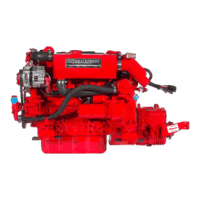
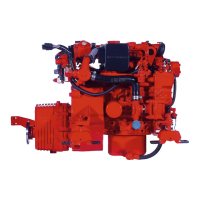
Illustrates and labels parts for M-40B and M-50B engine models.
Disclaimer on third-party software and warranty registration procedures.
Explains the meaning of notes, cautions, and warnings used in the manual.
Explains how to find serial numbers and order parts.
Basic engine overview and tips for long engine life.
Describes the Admiral panel's gauges, controls, and indicators.
Explains the high temperature and low oil pressure alarm systems.
Describes the Captain panel's gauges, buttons, and lamps.
Explains the function of start, preheat buttons and alarm conditions.
Specifies fuel grade and care for fuel supply.
Details engine oil type, API classification, and coolant mixture.
Lists essential checks before starting the engine for the first time or after a layoff.
Step-by-step guide for starting the engine, including cold conditions.
Outlines engine shutdown and warnings about prolonged cranking.
Details the 50-hour break-in and recommended RPM ranges for engine models.
Provides a daily inspection checklist and engine starting steps.
Explains circuit breaker function and alarm switch operations.
Outlines maintenance tasks based on operating hours.
Continues listing maintenance tasks by operating hours.
Describes cooling systems and how to refill with coolant.
Explains raw water pump function and impeller replacement.
Details thermostat, heat exchanger, and zinc anode functions.
Covers maintenance of the raw water intake strainer.
Steps for draining oil, changing filter, and refilling the oil sump.
Instructions for installing the remote oil filter and vital cautions.
Covers fuel additives, spares, lift pump, and safety for fuel system.
Details fuel system bleeding, safety, and shut-off valve.
Explains the air cleaner/silencer function and maintenance.
Details fuel filter types and the importance of water separators.
Covers DC circuit, belt tension, and glow plug service.
Recommendations for battery maintenance and warnings.
Describes charging system and troubleshooting the alternator.
Details checking alternator voltage and important cautions.
Shows wiring connections for the Admiral and Captain instrument panels.
Provides a detailed schematic of the DC electrical system.
Presents a wiring diagram specific to Catalina Yachts models.
Presents a wiring schematic specific to Catalina Yachts models.
Covers adjustment of throttle/stop controls and valve clearance.
Procedures for testing engine compression and oil pressure.
Discusses fuel injector service, overhaul, and replacement.
Troubleshooting for control panel, starting, and battery charging problems.
Troubleshooting for engine start/stop failures and exhaust problems.
Diagnosing overheating, vibration, and transmission problems.
Addresses issues with starter, preheat, and panel indications.
Explains tachometer/hour meter function and calibration procedures.
Guidance on adjusting idle speed and checking tachometer calibration.
Covers water heater connections, hoses, and transmission lay-up.
Details operation, fluid changes, and specifications for PRM transmissions.
Covers control cables, routine maintenance, and warranty information.
Addresses noise, speed, and engagement problems in PRM transmissions.
Overviews HBW/ZF transmissions, shaft couplings, and shift lever operation.
Covers initial operation, fluid changes, and daily checks for HBW/ZF transmissions.
Lists technical specifications for HBW/ZF transmissions.
Details operating temperature, transmission cooler, and maintenance.
Procedures for preparing the transmission for storage.
Addresses transmission shifting, noise, and speed problems.
Diagnoses issues related to fluid temperature, leaks, and boat movement.
Covers lay-up procedures for engine oil, cooling, fuel, and raw water systems.
Covers lay-up for starter motor, transmission, spares, and batteries.
Outlines steps for recommissioning the engine after lay-up.
Lists specifications for engine, lubrication, fuel, and electrical systems.
Lists specifications for cooling system and tune-up parameters.
Suggests spare parts and details available spare parts kits.
Covers bolt markings, torque specifications, and recommended sealants/lubricants.
Declares conformity and provides certificate details for EU compliance.
Provides further certification details for EC directives.
 General
| Engine Model | M-35B |
|---|---|
| Engine Type | Diesel |
| Number of Cylinders | 4 |
| Rated RPM | 3600 |
| Fuel System | Direct Injection |
| Lubrication System | Forced Lubrication |
| Max Power Output | 35 HP |
| Cooling System | Fresh Water Cooled |
| Alternator Output | 55 Amps |


 To Next Page