EasyManua.ls Logo

Westinghouse WGen5300DFcv - User Manual

Westinghouse WGen5300DFcv
95 pages
Print Icon
To Next Page IconTo Next Page
Loading...
USER MANUAL
DO NOT RETURN THIS PRODUCT TO THE STORE
If you have questions or need assistance, please call customer
service at 855-944-3571.
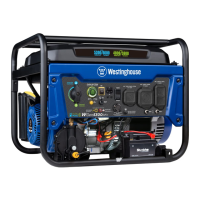
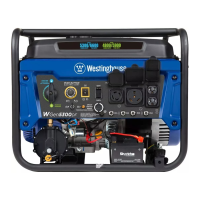
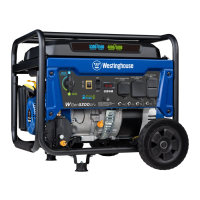
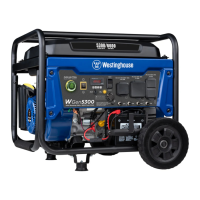
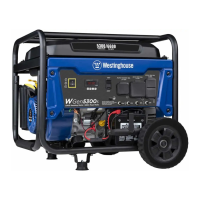
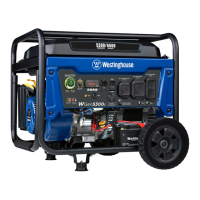
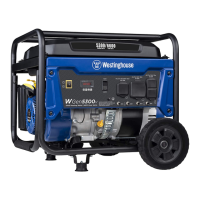
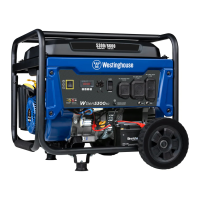
WGen5300DFcv
Dual Fuel Portable Generator
Gasoline: 5300 Running Watts | 6500 Peak Watts
Propane: 4800 Running Watts | 5800 Peak Watts

Table of Contents

Questions and Answers

  • R
    Robert LeAug 13, 2025
    What to do if my Westinghouse WGen5300DFcv Portable Generator engine will not start?
    • T
      Todd GibbsAug 13, 2025
      If your Westinghouse Portable Generator engine won't start, possible causes include: being out of fuel (refuel), bad fuel (drain and refuel with fresh gasoline), a dirty air filter (clean it), low engine oil (check and add oil if needed), a wet spark plug (wait five minutes, turn the switch off, and pull the recoil handle; if that doesn't work, remove and dry the spark plug), a faulty spark plug (gap or replace it), a fuel system malfunction (contact customer service), choke issues (fully open or close it), a removed or modified CO sensor (return to original configuration), or an activated CO sensor/system fault (relocate the generator or contact customer service).
  • G
    Gerald BauerAug 17, 2025
    Why Westinghouse WGen5300DFcv engine lacks power?
    • K
      Kristen FordAug 17, 2025
      If your Westinghouse Portable Generator engine lacks power, it could be due to a restricted air filter (clean or replace it), bad fuel (drain the fuel tank and refuel with fresh gasoline), or a fuel system malfunction (contact customer service).
  • B
    Briana DavisAug 20, 2025
    What to do if Westinghouse Portable Generator engine runs rough or bogs when load applied?
    • J
      jacqueline08Aug 20, 2025
      If your Westinghouse Portable Generator runs rough or bogs down when a load is applied, the issue might stem from a dirty air filter (clean it), an overloaded generator (unplug some devices), or a faulty power tool/appliance (replace or repair it and restart the engine). A fuel system malfunction could also be the cause (contact customer service).
  • R
    Raymond HansonAug 25, 2025
    Why is there frost on the propane tank or regulator of Westinghouse WGen5300DFcv Portable Generator?
    • J
      jwilliamsAug 25, 2025
      Frost on the propane tank or regulator of your Westinghouse Portable Generator can occur if the tank's temperature drops below the dew point, especially in humid conditions; if all equipment is functioning normally, no action is needed. It may also indicate that the propane tank is not equipped with an Overfilling Prevention Device (OPD), in which case you should discontinue use and replace the tank with one that has an OPD. Finally, it could mean the propane fuel tank is overfilled, in which case you should discontinue use and return the tank to the place of purchase or refilling.
  • M
    Matthew BrooksAug 28, 2025
    What causes poor performance or engine stalling on propane in Westinghouse Portable Generator?
    • A
      ashleyjohnsonAug 28, 2025
      Poor performance or engine stalling on propane in your Westinghouse Portable Generator can be caused by a kinked or crushed propane fuel line (inspect and remove any obstructions). It may also be due to the fuel selector valve not being properly positioned (rotate the fuel valve fully until the pointer aligns with the desired fuel). Another cause could be gasoline not being purged from the carburetor before switching to propane (close the propane fuel tank valve, move the fuel selector switch to gas, start the engine and let it run until the gasoline is consumed, then begin the propane start-up procedure).
  • A
    Andrew JohnsonSep 1, 2025
    Why does my Westinghouse WGen5300DFcv engine start, then shuts down?
    • J
      Johnny SheltonSep 1, 2025
      Your Westinghouse Portable Generator might start and then shut down due to several reasons: being out of fuel (refuel), incorrect engine oil level (check the level), a dirty air filter (clean the air filter), contaminated fuel (drain the fuel tank and refuel with fresh gasoline), or a defective low oil level switch (contact customer service).
  • S
    sspearsSep 4, 2025
    What to do if there is no power at AC receptacles of Westinghouse WGen5300DFcv?
    • B
      Brandon WilliamsSep 4, 2025
      If there's no power at the AC receptacles of your Westinghouse Portable Generator, it could be due to tripped AC circuit breakers (check AC loads and reset the breakers), a faulty power tool or appliance (replace or repair it, then restart the engine), or a faulty generator (contact customer service).
  • M
    Mason WestSep 8, 2025
    Why do I smell propane fuel near my Westinghouse WGen5300DFcv?
    • J
      Johnathan LongSep 8, 2025
      A propane fuel smell near your Westinghouse Portable Generator could be due to a fuel regulator or fuel hose and fittings not being securely sealed (check each connection with a soap solution and tighten as needed). It could also be the propane fuel regulator vent being active, which is normal if the venting is brief; if you suspect it's abnormal, discontinue use and have the regulator inspected. The smell may also be residual fuel dispersing from the carburetor after operation, which is normal and requires no correction.

Summary

Introduction

Disclaimers

Information, illustrations, and specifications are subject to change without notice.

All Rights Reserved

No reproduction allowed without written permission from Westinghouse.

Safety

Safety Definitions

Defines DANGER, WARNING, CAUTION, and NOTICE terms used in the manual.

Safety Symbols

Lists and explains safety symbols used on the generator and in the manual.

Safety Instructions

Provides crucial guidelines for safe operation and placement of the generator.

Safety Labels

Identifies and explains the purpose of various safety labels on the generator.

General Safety Precautions

Essential safety guidelines for operating and maintaining the generator.

Fuel Safety

Covers safe handling and storage of gasoline and propane fuels.

Liquid Petroleum Gas (LPG;Propane)

Detailed safety precautions for using propane as fuel.

CO Sensor

Explains the function of the CO sensor and its indicator lights.

Action Label

Provides instructions for immediate action following a CO-related auto-shutoff.

Specifications

Notice

Important notice regarding operating temperatures and usage conditions.

Product Registration

Instructions and links for registering your Westinghouse generator for warranty coverage.

Updates

Information on how to find the latest user manual updates online.

Components

Control Panel Components

Identifies and describes the components of the generator's control panel.

Generator Components

Illustrates and labels the various external components of the generator.

Assembly

Carton Contents

Lists all items included in the generator's packaging.

Install Feet and Wheels

Step-by-step guide for attaching the mounting feet and wheels to the generator.

Initial Oil Fill

Instructions for adding the correct type and amount of engine oil before first use.

Fuel

Information on fuel requirements, types, and the use of fuel stabilizer.

Filling the Fuel Tank

Procedure for safely filling the generator's fuel tank with gasoline.

Connect an LPG;Propane Tank

Instructions for connecting a propane tank to the generator for dual-fuel operation.

Operation

Generator Location

Guidelines for selecting a safe and proper location for generator operation.

Grounding

Information on grounding the generator for electrical safety.

High Altitude Operation

Adjustments and considerations for operating the generator at high altitudes.

Voltage Selector Switch

How to select between 120V and 240V output for various applications.

Fuel Selector Switch

Procedure for switching between gasoline and propane fuel sources.

Break-in Period

Recommended procedure for the initial break-in of the generator engine.

Before Starting the Generator

Checks and verifications required before starting the generator.

Starting the Engine: Gasoline

Step-by-step instructions for starting the generator using gasoline.

Starting the Engine: Propane

Step-by-step instructions for starting the generator using propane.

Stopping the Engine

Procedure for safely shutting down the generator and its connected loads.

Switching Fuel Sources

Instructions for switching between gasoline and propane fuel sources.

Frequency of Use

Guidance on fuel storage for infrequent or intermittent generator use.

AC Circuit Breakers

Explanation of how circuit breakers protect the generator from overloads.

Generator Capacity

Guidance on understanding and not exceeding the generator's power output capacity.

Power Management

Steps for safely adding electrical loads to the generator sequentially.

Extension Cords

Safety warnings and guidelines for using extension cords with the generator.

Extension Cord Sizing

Table and guidelines for selecting the correct gauge extension cords.

Transporting

Safety precautions and steps for safely moving or transporting the generator.

Maintenance

Maintenance Schedule

Recommended maintenance tasks and intervals for optimal generator performance.

Maintenance Reminders

Explanation of maintenance codes displayed on the unit.

Maintenance Replacement Parts

List of common replacement parts with their part numbers.

Air Filter Maintenance

Instructions for cleaning or replacing the air filter.

Engine Oil Level Check

Procedure for checking the engine oil level before each use.

Engine Oil Change

Step-by-step guide for changing the engine oil.

Spark Plug Maintenance

Instructions for inspecting, cleaning, and replacing the spark plug.

Fuel Valve Maintenance

Procedure for inspecting and cleaning the fuel valve and filter.

Spark Arrestor Service

Procedure for inspecting and cleaning the spark arrestor.

Storage

Guidelines for proper storage, including short and long-term procedures.

Valve Clearance

Procedure for checking and adjusting engine valve clearance.

Troubleshooting

Engine will not start

Common causes and corrections for the engine failing to start.

Engine starts, then shuts down

Troubleshooting steps for when the engine starts but then stops.

Engine lacks power

Diagnosing and resolving issues causing the engine to run with reduced power.

Engine runs rough or bogs when load applied

Solutions for engine performance issues when powering loads.

No power at AC receptacles

Steps to troubleshoot and restore power to the AC outlets.

Propane fuel smell

Troubleshooting causes and corrections for propane fuel odors.

Poor performance or engine stalling on Propane

Addressing issues with engine performance or stalling when using propane.

Exploded Views

Engine Exploded View

Diagram showing the exploded view of the generator's engine components.

Engine Parts List

A comprehensive list of engine parts with their corresponding part numbers.

Generator Exploded View

Diagram illustrating the exploded view of the generator's main assembly.

Generator Parts List

A comprehensive list of generator parts with their corresponding part numbers.

Schematics

Control Panel

Wiring schematic for the generator's control panel.

Engine

Wiring schematic for the generator's engine and ignition system.

Alternator

Wiring schematic for the generator's alternator and AVR.

Westinghouse WGen5300DFcv Specifications

General IconGeneral
Fuel TypeGasoline/Propane
Engine Type4-Stroke OHV
Engine Displacement224 cc
Noise Level68 dBA
WheelsYes
Power Output (Running)5300 watts
Fuel Tank Capacity4.0 gallons
Power Output (Peak)6600 W (Gasoline) / 5300 W (Propane)

Related product manuals