
 Need help?
Do you have a question about the Whelen Engineering Company Howler HWLRB32 and is the answer not in the manual?
Mandatory use of approved hearing protection due to extremely loud emergency warning tones.
Ensure proper mounting and wiring for safety and effectiveness; account for high-speed conditions.
Caution around live connections; avoid sharing circuits with radio equipment; test for interference.
Mounting must not interfere with air bag systems; avoid deployment areas.
Warning devices do not guarantee right-of-way; operators must proceed safely.
Test devices daily; ensure warnings are not blocked; obey all applicable laws.
Product contains lead, known to cause cancer and reproductive harm.
Requires understanding of automotive systems; use waterproof connectors and seal holes.
Check for hidden components before drilling; de-burr holes; use grommets.
Do not install or route wires in air bag deployment zones to prevent injury.
Ensure good chassis ground; place remote devices safely.
Designed for high-risk areas; not a replacement for primary vehicle siren.
Low-frequency tones may affect operators; use timing circuit and hearing protection.
The Whelen Howler™ Siren Speaker Mounting Bracket, models HWLRB32 and HWLRB32K, is designed to facilitate the installation of the Whelen Howler™ Supplemental Siren in a 2021 Chevy Tahoe. This bracket system ensures the siren speaker is securely mounted to the vehicle's frame, optimizing its performance and safety. The primary function of this device is to provide a stable and durable mounting solution for the Howler™ siren speaker, allowing it to project its low-frequency warning tones effectively.
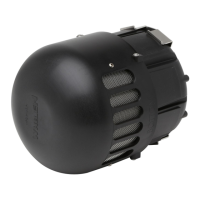
The installation process begins with mounting the bracket to the vehicle's frame. This involves removing the existing skid plate to access the frame, then securing the bracket using the provided hardware. Once the bracket is in place, the skid plate is re-mounted, utilizing one of its original bolts to further secure the bracket on both sides. A critical aspect of the installation is ensuring that the slotted holes on the siren speaker face towards the road after mounting. This orientation is essential for proper drainage, preventing water accumulation that could damage the speaker.
The Howler™ Supplemental Siren, for which this bracket is designed, is specifically intended for use in high-risk areas, such as intersections. It is crucial to understand that this siren is not a replacement or alternative to the vehicle's primary siren but rather a supplement. Its low-frequency tones are engineered to penetrate other vehicles more effectively than traditional higher-frequency sirens, thereby alerting drivers to the presence of an emergency vehicle. However, these low-frequency tones can also penetrate into the responding vehicle itself, potentially increasing noise levels for the operator. To mitigate this, the Howler™ siren incorporates a built-in timing circuit.
For optimal safety and effectiveness, the siren speakers must be securely fastened to the mounting brackets using the supplied sheet metal screws. The speaker should be oriented so that its screened vent holes face downwards towards the road, again to facilitate proper drainage. The mounting brackets are specifically designed for either the driver's side or passenger's side, indicated by a serial number ending in "D" for driver side or "P" for passenger side. After the mechanical installation, the WHITE (positive) and BLACK (negative) speaker wires need to be extended to the siren amplifier, following the amplifier's specific instructions for electrical connections.
The device's design and installation procedures emphasize safety and proper functionality. The warnings provided with the product highlight the importance of proper mounting and wiring to ensure the siren's effectiveness and safety, especially given that emergency vehicles often operate under high-speed, stressful conditions. Controls for the siren should be placed within convenient reach of the operator to allow system operation without diverting attention from the road. High electrical voltages and/or currents are involved, necessitating caution around live electrical connections. Proper grounding is vital to prevent high current arcing, which could lead to personal injury or vehicle damage, including fire.
Electromagnetic interference is another consideration, as many electronic devices in emergency vehicles can affect or be affected by it. Therefore, after installing any electronic device, including this siren and bracket, all electronic equipment should be tested simultaneously to ensure interference-free operation. It is explicitly stated that emergency warning equipment should not be powered from the same circuit or share the same grounding circuit as radio communication equipment. All devices must be mounted according to manufacturer instructions and securely fastened to vehicle elements strong enough to withstand operational forces.
The presence of driver and/or passenger air bags (SRS) significantly influences equipment mounting. This device must be permanently installed within the zones specified by the vehicle manufacturer, if any. Mounting any device in the air bag deployment area could damage or reduce the air bag's effectiveness, or even dislodge the device, potentially causing injury. Installers must ensure that the device, its mounting hardware, and electrical supply wiring do not interfere with the air bag or its associated wiring or sensors. Non-permanent installation methods, such as suction cups, magnets, tape, or Velcro®, are not recommended for units inside the vehicle, as they could become dislodged during sudden maneuvers, braking, or collisions, leading to personal injury.
Maintenance features primarily revolve around ensuring the continued secure mounting and proper electrical connections. Regular inspection of the mounting hardware for tightness and any signs of wear or corrosion is recommended. The orientation of the siren speaker for drainage should also be periodically checked. Any damage to the bracket or speaker should be addressed promptly to maintain the system's integrity and performance.
The warnings also extend to users, emphasizing that while Whelen's emergency warning devices are designed to alert others, they do not guarantee right-of-way or that other drivers will always heed the signal. Users are responsible for proceeding safely and understanding and obeying all laws regarding emergency warning devices. Daily testing of the devices is recommended to ensure proper operation. During actual use, operators must ensure that visual and audible warnings are not obstructed by vehicle components, people, or other obstructions.
The document stresses the importance of "Safety First," requiring both installation technicians and operators to read the manual completely before installation or operation. It warns that sirens produce extremely loud tones, and exposure without proper hearing protection can cause ear damage or hearing loss. The Occupational Safety & Health Administration (OSHA) provides guidelines for safe exposure times, and until these are determined for a specific application, operators and anyone nearby should wear approved hearing protection.
Proper installation requires a good understanding of automotive electronics, systems, and procedures. Whelen Engineering mandates the use of waterproof butt splices and/or connectors if exposed to moisture. Any holes created or utilized during installation must be made air- and watertight using a sealant recommended by the vehicle manufacturer. Failure to use specified installation parts and/or hardware will void the product warranty. If drilling is required, installers must ensure no vehicle components or vital parts are damaged, checking both sides of the mounting surface before drilling. Holes must be de-burred, metal shards removed, and grommets installed in all wire passage holes.
For optimal electrical efficiency, a good connection to chassis ground is essential, with the product ground wire preferably connected directly to the NEGATIVE (-) battery post (excluding products with cigar power cords). If a remote device is used for activation or control, it must be located in an area that allows safe operation of both the vehicle and the device. These instructions should be stored in a safe place for future reference during maintenance or reinstallation. Failure to follow these safety precautions and instructions could result in damage to the product or vehicle, and/or serious injury to occupants. The manual also includes a specific caution regarding the activation of the siren, stating that it may damage unprotected ears and reiterating the need for hearing protection.
 General
| Voltage | 12 VDC |
|---|---|
| Operating Voltage Range | 10 - 16 VDC |
| Sound Pressure Level | 123dB @ 10ft |
| Frequency Range | 500-2000Hz |
| Operating Temperature | -40°C to +74°C |
| Material | Aluminum |
| Mounting | Bracket Mount |





 To Next Page