EasyManua.ls Logo

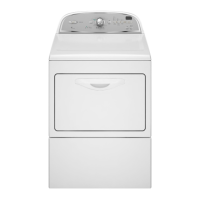
Whirlpool WED6200SW1 - User Manual

Whirlpool WED6200SW1
12 pages
Print Icon
To Next Page IconTo Next Page
Loading...
TECH SHEET - DO NOT DISCARD PAGE 1
FOR SERVICE TECHNICIAN’S USE ONLY PART NO. W10054150
WARNING
Electrical Shock Hazard
Disconnect power before servicing.
Replace all parts and panels before operating.
Failure to do so can result in death or
electrical shock.
IMPORTANT
Electrostatic Discharge (ESD) Sensitive
Electronics
ESD problems are present everywhere. ESD may damage or
weaken the machine control electronics. The new control
assembly may appear to work well after repair is finished, but
failure may occur at a later date due to ESD stress.
Use an anti-static wrist strap. Connect wrist strap to green
ground connection point or unpainted metal in the
appliance
-OR-
Touch your finger repeatedly to a green ground connection
point or unpainted metal in the appliance.
Before removing the part from its package, touch the
anti-static bag to a green ground connection point or
unpainted metal in the appliance.
Avoid touching electronic parts or terminal contacts;
handle machine control electronics by edges only.
When repackaging failed machine control electronics in
anti-static bag, observe above instructions.
DIAGNOSTIC GUIDE
Before servicing, check the following:
Make sure there is power at the wall outlet.
Has a household fuse blown or circuit breaker tripped? Time delay
fuse?
Is dryer vent properly installed and clear of lint or obstructions?
All tests/checks should be made with a VOM
(volt-ohm-milliammeter) or DVM (digital-voltmeter) having a
sensitivity of 20,000 ohms per volt DC or greater.
Check all connections before replacing components. Look for
broken or loose wires, failed terminals, or wires not pressed into
connectors far enough.
A potential cause of a control not functioning is corrosion on
connections. Observe connections and check for continuity with an
ohmmeter.
Connectors: Look at top of connector. Check for broken or loose
wires. Check for wires not pressed into connector far enough to
engage metal barbs.
Resistance checks must be made with dryer unplugged or power
disconnected.
DIAGNOSTIC TESTS
These tests allow factory or service personnel to test and verify all
inputs to the machine control electronics. You may want to do a
quick and overall checkup of the dryer with these tests before going
to specific troubleshooting tests.
ACTIVATING THE DIAGNOSTIC TEST MODE
1. Be sure the dryer is in standby mode (plugged in with all
indicators off, or with only the Clothes Dry indicator on).
2. Select any one button (except Pause/Cancel) and follow the steps
below, using the same button (remember the button):
Press/hold
2-5 seconds
Release for
2-5 seconds
Press/hold
2-5 seconds
Release for
2-5 seconds
Press/hold
2-5 seconds
3. If this test mode has been entered successfully, all indicators on
the console are illuminated for 5 seconds with
88 showing in the
Estimated Time Remaining two-digit display.
DIAGNOSTIC: Unsuccessful Entry
If entry into diagnostic mode is unsuccessful, press the Pause/Cancel
button twice, then press the Power button.
If indicators come on, try to use a different button than was used to
activate the diagnostic test mode. If that button fails to enter the
diagnostic mode, something is faulty, and it is not possible to enter
the diagnostic mode. Go to TEST #2, page 6.
If no indicators come on after pressing the Power button, go to
TEST #1, page 6.
DIAGNOSTIC: Saved Fault Codes
If there are saved fault codes, the most recent fault code will
alternately show “F-” and “XX where XX is the fault code.
Press and release
the same button
used to activate
Diagnostics
beep tone
Second most recent fault code is displayed.
Repeat
beep tone
Third most recent fault code is displayed.
Repeat
beep tone
Fourth most recent fault code is displayed.
Repeat
All indicators momentarily turn off, then stay on.
DIAGNOSTIC: Console Buttons and Indicators
Pressing the console buttons or rotating the cycle selector will sound
a beep and will turn on or off the corresponding indicators as shown
in Figure 1, Console Diagnostics, page 2. Pressing Time Adjust
(more time) will sound a beep and turn the left digit of the display on
or off. Pressing Time Adjust (less time) will sound a beep and turn
the right digit of the display on or off.
If indicators fail to turn on or off and beep after pressing
buttons or rotating the cycle selector, go to TEST #6, page 10.
DIAGNOSTIC: Door Switch
Opening the door should cause a beep and an alphanumeric number
to be displayed. Closing the door should cause a beep and
88 to be
displayed.
If opening the door fails to cause a beep and a number and letter
to be displayed, go to TEST #7, page 10.
DIAGNOSTIC: Moisture Sensor
Open the door and locate two metal strips on the inside of the dryer.
Bridge these strips with a wet cloth or a finger.
If a continuous beep tone is heard and an alphanumeric number is
displayed on the console, the sensor is OK.
If not, or if a continuous beep tone is heard before bridging the
moisture strips, go to TEST #5, page 9.


Other manuals for Whirlpool WED6200SW1

Questions and Answers

Summary

Safety Warning: Electrical Shock Hazard

Electrical Shock Precaution

Emphasizes disconnecting power before servicing to prevent electrical shock or death.

Electrostatic Discharge (ESD) Protection

Anti-Static Wrist Strap Usage

Instructions on connecting a wrist strap to a ground point or unpainted metal appliance.

Diagnostic Test Mode Activation

Diagnostic Test Mode Activation Steps

Detailed steps for entering the diagnostic test mode using console buttons.

Console Button and Indicator Test

Testing console buttons and their corresponding indicators for functionality.

Motor, Heater, and Console ID Diagnostics

Console ID Display and Motor;Heater Test

Tests motor and heater operation, and checks for console IDs.

Displaying Inlet Air Flow

Inlet Air Flow Measurement

Measures and displays the airflow value at the heater box inlet.

Manual Load Test Activation

Manual Load Test Procedure

Steps to activate the manual load test sequence for motor operation.

Troubleshooting Guide Overview

Troubleshooting: Dryer Wont Power Up

Common causes and tests for a dryer that does not respond to button presses.

Troubleshooting: Dryer Wont Heat

Steps to diagnose and fix a dryer that fails to produce heat.

Dryer Fault Code Display

Fault Code PF: Power Failure

Indicates a power failure occurred during the cycle; requires pressing START to continue.

Fault Code AF: Restricted Airflow

Indicates a restricted airflow condition; check lint screen and vent.

Fault Code F-01: Primary Control Failure

Signifies a primary control failure, requiring replacement of machine control electronics.

Electric Dryer Wiring Diagrams

Single Element Dryer Wiring Diagram

Schematic illustrating the electrical connections for single element dryer models.

Dual Element Dryer Wiring Diagram

Schematic illustrating the electrical connections for dual element dryer models.

Drive Motor Circuit Diagram

Drive Motor Electrical Path

Diagram showing the electrical connections for the drive motor.

Single Element Heater Circuit

Single Element Heater Electrical Path

Diagram illustrating the electrical connections for the single element heater.

Troubleshooting Tests Overview

Test #1: Supply Connections Verification

Checks continuity of the power cord and connections to the terminal block and control board.

Test #2: Machine Control Power Check

Verifies power is present at the machine control electronics by checking the drum light.

Test #3: Drive Motor Circuit

Drive Motor Circuit Component Checks

Checks components like thermal fuse, belt switch, and drive motor windings.

Belt Switch and Drive Motor Test

Tests the belt switch and drive motor by checking resistance and continuity.

Test #4: Heater Functionality

Troubleshooting: Dryer Not Heating

Steps to diagnose why the dryer is not producing heat.

Test #4 a: Thermistor Checks

Exhaust Thermistor Test Procedure

Tests the exhaust thermistor for proper resistance and function.

Inlet Thermistor Test Procedure

Tests the inlet thermistor for correct resistance values at various temperatures.

Test #5: Moisture Sensor

Moisture Sensor Bridging Test

Tests moisture sensor functionality by bridging the metal strips.

Test #6: Buttons and Indicators

Troubleshooting: No Indicators Lit

Diagnosing why none of the console indicators are illuminated.

Troubleshooting: No Beep Sound

Diagnosing why no beep sound is heard from the console buttons.

Test #7: Door Switch

Door Switch Diagnostic Test Procedure

Performing the diagnostic test for the door switch functionality.

Removing Front Panel and Drum Assembly

Removing Front Panel;Door Assembly

Steps to remove the complete front panel and door assembly.

Accessing Electronic Assemblies

Removing Machine Control Electronics

Steps for removing the main machine control electronics board.

Removing User Interface Assembly

Procedure for detaching and removing the user interface assembly from the console.

Removing the Back Panel

Removing Back Panel Cover Plate

Steps to remove the cover plate and its screw from the back panel.

Removing Back Panel Screws

Procedure for removing the nine screws securing the back panel.

Summary

Safety Warning: Electrical Shock Hazard

Electrical Shock Precaution

Emphasizes disconnecting power before servicing to prevent electrical shock or death.

Electrostatic Discharge (ESD) Protection

Anti-Static Wrist Strap Usage

Instructions on connecting a wrist strap to a ground point or unpainted metal appliance.

Diagnostic Test Mode Activation

Diagnostic Test Mode Activation Steps

Detailed steps for entering the diagnostic test mode using console buttons.

Console Button and Indicator Test

Testing console buttons and their corresponding indicators for functionality.

Motor, Heater, and Console ID Diagnostics

Console ID Display and Motor;Heater Test

Tests motor and heater operation, and checks for console IDs.

Displaying Inlet Air Flow

Inlet Air Flow Measurement

Measures and displays the airflow value at the heater box inlet.

Manual Load Test Activation

Manual Load Test Procedure

Steps to activate the manual load test sequence for motor operation.

Troubleshooting Guide Overview

Troubleshooting: Dryer Wont Power Up

Common causes and tests for a dryer that does not respond to button presses.

Troubleshooting: Dryer Wont Heat

Steps to diagnose and fix a dryer that fails to produce heat.

Dryer Fault Code Display

Fault Code PF: Power Failure

Indicates a power failure occurred during the cycle; requires pressing START to continue.

Fault Code AF: Restricted Airflow

Indicates a restricted airflow condition; check lint screen and vent.

Fault Code F-01: Primary Control Failure

Signifies a primary control failure, requiring replacement of machine control electronics.

Electric Dryer Wiring Diagrams

Single Element Dryer Wiring Diagram

Schematic illustrating the electrical connections for single element dryer models.

Dual Element Dryer Wiring Diagram

Schematic illustrating the electrical connections for dual element dryer models.

Drive Motor Circuit Diagram

Drive Motor Electrical Path

Diagram showing the electrical connections for the drive motor.

Single Element Heater Circuit

Single Element Heater Electrical Path

Diagram illustrating the electrical connections for the single element heater.

Troubleshooting Tests Overview

Test #1: Supply Connections Verification

Checks continuity of the power cord and connections to the terminal block and control board.

Test #2: Machine Control Power Check

Verifies power is present at the machine control electronics by checking the drum light.

Test #3: Drive Motor Circuit

Drive Motor Circuit Component Checks

Checks components like thermal fuse, belt switch, and drive motor windings.

Belt Switch and Drive Motor Test

Tests the belt switch and drive motor by checking resistance and continuity.

Test #4: Heater Functionality

Troubleshooting: Dryer Not Heating

Steps to diagnose why the dryer is not producing heat.

Test #4 a: Thermistor Checks

Exhaust Thermistor Test Procedure

Tests the exhaust thermistor for proper resistance and function.

Inlet Thermistor Test Procedure

Tests the inlet thermistor for correct resistance values at various temperatures.

Test #5: Moisture Sensor

Moisture Sensor Bridging Test

Tests moisture sensor functionality by bridging the metal strips.

Test #6: Buttons and Indicators

Troubleshooting: No Indicators Lit

Diagnosing why none of the console indicators are illuminated.

Troubleshooting: No Beep Sound

Diagnosing why no beep sound is heard from the console buttons.

Test #7: Door Switch

Door Switch Diagnostic Test Procedure

Performing the diagnostic test for the door switch functionality.

Removing Front Panel and Drum Assembly

Removing Front Panel;Door Assembly

Steps to remove the complete front panel and door assembly.

Accessing Electronic Assemblies

Removing Machine Control Electronics

Steps for removing the main machine control electronics board.

Removing User Interface Assembly

Procedure for detaching and removing the user interface assembly from the console.

Removing the Back Panel

Removing Back Panel Cover Plate

Steps to remove the cover plate and its screw from the back panel.

Removing Back Panel Screws

Procedure for removing the nine screws securing the back panel.

Overview

This document outlines the diagnostic and troubleshooting procedures for a dryer, focusing on its electronic controls, motor, heating system, and various sensors. It also provides instructions for accessing and reinstalling electronic assemblies and other components.

Function Description

The dryer is designed to dry clothes efficiently, incorporating various cycles and options to suit different fabric types and drying needs. Its operation is managed by machine control electronics, which monitor and regulate key components like the motor, heater, and sensors to ensure proper and safe functioning. The user interacts with the dryer through a console that includes buttons, a cycle selector knob, and a two-digit display for estimated time remaining and fault codes.

Usage Features

The dryer offers several features to enhance its usability and performance:

  • Diagnostic Test Mode: This mode allows service personnel to test and verify all inputs to the machine control electronics. It can be activated by selecting any button (except Pause/Cancel) and following a specific press/hold sequence. Upon successful entry, all console indicators illuminate for 5 seconds, and "88" appears in the display.
    • Unsuccessful Entry: If entry fails, pressing Pause/Cancel twice, then Power, can help. If indicators come on, a different button can be tried. If no indicators come on, further troubleshooting is required.
    • Saved Fault Codes: The dryer stores fault codes, which are displayed alternately as "F-" and "XX" (where XX is the fault code). Pressing the same button used to activate diagnostics will cycle through the most recent fault codes, accompanied by a beep tone.
    • Console Buttons and Indicators Diagnostic: In diagnostic mode, pressing console buttons or rotating the cycle selector will produce a beep and toggle corresponding indicators. Pressing "Time Adjust +" (more time) toggles the left digit of the display, while "Time Adjust -" (less time) toggles the right digit.
    • Door Switch Diagnostic: Opening the door in diagnostic mode should trigger a beep and display an alphanumeric number. Closing it should result in a beep and "88" being displayed.
    • Moisture Sensor Diagnostic: With the door open, bridging the two metal sensor strips inside the dryer with a wet cloth or finger should produce a continuous beep and display an alphanumeric number if the sensor is functioning correctly.
    • Motor, Heater, and Console ID Diagnostic: Closing the door and pressing Start should activate the motor and heater, and the display will show a console ID (C0-C9).
    • Displaying Inlet Air Flow: After fault codes are displayed, pressing the Wrinkle Shield button activates airflow detection. A countdown timer starts (30 or 50 seconds), and the dryer turns on. A Dryness modifier LED indicates the airflow range (More, Normal, Less) corresponding to the displayed number.
    • Displaying Line Voltage: After fault codes, pressing the Cycle Signal button displays the line voltage. A Dryness modifier LED indicates the voltage range (More, Normal, Less).
  • Manual Load Test: This test can be activated similarly to the diagnostic mode. After "88" flashes, the motor starts, and the Heavy Duty LED flashes, initiating the Manual Load sequence. This allows for testing the motor and heater elements independently.
  • Customer-Focused Drying Modes: The dryer allows adjustment of automatic drying cycles to address issues like clothes being damp or over-dry. By pressing and holding the Dryness button for 5 seconds, the current drying mode (default "1") is displayed. Subsequent presses allow selection of different drying modes ("2" for 15% more drying time, "3" for 20% more drying time). The selected mode is saved by pressing the Start button.
  • Display Fault Codes: The dryer indicates specific fault codes (e.g., PF for Power Failure, AF for Restricted Airflow, F-01 for Primary Control Failure, F-02 for Keypad/User Interface Failure, F-22/F-23 for Exhaust Thermistor issues, F-24/F-25 for Inlet Thermistor issues, F-26 for Motor Drive System Failure, F-28/F-29 for Moisture Sensor issues, F-30 for Restricted Airflow) to help diagnose problems.

Maintenance Features

The document provides detailed steps for troubleshooting and component replacement, which are essential for maintaining the dryer's functionality:

  • Electrostatic Discharge (ESD) Protection: Emphasizes the importance of using an anti-static wrist strap or repeatedly touching a green ground connection point/unpainted metal to prevent ESD damage to sensitive electronics during servicing. This includes handling parts by their edges and touching anti-static bags to ground points before removing components.
  • Diagnostic Guide: Before servicing, it's recommended to check basic issues like power at the wall outlet, blown fuses/tripped breakers, clear dryer vent, and use a VOM/DVM for tests. All connections should be checked for broken or loose wires, and resistance checks should be done with the dryer unplugged.
  • Troubleshooting Tests:
    • TEST #1 Supply Connections: Verifies proper voltage at the outlet and continuity of the power cord and main wire harness to the machine control electronics.
    • TEST #2 Machine Control Power Check: Determines if power is present at the machine control electronics, often indicated by the drum light.
    • TEST #3 Drive Motor Circuit: Checks the motor, belt switch, door switch, thermal fuse, and associated wiring and connections. Includes resistance measurements for motor windings and belt switch continuity.
    • TEST #4 Heater: Checks the heating circuit components, including the heater relay, thermal cut-off, inlet thermistor/high limit thermostat, heat element, and exhaust thermistor. Provides resistance values for thermistors at various temperatures.
    • TEST #4a Thermistors: Specifically details troubleshooting for exhaust and inlet thermistors, including resistance checks and identifying open or shorted conditions.
    • TEST #4b Thermal Fuse: Checks the continuity of the thermal fuse, which is wired in series with the drive motor.
    • TEST #4c Thermal Cut-Off: Checks the continuity of the thermal cut-off.
    • TEST #5 Moisture Sensor: Diagnoses issues with the moisture sensor system, including open or short circuits, and provides steps to access and inspect the sensor strips and wiring.
    • TEST #6 Buttons and Indicators: Troubleshoots issues where console indicators do not light up or the beep sound is not heard, focusing on user interface and machine control electronics connections.
    • TEST #7 Door Switch: Verifies the functionality of the door switch through diagnostic mode and provides steps to check wiring and replace the switch assembly.
  • Component Access and Removal: Detailed instructions are provided for:
    • Removing the Front Panel/Drum Assembly: Involves unplugging the dryer, removing the lint screen, screws, and retaining clips, then rotating the top and disconnecting the door switch harness.
    • Accessing & Removing the Electronic Assemblies: Steps for removing the machine control electronics and user interface assembly, including screws, ribbon cables, and the cycle selector knob.
    • Removing the Back Panel: Involves unplugging the dryer and removing screws to access thermal components like the thermal cut-off, inlet thermistor/high-limit thermostat, heater, and exhaust thermistor.
  • Wiring Diagrams: Includes detailed wiring diagrams for single and dual element models, as well as specific strip circuits for the drive motor, heater, and moisture sensor, aiding in tracing electrical paths during troubleshooting.
  • Centrifugal Switch (Motor) Contacts: A diagram showing the contacts and their states (start/run) for the centrifugal switch, useful for motor diagnostics.

Whirlpool WED6200SW1 Specifications

General IconGeneral
Capacity7.0 cu. ft.
Fuel TypeElectric
Drum MaterialPowder Coat
BrandWhirlpool
ModelWED6200SW1
ColorWhite
Number of Temperature Settings4
Wrinkle Control OptionYes
Energy Star CertifiedNo
FeaturesEnd of Cycle Signal
Dryer Venting4-Way Venting

Related product manuals