
 Need help?
Do you have a question about the Whirlpool WMC20005 and is the answer not in the manual?
Essential safety precautions for operating the microwave oven, reducing risks of burns, electric shock, fire, and injury.
Steps for unpacking the microwave oven, including cleaning and checking for damage before initial use.
Guidelines for placing the microwave oven on a stable surface and ensuring proper ventilation for optimal operation.
Detailed instructions for safely grounding the microwave oven to prevent electric shock hazards.
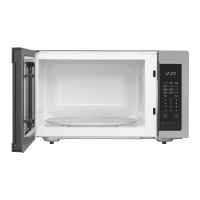
Description and installation instructions for the microwave oven's turntable and support system.
Explanation of the microwave oven's display functions, messages, and indicators during operation.
How to initiate cooking cycles and resume them after interruption using the START pad.
Instructions for clearing commands, cancelling programs, and turning the microwave oven off.
Using the ADD 30 SEC pad to add cooking time in 30-second increments.
How food properties like amount, size, temperature, and density affect microwave cooking results.
Tips on covering food to retain moisture, reduce spattering, and ensure even cooking.
Techniques for stirring and turning food to redistribute heat and achieve even cooking.
Methods for arranging food items in the microwave for optimal and even cooking.
Instructions on piercing foods with skins or membranes to prevent bursting during cooking.
Using aluminum foil to shield specific parts of food from overcooking.
Explanation of how food continues to cook after the cycle ends due to residual heat.
List of materials and items that should not be used in the microwave oven due to safety risks.
Guide to different power levels and their recommended uses for various foods and cooking tasks.
Procedure to test if cookware or dinnerware is safe for microwave use.
Guidelines for safely using aluminum foil and metal in the microwave oven.
Important guidelines and recommendations for cleaning the microwave oven's interior, exterior, and control panel.
Specific cleaning instructions and what materials to avoid for the microwave oven's interior.
Cleaning advice for the microwave oven door and its exterior surfaces.
How to clean the control panel safely without damaging its sensitive components.
Instructions for cleaning the turntable and the importance of its presence during operation.
Solutions for when the microwave oven does not power on or respond to controls.
Troubleshooting steps for the microwave oven failing to start or heat food.
Explanation that a humming noise is normal during magnetron operation.
Explanation that a wavy door appearance is normal and does not affect performance.
Steps to diagnose and fix issues with the turntable not rotating or functioning correctly.
Explanation that alternating turntable rotation is a normal operational characteristic.
Interpreting specific messages on the display, such as the colon indicating a power failure.
Troubleshooting when the timer is active but the oven isn't heating.
Identifying reasons for prolonged cooking times, including power settings and food quantity.
Solutions for electromagnetic interference affecting other electronic devices.
Information on ordering FSP® replacement parts and locating authorized service centers.
Contact information and services provided by the Whirlpool Customer Experience Center in the USA.
Contact details for writing to Whirlpool Corporation with questions or concerns.
List of common replacement parts with their respective part numbers for ordering.
List of recommended cleaning supplies with their part numbers.
Details of the one-year limited warranty, covering repair or replacement of defective products.
List of conditions and situations not covered by the limited warranty.
Step-by-step process for obtaining service or replacement within the first year of ownership in the US.
Legal disclaimer regarding implied warranties and their limitations.
Legal limitations on remedies and exclusion of incidental/consequential damages under the warranty.
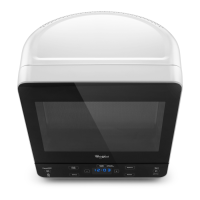
This document is a Use & Care Guide for a Whirlpool Microwave Oven, specifically Model WMC20005. It provides comprehensive instructions for safe operation, installation, usage, and maintenance of the appliance.
The Whirlpool Microwave Oven is designed for heating, cooking, or drying food. It operates by producing microwaves that reflect off the metal interior, pass through the turntable, and are absorbed by fat, sugar, and water molecules in food, generating heat. The appliance features a turntable that rotates in either direction to ensure even cooking.
The microwave oven offers various cooking functions accessible via its control panel. The primary functions include:
The guide also includes a comprehensive troubleshooting section to help users resolve common issues before seeking service, covering problems like the oven not operating, unusual noises, display messages, long cooking times, and interference with other electronic devices. It emphasizes the importance of proper grounding and adherence to safety instructions to prevent electric shock, fire, or injury.
 General
| Turntable | Yes |
|---|---|
| Capacity | 0.5 cu. ft. |
| Control Type | Electronic |
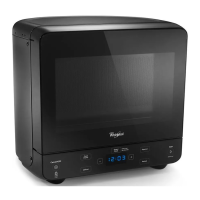
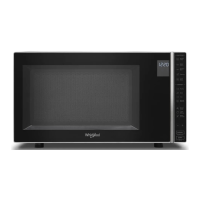
| Color | Black |
| Type | Countertop Microwave |
| Power | 750 watts |



 To Next Page