Installation
6
Locating Wall Furnace
Note: When installing the furnace directly on carpeting or other
combustible material (excluding wood flooring), it must be
installed on a metal or wood panel extending the full width and
depth of the furnace.
Consider the following points before attempting to install the
furnace.
All Models
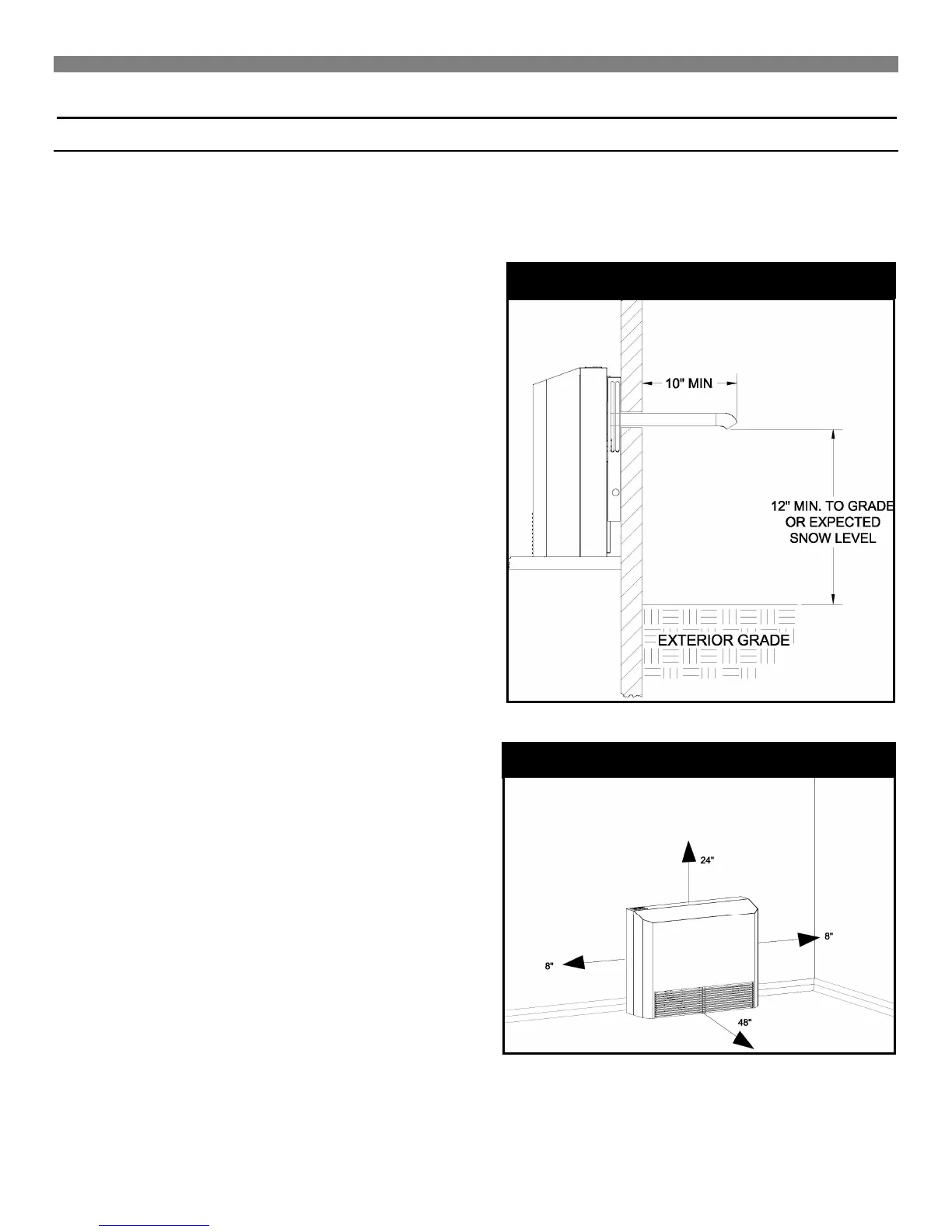
1. This is a direct-vent wall furnace. It must be installed on an
outside wall for proper venting of flue gases. (Figure 1).
2. Check the clearances needed from the furnace and vent.
(Figure 1 and 2). You must place the furnace where you will
have no less than the clearances shown.
3. The furnace will not work if anything stops free entry of
fresh air into the vent (if using the optional air inlet kit), or
free flow of flue gases from it. Be sure the exhaust vent cap
is at least 12-inches above ground level or shrubs. (Figure
1). Make sure shrubs are kept trimmed.
4. Place the furnace near the center of the space to be heated
for good air circulation. Do not put it behind a door or
draperies. Do not put it in a closet, alcove, hallway or other
confined space where the furnace could be isolated by
closing doors to the heated space.
5. Be sure that gas piping and electrical outlet can be brought
to the furnace.
6. Select a location that will provide adequate accessibility
clearance for servicing and proper operation.
Interior Clearances (Figure 2).
1. The unit is designed to be floor mounted.
2. The top of the furnace must be at least 24-inches from the
ceiling or other projecting overhang.
3. The side of the furnace must have 8” clearance to the wall.
If an external thermostat is used, choose a location for the
thermostat about 5-feet above floor on an inside wall. The
thermostat wire supplied as an accessory is 20-feet long,
which should be enough to run up through the attic so the
thermostat can be a maximum of 16 feet from furnace
measured in a straight line, or approximately 12-feet from the
furnace if the wire is run under the floor. The thermostat should
be sensing an average room temperature; avoid the following:
Hot Spots Cold Spots Dead Spots
Concealed pipes/ducts Concealed pipes/ducts Behind doors
Fireplaces Stairwells (drafts) Corners/alcoves
Registers Doors (drafts)
TV sets Unheated rooms on
Radios other side of the wall
Lamps
Direct sunlight
Kitchen
After selecting a location that meets the requirements, inspect
the wall, floor and outside areas. Make sure there are no pipes,
wiring, or anything else that would interfere with furnace, vent
or thermostat installation. If required, move or pick a new
location.
FIGURE 1
FIGURE 2


 To Next Page