13User’s Guide
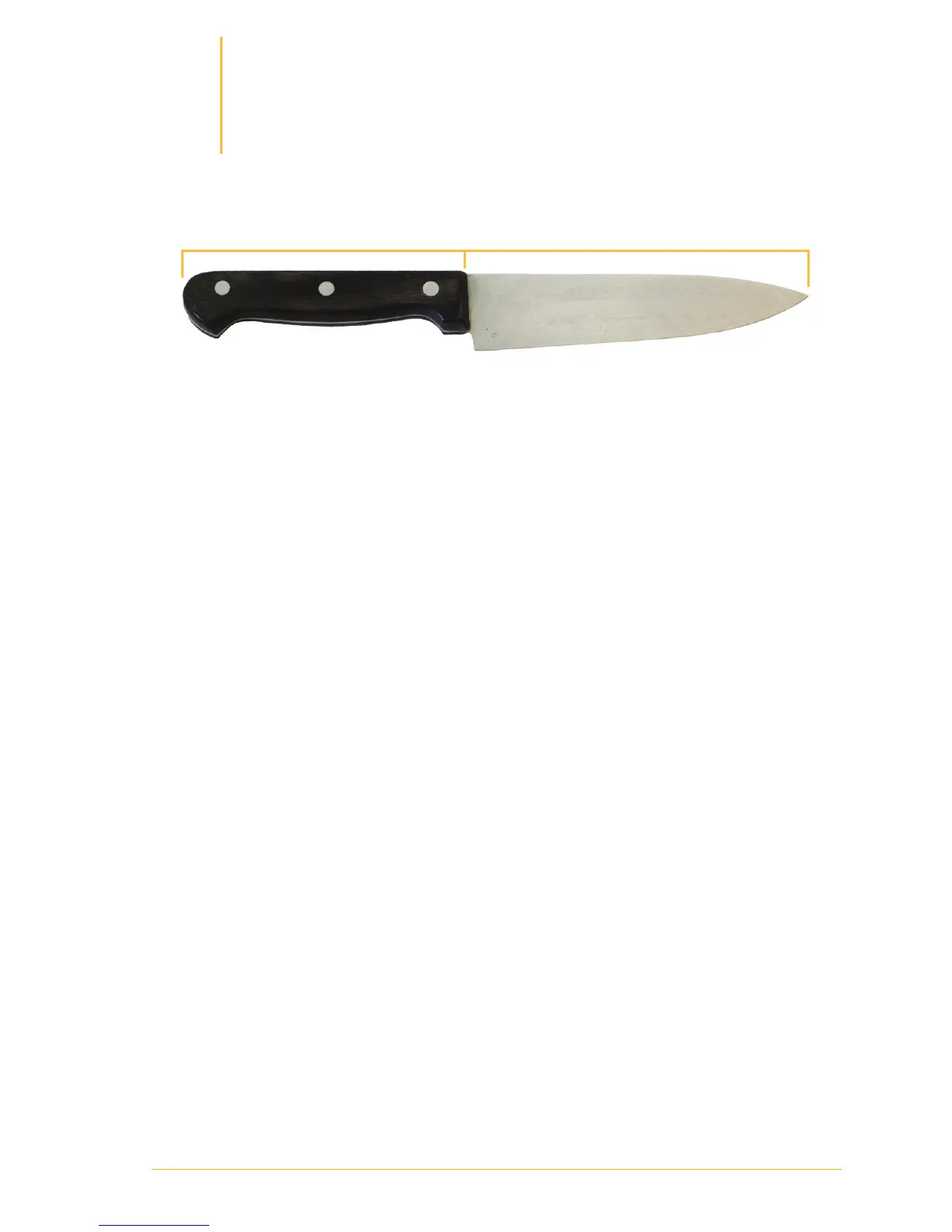
Anatomy of
a knife
3
A. Point. . . . . . . . . The very end of the knife, which is used for
piercing
B. Tip . . . . . . . . . . The first third of the blade (approximately) which
is used for small or delicate work
C. Edge . . . . . . . . . The cutting surface of the knife, which extends
from the point to the heel
D. Heel . . . . . . . . . .The rear part of the blade, used for cutting
activities that require more force
E. Spine . . . . . . . . . The top, thicker portion of the blade, which adds
weight and strength
F. Bolster. . . . . . . . .The thick metal portion joining the handle and
the blade, which adds weight and balance and
keeps the user’s hand from slipping
G. Finger Guard . . . .The portion of the bolster that keeps the user’s
hand from slipping onto the blade
Blade
A
B
C
D
E
F
G
Handle
Knives are made of different steels. Softer steels
will sharpen quickly. Harder steels will take longer
to sharpen, but they also hold their edge longer.


 To Next Page