Need help?
Do you have a question about the XENX P3-1060 and is the answer not in the manual?
Utilizes an 8192-level pressure sensor and two customizable side buttons.
On-tablet buttons can be customized for shortcuts, saved per application.
Supports Mac OS 10.12+, Windows 7 64-bit+, Android 6.0+. Driver-free on Win 10 & Android 6.0+.
Download the driver software from the official Xenx website for full functionality.
Unzip the file, run the installer, and follow on-screen prompts to complete installation.
Connect the graphics tablet to your Windows computer using the provided USB Type-C cable.
Download driver from www.xenx-tech.com, selecting version for your Mac's CPU.
Unzip the downloaded file, run the installer, and follow the setup instructions.
Grant necessary permissions to 'XenxTabletShadow' in System Preferences > Security & Privacy.
Adjust pen pressure sensitivity, modes, and side button functions.
Information on pen technology, resolution, pressure sensitivity, and report rate.
Specifies connection interface and supported operating system versions.
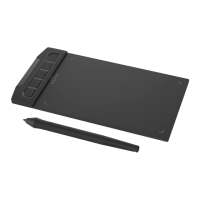
The XENX P3-1060 is a graphics tablet designed for digital art, painting, photo editing, and graphic design. It also serves as a versatile tool for document annotation, pen input in online classes and meetings, and electronic signature applications. This device aims to provide a comprehensive and intuitive experience for creative professionals and students alike.
The core function of the P3-1060 is to allow users to create and interact with digital content using a pressure-sensitive pen on a drawing area. It translates pen movements and pressure levels into digital input, enabling precise control over various software applications. The tablet connects to computers (Windows, Mac) and Android devices, extending its utility across different platforms.
The XENX P3-1060 boasts a range of features designed to enhance usability and performance:
Drawing Area: The tablet provides a generous 10 x 6.22 inches drawing area, offering ample space for creative work.
Battery-free Pen: The included pen operates without a battery, eliminating the need for charging and ensuring uninterrupted workflow. It incorporates a highly precise pressure sensor, supporting 8192 levels of pressure sensitivity. This allows for nuanced control over line thickness, opacity, and other pen-dependent parameters in creative software. The pen also features two customizable side buttons, which can be configured to perform frequently used shortcuts, further streamlining the user's interaction.
Customizable Shortcut Keys: The tablet itself is equipped with 10 customizable shortcut keys. With the XENX Tablet Driver installed, users can assign their favorite shortcuts to these buttons. A significant advantage is the ability to configure and save these shortcuts on a per-application basis, meaning different software can have its own unique set of shortcuts, optimizing workflow for specific tasks.
High Performance: The P3-1060 is engineered for high performance, capturing 266 sets of pen coordinates and pressure data per second. This high report rate ensures smooth and responsive drawing, minimizing lag and providing a natural pen-on-paper feel.
Broad Compatibility: The XENX P3-1060 is compatible with a wide range of operating systems: Mac OS 10.12 or later, Windows 7 64-bit or later, and Android 6.0 or later. For Windows 10 and Android 6.0 or later, the tablet offers a driver-free pen experience, allowing for basic plug-and-play functionality without the need for additional software installation. However, to unlock advanced features like shortcut key customization and screen mapping, the XENX Driver software is required.
Windows OS Setup: For Windows users, the tablet can function as a plug-and-play device for pen pressure-enabled applications starting from Windows 10, leveraging Microsoft® Windows Ink. To access advanced features, the XENX Driver software needs to be downloaded from the official website, unzipped, installed, and the computer restarted if prompted. The driver can always be accessed via the XENX icon in the system tray. Users are advised to temporarily disable anti-virus software if installation is blocked and to uninstall any other graphics tablet drivers before installing the XENX Driver.
Mac OS Setup: Mac users (OS 10.12 or later) also need to install the XENX Driver software. The process involves downloading the driver, selecting the appropriate CPU version (M1 or Intel), unzipping and running the installer, and restarting the computer. After installation, users might need to update system preferences under "Security & Privacy" to allow "XenxTabletShadow" accessibility access if a warning appears.
Android OS Setup: The P3-1060 supports plug-and-play functionality on Android OS 6.0 or later. By default, the drawing area is in landscape mode. To match the phone's aspect ratio and switch to portrait mode, users connect the tablet via a Type-C OTG adapter, launch a drawing app, and then press and hold both the top and bottom shortcut buttons on the tablet for 5 seconds. Holding them again for 5 seconds switches back to landscape mode for PC/Mac use. It's important to note that shortcut keys on the tablet and pen are not supported on Android devices, and only a USB Type-C OTG adapter is provided. Some Android devices may require enabling the USB OTG function in their settings.
XENX Driver Settings: The XENX Driver software provides extensive customization options, organized into six main sections:
Windows Ink: Default mode, leveraging built-in Windows pen features. If pen pressure doesn't work in older applications, switching to Absolute mode is recommended.
Absolute: Pen coordinates are absolutely mapped to the screen area, so the cursor jumps to the pen's location on the tablet.
Relative (Mouse Mode): The pen behaves like a traditional mouse; the cursor stays when the pen is lifted and continues from that point when placed back down. Useful for daily operation as a mouse replacement.
Absolute: Default mode, pen coordinates are absolutely mapped to the screen area.
Relative: Behaves like mouse mode, similar to Windows OS.
Default: Both buttons are set to eraser function on Windows OS.
None: Disables the pen button.
Right Click: Simulates a mouse right-click.
Middle Click: Simulates a mouse middle-click.
Pen / Eraser: Toggles pen tip function between pen stroke and eraser.
Hotkey: Allows customization of any key combination for different applications. * Advanced Settings: This section offers three extra functions:
*   **Device and Application:**
    *   **Device List:** For users with multiple XENX devices, the driver creates different profiles. Clicking a device icon views its specific settings.
    *   **Application List:** Allows setting different profiles for specific software applications. By default, settings apply to all applications. To create an application-specific profile, users select the target device, click the "+" button in the application list, and choose the desired application. For Windows, this involves locating the application's .exe file or selecting its desktop shortcut. To remove a profile, users select the target device and application, then click the "-" button.
*   **Manage Xenx Driver Settings File:** Located at the bottom of the driver interface, this section includes four buttons:
    *   **About:** Displays driver and firmware version information.
    *   **Export:** Backs up/exports settings to computer storage.
    *   **Import:** Restores/imports settings from a file.
    *   **Reset:** Clears all customized settings and restores default values.
The P3-1060 incorporates features for easy maintenance and longevity:
The XENX P3-1060 is designed to be a reliable and adaptable tool for digital creation, offering a balance of performance, customization, and user-friendly features across various operating systems.
 General
| Pressure Sensitivity | 8192 Levels |
|---|---|
| Resolution | 5080 LPI |
| Interface | USB |
| Tilt | ±60° |
| Express Keys | 8 |
| Pen Technology | Battery-free Electromagnetic Resonance |

 To Next Page