This document serves as the user manual for a foldable electric scooter, outlining its functions, safety recommendations, maintenance, and technical specifications.
Function Description
The foldable electric scooter is designed for personal transportation and entertainment. It features a control panel with four LED indicators to display the battery charge level. When all four LEDs are lit, the battery is between 100% and 86% charged. If three LEDs are lit and one is blinking, the charge level is between 85% and 71%. As the battery depletes, the indicators will flash and eventually turn off.
The scooter is operated via a switch button. Pressing it for 3 seconds turns the scooter on, displaying battery capacity and real-time speed on an LCD screen. A single press changes the speed level, and a double press toggles the headlight on and off. The scooter can also be connected to a mobile phone via Bluetooth using the "firelus" app (available on app stores), with a pairing code of 888888.
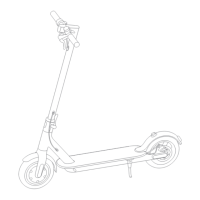
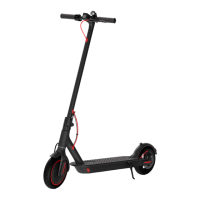
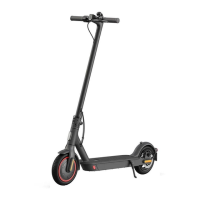
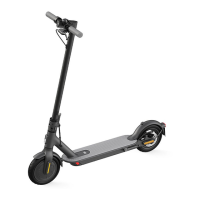
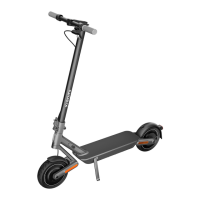
The scooter incorporates a folding mechanism for easy storage and transportation. It also includes a speed lever, brake handle, brake lights, brake disc, stand, and a brake compartment. Energy recovery systems are integrated to assist in slowing down when the accelerate button is released.
Important Technical Specifications
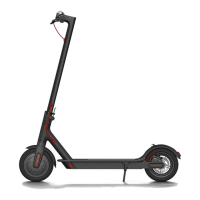
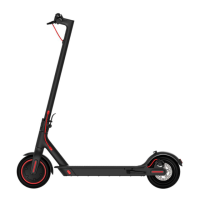
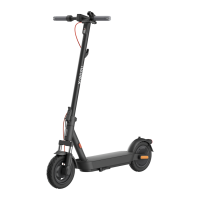
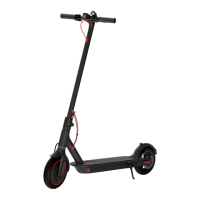
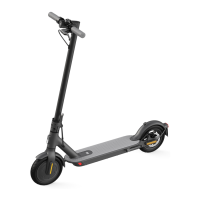
The manual details two models: M187 and Pro Edition.
Dimensions:
- Length x Width x Height: 106 x 42 x 48 cm (unfolded)
- Folded Length x Width x Height: 106 x 42 x 48 cm
Weight:
- Gross weight: 12kg (M187), 12.5kg (Pro Edition)
- Max load: 120 kg
User Specifications:
- Age: 16-50 years
- Height: 120-200 cm
Performance:
- Max speed: 25 km/h (M187), 30 km/h (Pro Edition)
- Possibility in average condition: 20 km (M187), 30 km (Pro Edition)
- Maximum slope: 11% (M187), 14% (Pro Edition)
- Suitable area: Solid road surface, smooth clay surface, obstacles less than 1cm high, pools no more than 2cm deep.
Environmental Conditions:
- Operating temperature range: -10°C to 40°C
- Temperature of storage: -20°C to 45°C
- Waterproof level: IP54
Battery Parameters:
- Rated voltages: 36VDC
- Max voltage of charging: 42VDC
- Rated power (Wh): 187 Wh (M187), 280 Wh (Pro Edition)
- Smart battery management system: Stress, insufficient voltage, short circuit, auto sleep/wake up, overheating protection, control of battery using.
- Charging time: Est. 3.5 hours (M187), Est. 5 hours (Pro Edition)
Motor Parameters:
- Rated power: 200W (M187), 250W (Pro Edition)
- Max power: 400W (M187), 500W (Pro Edition)
Power Adaptor Parameters:
- Rated power: 71W
- Rated input voltage: 100-240VAC
- Rated output voltage: 42VDC
- Rated current: 1.7A
- Certificate: CCC, RoHs
Usage Features
Assembly:
- Fix the steering rod and open the parking bridge.
- Set the handlebars vertically.
- Use the hex wrench provided to tighten the screws on the handlebar.
- Test the power switch after assembly.
Driving Instructions:
- Always wear a helmet and knee pads during practice.
- Power on the scooter and check the battery LED light.
- Stand on the pedal with one leg and push off the ground with the other.
- Once moving, place the other leg on the pedal and press the accelerate button. Acceleration only engages when the scooter speed exceeds 5 km/h.
- To slow down, release the accelerate button. The energy recovery system will automatically engage. For urgent braking, press the left disc brake tightly.
- To turn, lean your body slightly in the desired direction (left for left, right for right) and slowly turn the handlebar.
Safety Recommendations:
- Avoid driving in the rain.
- Bend knees slightly on rough roads and maintain a low speed (5-10 km/h).
- Be cautious when entering rooms or elevators to avoid hitting door frames.
- Do not accelerate when descending a hill.
- Do not press the speed knob while walking with the scooter.
- Avoid obstacles on the road.
- Do not hang heavy objects or backpacks on the handlebars.
- Do not place one foot on the running board or on the ground while driving.
- Do not drive on high roadways meant for motor vehicles or at high speeds in residential areas with heavy pedestrian traffic.
- Do not drive through puddles exceeding 2cm in depth.
- Do not ride with more than one person or hold a child in your arms.
- Do not tread on the back of the fender.
- Do not touch the disc brake.
- Do not drive with hands off the handlebars.
- Do not ride the scooter up or down steps or jump over obstacles.
- Always comply with local traffic rules and safety recommendations.
- Do not lend the scooter to inexperienced riders without proper training and safety gear.
- Inspect the scooter before each use for any damage, leaks, or unusual sounds. Discontinue use immediately if any issues are found.
Folding and Transportation:
- Ensure the scooter is off.
- Hold the front pole, loosen the lock lever, and lower the steering rack.
- Position the steering rack horizontally and secure it by inserting a hook through a special ring on the rear wheel mudguard.
- To unfold, disconnect the steering rack lock from the mudguard hook, lift the steering rack to a vertical position, and lock the lever.
- The folded scooter can be carried with one hand.
Maintenance Features
Cleaning and Storage:
- Clean the scooter housing with a soft, damp cloth. For stubborn stains, use toothpaste and a toothbrush, then wipe clean with a damp cloth.
- For scratched plastic parts, use sandpaper or other grinding materials for polishing.
- DO NOT use alcohol, petrol, kerosene, or other corrosive solvents, or volatile chemical solvents for cleaning.
- DO NOT wash the scooter with high-pressure water.
- Ensure the scooter is off during cleaning.
- After charging, reinsert the plug into the charging connector to prevent electric shock or water damage.
- Store the scooter in a dry, cool place. Avoid prolonged exposure to direct sunlight, extremely high temperatures, or very low temperatures, as this can accelerate aging of the outer body and wheels, and reduce battery life.
Battery Maintenance:
- Use only original batteries.
- Do not open or disassemble the battery to prevent electric shock.
- Avoid contact with metal objects to prevent short circuits.
- Use the original AC adapter for charging.
- Charge the battery after each use to prolong its service life.
- If the scooter is not used for 30 days, charge the battery and store it in a cool, dry place. Charge the battery every 60 days to prevent failure, which is not covered by warranty.
- Avoid full discharge of the device to extend battery life.
- Battery performance is optimal at normal room temperature. Performance decreases at temperatures below 0°C.
- At -20°C, the traveled distance can be half or less than normal conditions.
- A fully charged scooter has a standby time of 120-180 days.
- The smart chip stores charging/discharging information. Failure to charge for a long time can cause irreparable damage, which is not covered by warranty.
- DO NOT disassemble the device by unauthorized personnel due to the risk of electric shock or serious injury.
- Dispose of used batteries and accumulators according to local laws to prevent environmental pollution.
Adjusting Brake Disc:
- If the brake is too tight, use an M5 hex wrench to scroll the counterclockwise screws of the brake disc tensioner pulley, slightly shorten the tail brake cable, then tighten the tensioner pulley.
- If the brake is too loose, loosen the tension pulley, pull the brake cable to slightly increase its length, then tighten the tension pulley.
Adjusting Handlebars:
- To adjust the staggering of the steering rack, use an M5 hex wrench to tighten the two screws near the folding mechanism.
Pumping Wheels:
- If a rear wheel is deflated, connect a connecting pipe to the wheel nipple. First, remove the cap of the pin, then tighten the fitting, and then pump the wheel.
Warranty
The warranty service is provided in accordance with consumer rights and product quality laws. It is recommended to keep the original packaging for 15 days for safe transport.
Warranty Terms:
- Main Unit (Frame, hub motor, controller, steering wheel, handlebar, control panel, rear hub, brakes, disc brakes, folding system, fork, front fork, governance system bus control, brake cable): 1 year
- Accessories (Battery, power supply, brake level, switching gears): 6 months
- Exterior parts that easily wear out (Anti-collision strip, headlights, instrument cover, handle sets, tires, inner tubes, bell, fender, taillights, decorative cover, stand, battery compartment cover, foot pad, charging port, rubber stopper): 3 months
Non-Warranty Regulations:
- Unauthorized maintenance, misuse, collision, negligence, abuse, intake, accident.
- Improper use of non-product accessories, or torn/modified labels/anti-counterfeit marks.
- Expired warranty period.
- Damage caused by force majeure.
- Failures not corresponding to the "List of faults" of EcoRider service center.
- Failures due to human factors (e.g., excessive wetting, puncture, drop, scratch, damage to outer casing from normal use).
- Use of the product for commercial purposes.
List of Faults (examples):
- Incorrect motor operation.
- Problems with controller operation.
- Problems with charger.
- Problems with battery.
- Occurrence of cracks, deformation, etc., during use.
Presence of Toxic and Harmful Substances
The manual includes a table detailing the presence of toxic and harmful substances (Pb, Hg, Cd, Cr6+, PBB, PBDE) in various components (Power adaptor, Battery, Connecting pipe, Charging port, Indicators, Circuit board, Motor, Housing).
- O: Indicates that the toxic and harmful substances in all components are below the limit value according to standard GB/T 26572-2011.
- X: Indicates that the presence of toxic and hazardous substances in at least one component exceeds the threshold according to standard GB/T 26572-2011.

 To Next Page




 General