EasyManua.ls Logo

XTZ 99.26 P - User Manual

XTZ 99.26 P
11 pages
Print Icon
To Next Page IconTo Next Page
Loading...
Page: 1
XTZ 99.26 P
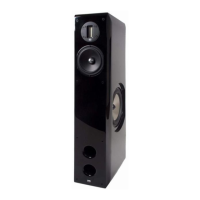
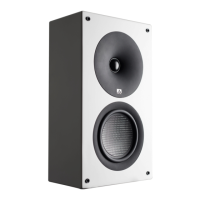
High-End Monitor speaker
User manual
© 2008 XTZ AB , www.xtz.se
Question and Answer IconNeed help?

Do you have a question about the XTZ 99.26 P and is the answer not in the manual?

Summary

Technical Presentation

Tweeter Driver

Describes the ribbon tweeter, its sandwich construction, magnet system, and frequency response.

Woofer;Midrange Driver

Details the 6.5" Seas Excel magnesium driver, its cone, surround, basket, and magnetic properties.

Crossover and Binding Post

Installation and Placement

Mounting and Connecting Tips

Correct Phase Connection

Emphasizes connecting amplifier and speaker terminals with the correct polarity (+/-).

Overload and Power Handling

Warns about the risk of overloading drivers at high loads and adjusting EQ settings.

Connecting Crossover

Details connecting cables from the crossover output to the speaker drivers, warning of potential damage.

Sound Settings

Room Tuning

Explains using bass plugs in reflex gates to adjust lower boundary frequency and treble level.

Treble Level Adjustment

Details four modes for adjusting treble level (-0dB, +3dB, -2dB, -4dB) via loop connector.

Technical Specifications

Service and Support

Overview

The XTZ 99.26 P is a high-end monitor speaker designed to deliver a natural and immersive sound experience, whether for motion pictures or music. The philosophy behind XTZ products, including this speaker, is to recreate sound as naturally as possible, acknowledging that acoustics are ultimately a matter of taste. The primary goal of XTZ is to offer the best value for money, achieved through a concept that minimizes middlemen, prioritizes product quality over advertising, focuses on cost-effective manufacturing in large volumes, and provides technically sound solutions.

Function Description

The XTZ 99.26 P is a 2-way monitor speaker that excels in reproducing audio with depth and clarity. Its design aims to immerse the listener in the sound, replicating the original intent of mastering engineers. The speaker's construction and components are carefully selected to achieve high-fidelity sound reproduction.

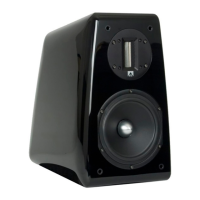
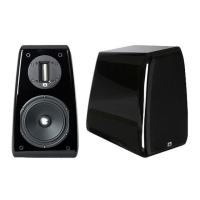
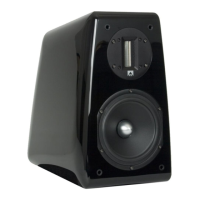
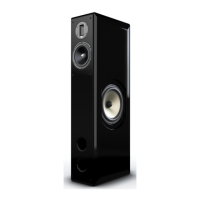
The cabinet design is not only aesthetically pleasing with its pyramid shape but also acoustically advantageous. The non-parallel walls effectively muffle internal resonances, contributing to a cleaner sound. Constructed from 25mm MDF board, known for its good sonic qualities, the cabinet is further reinforced with internal bars, ensuring a very stable and rigid structure.

The tweeter driver is a ribbon type, chosen for its superior transient response and flat frequency response, extending up to 40,000 Hz. This makes the speaker compatible with high-resolution audio formats like DVD-Audio and SACD. The ribbon cone is exceptionally light and thin, made from a sandwich construction of rosin-aluminium-rosin hardened at 320 degrees Celsius. The magnet system features two rows of high-efficient neodymium magnets within a molded chassis of ceramic carbon steel. Fishbone-shaped aluminum contactors ensure low connection resistance and efficient heat dissipation.

The woofer/midrange driver is a 6.5-inch magnesium driver from the Seas Excel series, renowned for its extreme performance and high quality. The surface-treated magnesium cone is both light and stiff, effectively reducing resonances, while a rubber surround prevents edge resonances. The molded metal basket is designed for "high flow," acoustically transparent, and precisely shaped to ensure stability and efficiently reduce resonances. Its non-magnetic nature contributes to higher driver efficiency. A strong magnet combined with the light cone yields high efficiency and good transient response. Heavy copper rings above and below the T-shaped pole piece reduce non-linear and modulation distortion, increasing the overload margin. Copper plating on the top and bottom plates, along with a solid copper phase plug, improves heat conduction, enhancing power durability. Gold-plated terminals reduce contact resistance and prevent corrosion. Large windows in the basket minimize sound reflection, airflow noise, and cavity resonances.

A unique feature of the 99.26 P is its external crossover box. This design choice offers several benefits: it reduces microphonic affection in the crossover, simplifies assembly, and provides the option to drive the speaker fully actively. The crossover components are of high quality to minimize signal affection. The crossover itself is a -12 dB design, chosen for its fast transient response and minimal phase shifting.

Usage Features

The XTZ 99.26 P offers several features for sound adjustment and optimal placement, allowing users to tailor the audio experience to their room acoustics and personal taste.

  • Room Tuning - Mechanical Adjustment of Boundary Frequency: The speaker's lower boundary frequency can be altered using supplied bass plugs in the bass reflex gates.
    • Closed Gate: When the bass plug is mounted, the cabinet operates as a closed construction, resulting in a "tighter" bass reproduction. This setting is influenced by room size, shape, and personal preference, encouraging experimentation.
    • Bass Reflex: Without the plug, the speaker operates in bass reflex mode, providing a higher bass level and the ability to handle lower frequencies.
  • Level Adjustment in the Treble Range: The treble level can be adjusted in four different modes using a supplied loop connector. This allows for fine-tuning the sonic characteristics to match the room, equipment, and individual taste.
    • Mode 1 / 0dB: Neutral sound with a flat frequency response.
    • Mode 2 / +3dB: Treble level is increased by 3dB.
    • Mode 3 / -2dB: Treble level is decreased by 2dB.
    • Mode 4 / -4dB: Treble level is decreased by 4dB.
  • Mounting Alternatives: The speaker is typically placed standing by a wall. The proximity to rear and side walls influences bass level and characteristics, so users are encouraged to experiment with different distances for optimal sound.
  • Connecting Cross Over: Cables from the external crossover box must be connected correctly to the speaker's terminals. The tweeter output from the crossover should connect to the tweeter on the speaker, and the woofer output to the woofer. Incorrect connection can damage the drivers.
  • Front Speaker Placement: For the best results, front speakers should be placed symmetrically in front of the listener. The distance between them should be approximately 80% of the distance to the listener, creating a recommended angle of 45° between the front speakers.
  • Subwoofer Placement: The placement of a subwoofer significantly impacts the overall frequency response and sound level, especially at low frequencies. Even slight changes can make a difference, requiring patience and experimentation to find optimal placement and phase alignment with the main loudspeakers. Placing the subwoofer near the front system is recommended to minimize phase eliminations.
  • Cables: Keep cables as short as possible to minimize electrical influence and antenna effects. Ensure all connections are clean, non-oxidized, and mechanically stable. Signal cables should be separated from other cables.
  • Using Two Subwoofers: Employing two subwoofers offers several benefits, including higher sound pressure levels, reduced dips and standing waves in the room, better frequency response, and less power needed to achieve the same SPL as with one subwoofer.

Maintenance Features

  • Initial Playing Time: The drivers require approximately 50 to 100 hours of initial playing time to sound optimal. During this period, the speaker can be used normally.
  • Overload Prevention: All loudspeakers have a limited tolerance for high power. Users should avoid playing music extremely loud or excessively increasing treble or bass settings, as this can overload the drivers and amplifier. Increasing bass or treble from 0 to maximum can increase power by about 16 times.
  • "Do-It-Yourself" Service: XTZ supports a "do-it-yourself" service approach. If a user can identify a defective part (driver, filter, or amplifier), they are permitted to unmount it and send it back for exchange. However, if uncertain, it's recommended to contact XTZ support before disassembling the speaker. The warranty applies if the defect is manufacturing-related, even if additional defects occur during unmounting.
  • Packaging for Repair: When sending a product for repair, it is crucial to pack it very carefully. Damages during transportation are common, and weak packaging may void compensation from the transporting company. Always include a copy of the receipt and a description of the defect.
  • Support: XTZ offers free support for installation advice or any problems encountered during installation. Users can contact support via email, including a phone number for verbal assistance if desired.

XTZ 99.26 P Specifications

General IconGeneral
Configuration2-way
Sensitivity88 dB
Drivers2
TypeBookshelf
Impedance4-8 Ohm
Power Handling150 W
Tweeter1" Dome
Woofer6.5"

Related product manuals