Need help?
Do you have a question about the Yadea V7 and is the answer not in the manual?
Explains warning symbols like DANGEROUS, WARNING, ATTENTION.
Emphasizes reading the manual and inspecting the scooter before use.
Identifies and labels various parts of the scooter in a diagram.
Explains the coding system for the vehicle's frame.
Details the various indicators and functions displayed on the speedometer.
Step-by-step instructions for installing the scooter's battery.
Explains how to use the power lock switch for power on/off and anti-theft functions.
Details how to lock and unlock the scooter using the anti-theft system.
Explains the functions of the switches on the left handlebar, including lights and horn.
Explains the functions of the switches on the right handlebar, including lights and P gear.
Checks the power supply, headlights, taillights, and turning indicators for proper function.
Verifies the function and performance of the front and rear brake systems.
Guides on how to start the scooter and begin riding safely.
Explains how to control the scooter's speed using the throttle.
Details regular checks and maintenance procedures for the motor.
Provides guidance on maintaining the controller for optimal performance and longevity.
Steps to prepare for inspecting the scooter, choosing a safe location and ensuring safety.
Checks handlebars, front fork, and absorbers for damage, looseness, or abnormal phenomena.
Provides a wiring diagram of the scooter's electrical system.
This document is a user manual for a YADEA electric scooter, providing comprehensive information on its operation, safety, and maintenance. It is designed to help users understand the scooter's performance, characteristics, and maintenance requirements to ensure safe and optimal driving.
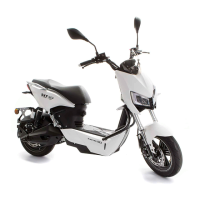
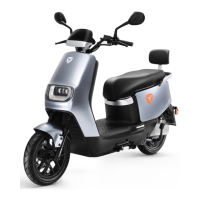
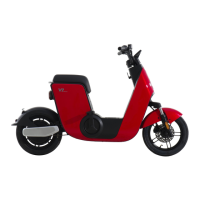
The YADEA electric scooter is a personal mobility device designed for urban and short-distance travel. It is powered by an electric motor and a lithium battery, offering an environmentally friendly alternative to gasoline-powered vehicles. The scooter features a handlebar for steering, a throttle for speed control, and front and rear brake levers for stopping. It is equipped with essential lighting and signaling devices, including headlights, taillights, and turning lights, to ensure visibility and communication on the road. A speedometer provides information on speed, mileage, and battery status. The scooter also includes a power lock switch for turning the device on/off and engaging seat or anti-theft locks. For security, an anti-theft alarm system is available, which can be activated and deactivated remotely.
Before riding, users are advised to perform a thorough inspection of the scooter, including checking the power supply and lighting circuits, front and rear brakes, handlebar, wheels, and tire pressure. It is crucial to ensure that all components are in good working order and that there are no loose connections or abnormal noises. The manual emphasizes the importance of wearing a helmet, goggles, and other protective gear while riding. Loose clothing should be avoided to prevent entanglement with moving parts. Overloading the scooter is strictly prohibited, with specific weight limits for the rear shelf, front storage box, and rear storage box, and an overall maximum load of 150Kg. The center of gravity of any loaded goods should be kept as low and close to the scooter's center as possible for balance.
Starting the scooter involves inserting the key into the electric door lock and rotating it clockwise to turn on the power. The throttle is used to adjust speed, rotating counterclockwise to accelerate and clockwise to decelerate. Releasing the throttle automatically resets it and stops power output from the motor. Braking is achieved by holding the front or rear brake levers. The manual advises against sudden sharp braking or turning, as this can lead to side slips or rollovers. For parking, the scooter can be supported by either the main stand or the side stand. When using the main stand, the scooter is kept vertical, while the side stand tilts the scooter to the left. Users are reminded to turn off the power, lock the anti-theft device, and secure any valuables when parking.
The scooter's lithium battery can be charged either by removing it from the scooter or by charging it directly on the scooter. It is recommended to charge the battery when its level is around 30% and to avoid letting it drain completely to the minimum allowable voltage. Charging should be done in a well-ventilated area, away from flammable materials, and the charging time should not exceed 10 hours. The charger's indicator light will turn red during charging and green when the battery is fully charged.
Regular maintenance is crucial for the longevity and safe operation of the YADEA electric scooter. The manual outlines a schedule for self-inspection and professional maintenance. Initial maintenance is recommended one month after purchase, with subsequent maintenance every three months. For scooters used by families, a detailed maintenance schedule is provided, including daily, 60-day, 180-day, and 360-day checks. For commercial or group-purchase scooters, the maintenance frequency should be doubled.
Key maintenance tasks include:
The manual also provides specific cautions for water washing, emphasizing the need to turn off the power, avoid touching charging ports with wet metal conductors, and prevent water from impacting electrical components, charging sockets, wire harness connectors, and safety tubes. High-pressure water pipes or steam should not be used for washing. For any complex failures or damage to critical components like the motor, controller, charger, or battery pack, users are advised to contact an authorized service station and refrain from unauthorized disassembly to maintain warranty validity.
 General
| Category | Scooter |
|---|---|
| Range | 80 km |
| Max Load | 150 kg |
| Brakes | Disc |
| Brake System | Front and Rear Disc Brakes |

 To Next Page