EasyManua.ls Logo

Yamaha Clavinova CVP-105 - User Manual

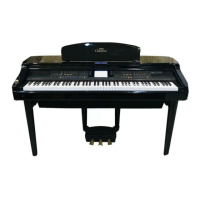
Yamaha Clavinova CVP-105
235 pages
Print Icon
To Next Page IconTo Next Page
Loading...
Owner’s Manual
IMPORTANT
Check Your Power Supply
Make sure that your local AC mains voltage matches
the voltage specified on the name plate on the bottom
panel. In some areas a voltage selector may be
provided on the bottom panel of the main keyboard
unit near the power cord. Make sure that the voltage
selector is set for the voltage in your area. The voltage
selector is set at 240V when the unit is initially shipped.
To change the setting use a “minus” screwdriver to
rotate the selector dial so that the correct voltage
appears next to the pointer on the panel.

Table of Contents

Other manuals for Yamaha Clavinova CVP-105

Questions and Answers

  • R
    robin08Aug 19, 2025
    Why is the overall volume low, or why is no sound heard from my Yamaha Musical Instrument?
    • D
      Desiree Leon MDAug 19, 2025
      The low or absent sound from your Yamaha Musical Instrument may be caused by several factors: the [MASTER VOLUME] might be set too low, so try raising the [MASTER VOLUME] level. Headphones might be connected, so unplug them. Alternatively, the Local Control function might be turned off, so turn the Local Control function on.
  • S
    Sean StoneAug 21, 2025
    What to do if noise is heard from the Yamaha Clavinova’s Musical Instrument speakers?
    • P
      phillip53Aug 21, 2025
      The noise you hear from the Clavinova's speakers might be due to interference from a mobile phone close to the instrument. To resolve this, either turn off the mobile phone or move it further away from the Clavinova.
  • D
    Dominique JonesAug 23, 2025
    What to do if the Yamaha Clavinova CVP-105 Clavinova does not turn on?
    • J
      Jose BennettAug 25, 2025
      If your Clavinova doesn't turn on, it might not be plugged in correctly. Make sure to securely insert the female plug into the socket on the Clavinova and the male plug into a proper AC outlet.
  • L
    Lance HolmesAug 26, 2025
    Why is the volume of the Auto Accompaniment or song playback low on my Yamaha Clavinova CVP-105 compared to the keyboard?
    • D
      Danielle Bishop PhDAug 26, 2025
      If the Auto Accompaniment or song playback volume is too low, it could be because the [ACMP/SONG VOLUME] is set too low, so raise the [ACMP/SONG VOLUME] level. Also, the volume level of one or more accompaniment parts or song tracks might be set too low; in this case, raise the part or track level(s) in the appropriate MIXER display.
  • A
    Amanda BrownAug 28, 2025
    Why is the keyboard volume low on my Yamaha Clavinova CVP-105 compared to the Auto Accompaniment or song playback?
    • J
      Jennifer BennettAug 28, 2025
      If the keyboard volume is low compared to the Auto Accompaniment or song playback, it could be that either the overall keyboard volume or the independent volume level of the keyboard part is set too low. Increase the overall keyboard level in the main display, or use the VOLUME function in the appropriate KEYBOARD display to raise the volume of the keyboard part in question.
  • D
    Denise SimpsonAug 30, 2025
    What to do if the damper pedal has no effect on Yamaha Clavinova CVP-105, or the sound sustains continuously?
    • T
      Tiffany HarrisAug 30, 2025
      If the damper pedal isn't working or the sound sustains continuously, the pedal cord plug may not be connected properly. Ensure you securely insert the pedal cord plug into the proper jack.
  • A
    Angela FisherSep 1, 2025
    Why does the Yamaha Musical Instrument Auto Accompaniment not play back?
    • D
      Donald ClaytonSep 1, 2025
      If the Auto Accompaniment doesn't play back, the Auto Accompaniment might not be turned on. Press the [ACMP ON] button to turn on the Auto Accompaniment.
  • J
    Joe MeadowsSep 3, 2025
    What to do if the Yamaha Clavinova CVP-105 style or song playback does not start?
    • R
      Ryan WalshSep 3, 2025
      If the style or song playback doesn't start, the MIDI Sync function might be set to EXT. Set the MIDI Sync function to INT.
  • L
    Leonard OneillSep 5, 2025
    Why is the desired chord not recognized or output by the Yamaha Musical Instrument Auto Accompaniment?
    • C
      Christopher PerkinsSep 5, 2025
      If the desired chord isn't recognized by the Auto Accompaniment, the keys might not be played correctly, or the keys are not being played according to the selected accompaniment mode. Check the accompaniment mode, and play the keys according to the selected mode.
  • T
    Timothy ConnerSep 7, 2025
    Why does the Yamaha Clavinova CVP-105 display look too bright or too dark?
    • S
      Sara BlairSep 7, 2025
      If the display is too bright or dark, the brightness may be affected by the surrounding temperature. Adjust the contrast of the display using the [CONTRAST] control.

Summary

CHAPTER 1: Getting Ready

Handling the Floppy Disk Drive (FDD) and Floppy Disks

Provides precautions and instructions for handling floppy disks and the disk drive.

Setting Up the Clavinova

Details the procedures for setting up the music stand, key cover, and turning the power on/off.

Panel Controls and Terminals

Identifies and explains the various panel controls and terminal connections on the instrument.

CHAPTER 2: Basic Operation

Using the LCD Display Controls

Tutorial on reading the LCD display and using associated controls for navigating functions and settings.

Adjusting the Volume

Explains how to adjust overall, accompaniment, song, and keyboard volumes using sliders and settings.

Using the Metronome

Covers starting, stopping, and adjusting the tempo and settings of the built-in metronome for practice.

CHAPTER 3: Voices

Selecting Voices

Describes how to select voice groups and individual voices from the VOICE SELECT display and main display.

Playing Two Voices Simultaneously - Dual Mode

Explains how to layer two voices, adjust their settings, and create richer tonal textures.

Playing Two Voices on Different Sides of the Keyboard - Split Mode

Guides on splitting the keyboard into two sections with different voices for each hand.

Using the Pedals

Details the functions of the damper, sostenuto, and soft pedals, including assigning other functions to them.

CHAPTER 4: Reverb and Other Effects

Reverb

Explains how to turn reverb on/off, change reverb types, and adjust depth settings for keyboard parts and vocals.

Chorus

Covers applying chorus effects to voices, changing chorus types, and adjusting depth settings for added warmth.

Voice Effects (CVP-109;107;700)

Details how to use and customize the two effect systems available for keyboard voices on specific models.

CHAPTER 5: Accompaniment Styles (Rhythm and Auto Accompaniment)

Selecting Accompaniment Styles

Guides on how to select accompaniment style groups and individual styles from the panel and display.

Playing the Accompaniment Styles

Covers varying styles, selecting variations, playing fill-in patterns, and starting/stopping accompaniment playback.

Playing with the Auto Accompaniment

Explains how to use Auto Accompaniment, select modes, change settings, and get help with chords.

CHAPTER 6: Registrations

Using Registrations (Registering and Recalling Panel Setups)

Details how to store, recall, protect, and name panel setups for instant recall of settings.

CHAPTER 7: Song Control

Song Playback

Covers entering Song Play mode, selecting songs, playback controls, adjusting tempo, and managing disks and tracks.

Guide Control

Introduces the Guide function for practicing songs using piano roll displays and keyboard guide lamps.

Song Recording

Details methods for recording performances, disk formatting, quick recording, track recording, and punch-in/out recording.

CHAPTER 8: Vocal Harmony (CVP-109;107;700)

Singing with Vocal Harmony (CVP-109;107;700)

Guides on connecting a microphone, turning the function on/off, and adjusting settings for vocal harmony effects.

CHAPTER 9: The Utility Functions

Using the Utility Functions

Explains how to access and use various utility functions for customizing instrument settings and operations.

Keyboard, Pedal, and MIDI Functions

Details keyboard, pedal, and MIDI settings for tuning, touch, controls, and external connections.

Disk and Backup Functions

Explains functions for managing disk files, including registration, setup, assistance data, and memory backup.

Tuning and Other Utility Functions

Covers micro tuning, scale tuning, user scale setup, and video output settings for pitch and display customization.

CHAPTER 10: Connections

Audio and Video Connections

Describes how to connect headphones, microphones, audio equipment, and video monitors to the Clavinova.

Data Connections

Covers connecting MIDI equipment and computers using MIDI and TO HOST terminals for data transfer.

APPENDICES

Effect Type Lists

Provides descriptions of various reverb, chorus, and effect types available on the Clavinova.

Messages

Panel Operation Messages

Lists messages related to performing operations via panel buttons, including restrictions and errors.

Disk-related and Style Messages

Covers messages related to disk operations, style file loading, and custom style mode.

Step Edit and Chord Sequence Messages

Details messages encountered during Step Edit and Chord Sequence operations, including recording and editing errors.

Troubleshooting

MIDI and Data Compatibility

Data Compatibility

Covers compatibility of song data formats like SMF, ESEQ, DOC, and voice allocation formats like GM and XG.

Yamaha Clavinova CVP-105 Specifications

General IconGeneral
CategoryDigital Piano
Sound SourceAWM (Advanced Wave Memory)
EffectsReverb, Chorus
DisplayLCD screen
ConnectivityMIDI In/Out
Speakers2 speakers
Keyboard88 keys, weighted (Graded Hammer Effect)

Related product manuals