16
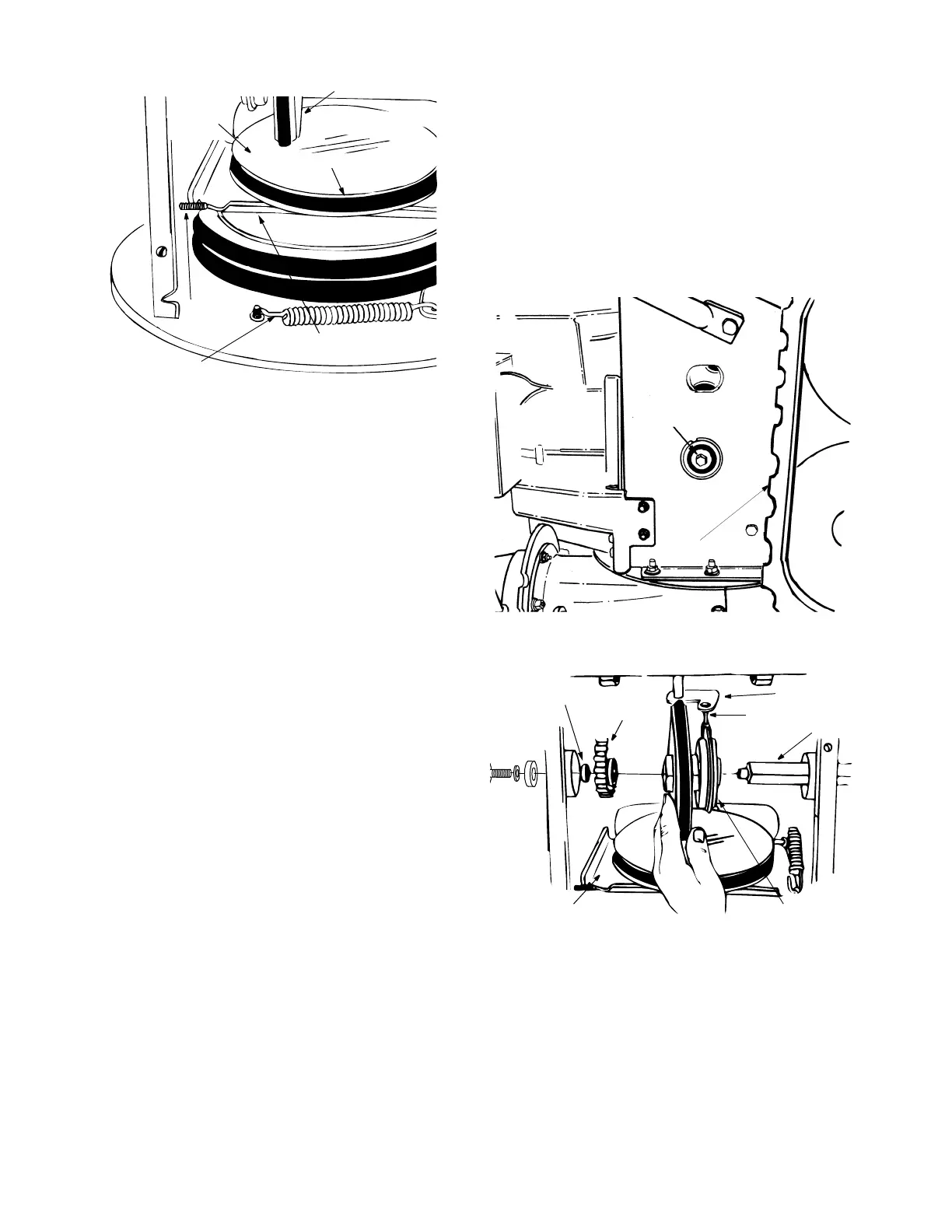
Figure 23
CHANGING THE
FRICTION WHEEL RUBBER
The rubber on the friction wheel is subject to wear
and should be checked after 25 hours of operation,
and periodically thereafter. Replace the friction
wheel rubber if any signs of wear or cracking are
found.
1. Drain the gasoline from the snow thrower, or
place a piece of plastic under the gas cap.
2. Tip the snow thrower up and forward, so that it
rests on the housing.
3. Remove four self-tapping screws from the frame
cover underneath the snow thrower.
4. Using a 7/8" wrench to hold the shaft, loosen,
but do not completely remove, the hex bolt and
bell washer from the left end of the shaft. See
Figure 24.
5. Move the track lock lever to the packed snow
position. Refer to Figure 16.
6. Lightly tap the head of bolt to dislodge the ball
bearing from the right side of frame, then
remove hex bolt and bell washer from left end of
shaft.
7. Sliding the shaft to the right, remove the spacer,
sprocket, and friction wheel assembly from the
shaft. See Figure 25.
8. Remove the six screws from the friction wheel
assembly (three from each side). Remove the
friction wheel rubber from between the friction
wheel plate.
9. Reassemble new friction wheel rubber to the
friction wheel assembly, tightening the six
screws in rotation and with equal force.
10. Position the friction wheel assembly up onto the
pin of the shift rod assembly, and slide the shaft
through the friction wheel. See Figure 25.
11. Slide the shaft into the hex portion of the
sprocket, the spacer, and the left ball bearing,
and secure with the bell washer and hex bolt.
See Figure 25.
Figure 24
Figure 25
Friction
Wheel
Disc
Friction Wheel
Stop
Bolt
Support Bracket
Drive Belt
Idler Spring
Hex Bolt
Bell Washer
Track
Spacer
Sprocket
Shift Rod
Assembly
Pin
Friction Wheel
Assembly
Shaft
Support
Bracket



 To Next Page