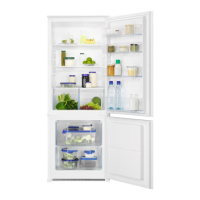
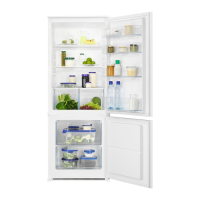
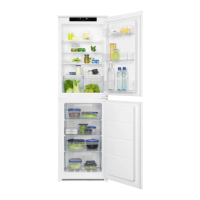
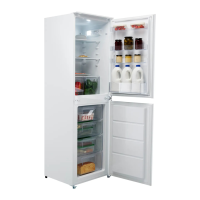
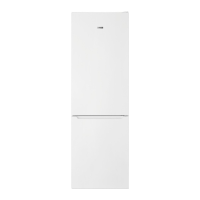
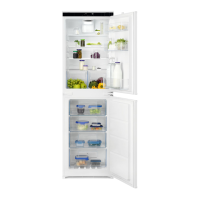
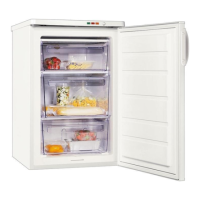
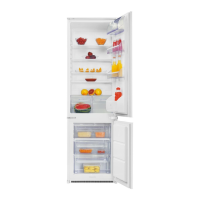
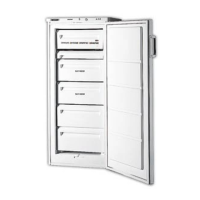
This document serves as a user manual for a Zanussi fridge freezer, providing comprehensive instructions for its installation, safe operation, maintenance, and troubleshooting. It emphasizes ease of use and aims to guide users through the various features of the appliance.
Function Description
The Zanussi fridge freezer is designed for storing food and beverages in a single household domestic indoor environment. It features separate compartments for refrigeration and freezing, allowing for the preservation of fresh, frozen, and deep-frozen food items. The freezer compartment is specifically designed for freezing fresh food and long-term storage of frozen goods. The appliance utilizes isobutane (R600a) as a flammable refrigerant gas, highlighting the importance of careful handling to prevent damage to the refrigerant circuit.
Usage Features
The appliance offers several user-friendly features to optimize food storage and energy efficiency.
Control Panel
The control panel, located on the top front of the appliance, includes a temperature regulator, a FastFreeze indicator, a FastFreeze button, and a temperature regulator ON/OFF button.
Switching On/Off
To switch on, users simply insert the plug into the wall socket and touch the temperature regulator button if all LED indicators are off. To switch off, the temperature regulator button must be touched for 3 seconds until all indicators light off.
Temperature Regulation
Temperature selection is progressive, ranging from 2°C to 8°C, with 4°C being the recommended setting. The desired temperature is selected by touching the temperature regulator until the corresponding LED lights up. The set temperature is reached within 24 hours and remains stored after a power failure.
FastFreeze Function
This function is crucial for pre-freezing and fast freezing in the freezer compartment. It accelerates the freezing of fresh food and protects already stored items from undesirable warming. Users are advised to activate FastFreeze at least 24 hours before placing food in the freezer. The function activates by pressing the FastFreeze button and automatically stops after 52 hours, though it can be manually deactivated at any time.
Movable Shelves and Door Shelves
The refrigerator walls are equipped with runners, allowing shelves to be positioned at various heights to accommodate different-sized food packages. Door shelves can also be repositioned.
Bottle Rack
A dedicated bottle rack is provided for storing bottles. One shelf can be tilted to store unsealed bottles by placing its front hooks one level higher than the rear hooks. If the shelf is positioned horizontally, only closed bottles should be stored.
Vegetable Drawers
Special drawers are located at the bottom of the appliance for storing fruits and vegetables, ensuring optimal conditions for these items.
Freezing Fresh Food
The freezer compartment is suitable for freezing fresh food and storing frozen and deep-frozen food for extended periods. Activating the FastFreeze function at least 24 hours before placing food in the freezer is recommended.
Storage of Frozen Food
When activating the appliance for the first time or after a period of disuse, it is advised to let the appliance run for at least 3 hours with the FastFreeze function switched on before placing products in the compartment. The freezer drawers are designed for easy access to food packages. For large quantities, drawers can be removed, and food placed directly on shelves, ensuring a minimum 15 mm clearance from the door.
Hints for Freezing
To ensure efficient freezing, fresh food should be wrapped and sealed in aluminum foil, plastic film, bags, or airtight containers. Dividing food into small portions facilitates more efficient freezing and thawing. Labeling and dating frozen food helps in identification and tracking shelf life. Food should be fresh when frozen to preserve quality, especially fruits and vegetables. Bottles or cans with liquids, particularly carbonated drinks, should not be frozen to prevent explosion. Hot food should be cooled to room temperature before being placed in the freezer. To avoid warming already frozen food, fresh unfrozen food should not be placed directly next to it but in a separate area of the freezer compartment.
Maintenance Features
Regular maintenance is essential for the appliance's longevity and efficient operation.
Care and Cleaning
Before any maintenance, the appliance must be deactivated and disconnected from the mains. The cooling unit contains hydrocarbons, and only qualified personnel should perform maintenance and recharging. The appliance should be cleaned with a moist soft cloth and neutral detergents. Abrasive products, cleaning pads, solvents, or metal objects should not be used. The drain of the appliance should be regularly examined and cleaned to prevent defrosted water from collecting at the bottom.
Cleaning the Interior
Before first use, the interior and all accessories should be washed with lukewarm water and neutral soap to remove any new product smell, then thoroughly dried. Detergents, abrasive powders, chlorine, or oil-based cleaners should not be used as they can damage the finish. Accessories and parts are not suitable for dishwasher cleaning.
Periodic Cleaning
The appliance should be cleaned regularly. The inside and accessories should be cleaned with lukewarm water and neutral soap. Door seals should be regularly checked and wiped clean to ensure they are free from debris.
Defrosting of the Refrigerator
Frost is automatically eliminated from the refrigerator evaporator during normal use. The defrost water drains into a special container at the back of the appliance, where it evaporates. The defrost water drain hole in the middle of the refrigerator compartment channel must be periodically cleaned to prevent water overflow onto food.
Defrosting of the Freezer
A layer of frost will always form on freezer shelves and around the top compartment. The freezer should be defrosted when the frost layer reaches a thickness of about 3-5 mm. To defrost, switch off the appliance or unplug it, remove stored food and place it in a cool location. The door should be left open, and the floor protected from defrosting water. Placing a pot of warm water in the freezer compartment can speed up the process. Ice pieces that break away should be removed. After defrosting, the interior should be thoroughly dried. The appliance should then be switched on, set to maximum coldness for at least 3 hours before returning food to the freezer. Sharp metal tools or mechanical devices should not be used to scrape off frost to avoid damaging the evaporator.
Period of Non-Operation
If the appliance is not in use for a long period, it should be disconnected from the electricity supply, all food removed, defrosted, cleaned, and all accessories cleaned. The doors should be left open to prevent unpleasant smells.
Replacing the Lamp
The appliance is equipped with a long-life LED interior light. Only authorized service personnel are permitted to replace the lighting device.


 To Next Page
 General