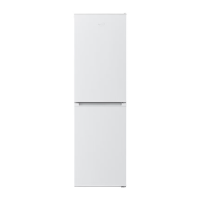
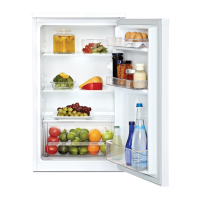
This document is an instruction manual for Zenith refrigerators, specifically models ZCS3582W and ZCS4582W. It provides comprehensive information on the product's function, technical specifications, usage, and maintenance.
Function Description
The Zenith refrigerator is designed for household use, primarily for the short-term storage of fresh food and drinks. It features a fridge compartment and a freezer compartment, with specific areas for different types of food to optimize storage conditions. The refrigerator utilizes a cooling system, which in some models, may use R600a gas. The operating temperature of the refrigerator is regulated by a thermostat, allowing users to adjust cooling settings according to their needs. A chiller compartment is also available in some models, designed to keep wrapped meat and fish food 2-3 times longer than a standard fridge compartment by maintaining a 0 °C temperature. The appliance is equipped with an illumination lamp to assist users in placing foodstuffs safely and comfortably.
Important Technical Specifications
- Models Covered: ZCS3582W, ZCS4582W.
- Cooling System: Some models may use R600a gas as a refrigerant.
- Temperature Control: Regulated by a thermostat with settings from 0 (system cooling off) to 5 (highest cooling setting/coldest setting).
- Fridge Compartment Temperature: Average temperature should be around +5°C.
- Chiller Compartment Temperature: Maintains 0 °C for specific food storage.
- Water Dispenser (for applicable models):
- Maximum cold water inlet pressure: 90 psi (6.2 bar).
- Recommended water pressure: below 80 psi (5.5 bar), use a pressure limiting valve if exceeded.
- Water temperature operating interval: 33°F (0.6°C) minimum and 100°F (38°C) maximum.
- Requires drinking water only.
- Electrical Connection: Connect to a grounded socket protected by an appropriate fuse. Voltage must match the network voltage.
- Illumination: Equipped with a lighting source of "G" energy class, to be replaced by professional repairers.
- Energy Efficiency: The condenser, located at the back, can be pulled out to achieve better energy efficiency and lower energy consumption.
Usage Features
- Adjustable Storage: Includes adjustable door shelves, adjustable shelves within the main compartment, a bottle shelf, and a wine rack (may not be available in all models).
- Food Storage Guidelines:
- Milk products should be stored in the intended compartment.
- Bottles can be stored in the bottle holder or door shelf.
- Raw meat is best kept in a polyethylene bag at the bottom of the cooler/freezer.
- Hot foods and beverages must cool to room temperature before placing them in the refrigerator.
- Concentrated alcohol should be stored upright and tightly closed.
- Explosive substances or containers with flammable propellant gases (e.g., canned cream, spray cans) must not be stored in the freezer due to explosion risk.
- Crisper drawer for vegetables and fruits.
- Thermostat Settings:
- 0 = System cooling is off.
- 1 = Lowest cooling setting (Warmest setting).
- 5 = Highest cooling setting (Coldest setting).
- Users should choose the setting according to the desired temperature, noting that interior temperature can be affected by seasonal temperatures, frequent door openings, and the temperature of food placed inside.
- Relocation and Installation:
- Unplug, empty, and clean the refrigerator before transportation.
- Secure shelves and accessories with adhesive tape.
- Keep original packaging for future transport.
- Install in a place that allows ease of use, away from heat sources, humid places, and direct sunlight.
- Maintain at least 5 cm distance from the ceiling and wall for proper air ventilation.
- Do not place on materials like rugs or carpets.
- Place on an even floor surface.
- Not suitable for rooms where temperature drops below 5°C.
- Initial operation: Do not open the door frequently for the first six hours, operate empty until set temperature is reached.
- Door Reversal: Instructions are provided for reversing the doors, proceeding in numerical order as illustrated in diagrams.
Maintenance Features
- Cleaning:
- Unplug the appliance before cleaning.
- Do not use gasoline, benzene, sharp abrasive instruments, soap, harsh household cleaners, detergents, or wax polish.
- For non-No Frost products, do not clean water drops or frost on the rear wall; do not apply oil or similar agents.
- Use a slightly damp microfiber cloth for outer surfaces.
- Clean the cabinet with lukewarm water and wipe dry.
- Clean the interior with a damp cloth wrung out in a solution of one teaspoon of bicarbonate of soda to one pint of water, then wipe dry.
- Ensure no water enters the lamp housing or other electrical items.
- Regularly check and clean door seals.
- Do not use cleaning agents containing chlorine on outer surfaces or chromium-coated parts.
- Avoid sharp, abrasive tools, soap, household cleaning agents, detergents, kerosene, fuel oil, or varnish on plastic parts to prevent damage to prints. Use lukewarm water and a soft cloth.
- Remove door racks by pushing them upwards from the base for cleaning.
- Defrosting:
- Fridge Compartment: Defrosts automatically. Defrost water runs to a drain tube via a collection container. Ensure no food particles block the drain tube; clear with the provided plastic plunger. If frost builds up (approx. 7 mm), adjust the thermostat to restart automatic defrosting.
- Freezer Compartment: Defrost twice a year or when a frost layer of about 7 mm has formed. Switch off the appliance and unplug. Wrap food in newspaper and store in a cool place. Warm water containers can be used to speed up defrosting. Do not use pointed objects, hairdryers, or electrical heaters. Sponge out defrost water and dry the interior thoroughly before plugging back in.
- Long-term Storage (if not used for a while): Unplug, remove all food, clean, dry, and leave the door open to prevent mold.
- Condenser Maintenance: Pull the condenser (located at the back) towards you to improve energy efficiency.
- Illumination Lamp Replacement: Contact authorized service for replacement.

 Need help?
 General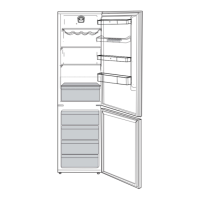

 To Next Page