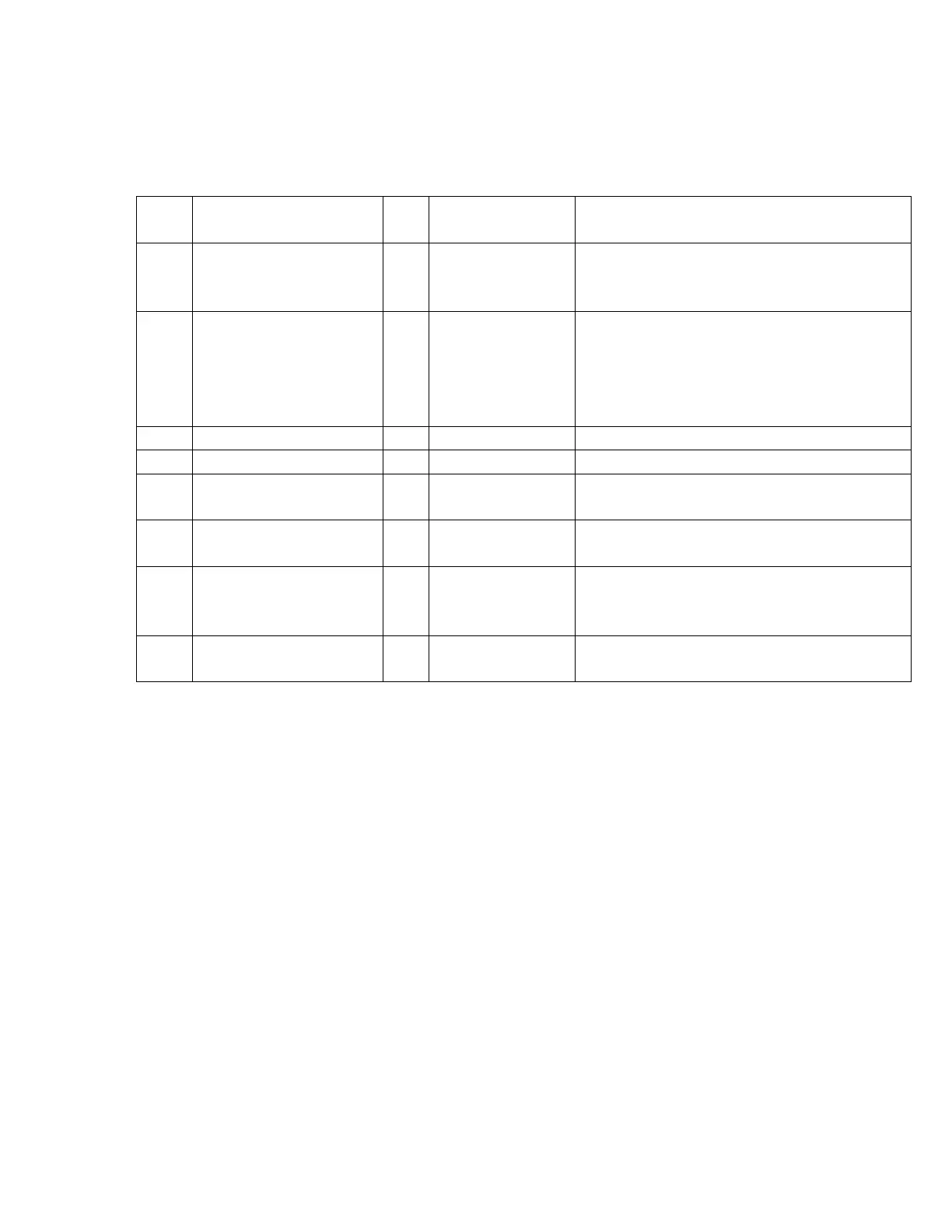
22 GPIO5 I/O 1.8VOn
0VOff
ThisI/OlinegoesdirectlytotheHuawei
GPIO5line.SeeHuaweiHardwareGuide.
23 RESIN_IN_NOT I 1.8Vto7VHigh
0Vto.6VLow
ThissignalreachestheHuawei609
throughaninverter.SeeHuawei
HardwareGuide.
24 VIN_ENABLE I Normally
enabled,since
resistorpullup
toVIN.Low
disables.
ConsiderusinganN‐channelMOSFET’s
outputtodisableVIN.
25 USBD‐ I/O‐ThisconnectstotheHuaweimodule.
26 GROUND
27 DTR I 1.8Vto25VHigh
‐25Vto.6VLow
HighmeansDataTerminalReady
28 TXD I 1.8Vto25VHigh
‐25Vto.6VLow
ThisistheRS‐232TransmitDataline.
29 RXD O Highimpedance
forHigh.
0VforLow
Thislogic‐levelsignalistheoutputofan
open‐drainN‐channelMOSFET.Pullthis
uptoyourlogic’spluspowersupply.
30 DCD# O 0VOn
1.8VOff
0VmeansDataCarrierDetect
Serial Port Lines
The 8 serial port lines typically interface to logic.
The header’s RXD line is the Huawei module’s TX after it goes through an open-drain
Mosfet N-channel inverter. Equipment using this line should pull the RXD line up to the
equipment’s logic supply. When no data is flowing, the RXD line is at 0 volts. The start
bit causes the Mosfet to go to a no-current state, so the pullup resistor raises the input
to the supply voltage of whatever is receiving the data from the modem.
The other 4 outputs (CTS#, DSR#, DCD#, RING#) come directly out of the Huawei
module and must be inverted to logic levels, NOT the RS-232 levels found on the DE-9.
The outputs go between 0 and 1.8 volts nominal. When level conversion is needed,
consider using an N-channel Mosfet circuit.
47



 To Next Page