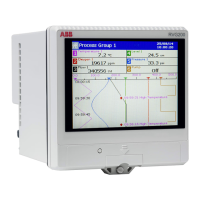
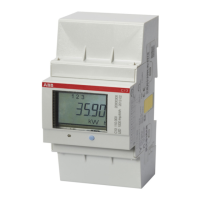
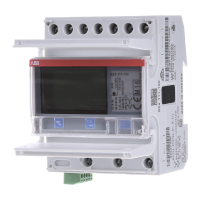
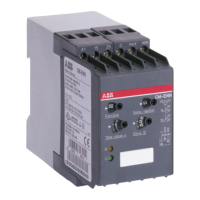
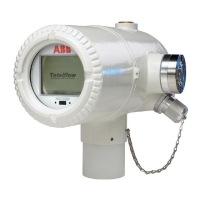
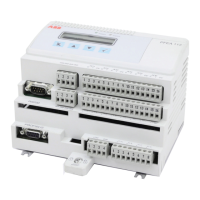
The ABB RGM40 meter is a versatile and robust device designed for comprehensive power monitoring and management in various electrical installations. This quick start guide provides essential information for its safe installation, electrical connection, and initial programming, ensuring efficient operation and accurate data acquisition.
Function Description
The RGM40 meter serves as a secondary protection device, offering detailed insights into electrical parameters. It is capable of monitoring voltage, current, power, energy, and other critical electrical quantities. The meter's primary function is to provide accurate measurements for system analysis, energy management, and fault detection. It is designed to be integrated into existing electrical systems, providing real-time data that can be used for operational optimization, predictive maintenance, and compliance with energy efficiency standards. The device features a clear display for local readings and supports communication protocols for remote data access and control.
Important Technical Specifications
The RGM40 meter is engineered for reliability and precision. While specific numerical values for all technical specifications are not detailed in this quick start guide, the document highlights key aspects of its design and capabilities:
- Voltage Measurement: The meter can measure both line-to-neutral (VL-N) and line-to-line (VL-L) voltages.
- Current Measurement: It measures current (AMPS) and can display maximum (MAX) and minimum (MIN) values.
- Power and Energy: The device monitors power (WOVAR, PF) and energy (Wh, VARH), indicating both real and reactive power.
- Harmonic Distortion: It is capable of measuring Total Harmonic Distortion (THD), which is crucial for power quality analysis.
- Frequency: The meter displays frequency (V/Hz).
- Communication: The RGM40 supports various communication protocols, including Modbus RTU (Mod rtU), Modbus ASCII (Mod ASCI), and DNP3 (dnp), facilitating integration into building management systems or SCADA. Baud rates can be configured, with options like 9600, 19200, 38400, and 57600.
- Input/Output: The meter can be connected to Current Transformers (CTs) and Potential Transformers (PTs) for scaling measurements. It supports different wiring configurations, including Wye/Delta 4-wire with 3 CTs (with or without PTs) and Delta 3-wire with 2 CTs (with or without PTs).
- Display: The meter features a clear digital display that shows measured values and programming menus. It has dedicated buttons for navigation (MENU, ENTER, DOWN ARROW, RIGHT ARROW).
- Mounting: Designed for DIN rail mounting, ensuring easy and secure installation within electrical panels.
Usage Features
The RGM40 meter is designed for user-friendly operation and configuration:
- Configuration Mode: Accessing the configuration mode is straightforward, initiated by pressing the MENU button. This allows users to set up various parameters.
- CT and PT Settings: Users can configure CT numerator (Ct-n), CT scaling (Ct-S), PT numerator (Pt-n), PT denominator (Pt-d), and PT scaling (Pt-S) values to match the installed transformers. Example settings are provided for common CT and PT ratios, such as 200/5 amps, 800/5 amps, 2000/5 amps, 10,000/5 amps for CTs, and 14400/120 volts, 138000/69 volts, 345000/115 volts, 345000/69 volts for PTs.
- Connection Type: The meter allows selection of the connection type (Cnct), such as 3 EL (element) Wye, 2 Ct del (Delta), or 2.5 EL Wye, to accurately reflect the electrical system configuration.
- Meter Address: A unique meter address (Adr) can be set for communication purposes, ranging from 001 to 247. For Ethernet options, the address should be kept as 1.
- Baud Rate: The baud rate (bAUd) for communication can be selected from several options, with 9600 recommended for RS485 and 57.6 for Ethernet.
- Communication Protocol: Users can choose the desired communication protocol (Prot) from Modbus RTU, Modbus ASCII, or DNP3.
- Scroll Setting: The display can be configured to automatically scroll through readings (SCrL YES) or remain static (SCrL NO).
- Data Storage: Settings can be saved (Stor ALL YES) or discarded (Stor ALL NO) after configuration. The meter resets after saving settings.
- Safety Features: The device is intended for secondary protection, emphasizing that it should not be used for primary protection or energy-limiting capacity. This ensures the safety of the electrical system and personnel.
Maintenance Features
While the quick start guide does not delve into detailed maintenance procedures, it implicitly highlights aspects that contribute to the meter's maintainability:
- Robust Design: The DIN mount installation and secure screw fastening suggest a robust physical design that can withstand typical industrial environments.
- Clear Labeling: The faceplate buttons and display indicators are clearly labeled, aiding in troubleshooting and configuration.
- User Manual Reference: The guide repeatedly refers to the user manual for additional safety warnings, detailed installation instructions, wiring diagrams, and programming instructions, indicating that comprehensive documentation is available for maintenance and advanced configuration.
- Qualified Personnel Requirement: The emphasis on installation by qualified personnel underscores the importance of proper handling and maintenance by trained professionals, which contributes to the longevity and reliability of the device.
- Safety Precautions: The warnings about dangerous voltages and currents during operation highlight the need for strict adherence to safety protocols during any maintenance or inspection activities.
In summary, the ABB RGM40 meter is a sophisticated power monitoring device designed for accurate measurement, flexible configuration, and safe operation within various electrical systems. Its features cater to both initial setup and ongoing operational needs, making it a valuable tool for modern energy management.

 Need help?
 General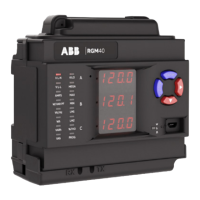

 To Next Page