EasyManua.ls Logo

Abbott FreeStyle Libre2 - User Manual

Abbott FreeStyle Libre2
2 pages
Print Icon
To Next Page IconTo Next Page
Loading...
CODE
XXX
CODE
XXX
STEP 3
STEP 6
STEP 9
Get ReadyApply Sensor Prepare Sensor Applicator
Wash site using a plain soap, dry,
and then clean with an alcohol wipe.
Allow site to air dry before
proceeding.
Peel lid completely o Sensor Pack.
Unscrew cap from Sensor Applicator.
CAUTION: Sensor codes must
match on Sensor Pack and
Sensor Applicator.
Select site on back of upper arm.
Note: Avoid scars, moles, stretch
marks, lumps and insulin injection
sites. To prevent skin irritation, rotate
sites between applications. Consider
your comfort and activities.
Refer to your Users Manual for full System instructions and information.
Touchscreen
Home Button
USB Port
Sensor
Pack
Reader
Place Sensor Applicator over site
and push down rmly to apply
Sensor.
CAUTION: Do not push down on
Sensor Applicator until placed
over prepared site to prevent
unintended results or injury.
Make sure Sensor is secure.
Discard the used Sensor Pack
and Sensor Applicator. See
Disposal section in the User’s
Manual.
Gently pull Sensor Applicator
away from your body.
Quick Start Guide
STEP 1
STEP 4
STEP 7
STEP 2
STEP 5
STEP 8
Line up dark mark on Sensor
Applicator with dark mark on
Sensor Pack. On a hard surface,
press down rmly on Sensor
Applicator until it comes to a stop.
Sensor Applicator is ready to
apply Sensor.
CAUTION: Sensor Applicator
now contains a needle. Do not
touch inside Sensor Applicator
or put it back into Sensor Pack.
Lift Sensor Applicator out of
Sensor Pack.
Lid
Cap
Sensor
Sensor
Applicator
Codes on labels
must match
1 Assemble and Apply Sensor
to your body
2 Start new Sensor with Reader
3 Check your glucose whenever you
want for up to 14 days
Wait 60 minutes
for start-up
Setup Overview
1 Assemble and Apply Sensor to your body
FLASH GLUCOSE MONITORING SYSTEM
Question and Answer IconNeed help?

Do you have a question about the Abbott FreeStyle Libre2 and is the answer not in the manual?

Summary

Setup Overview

Reader Components

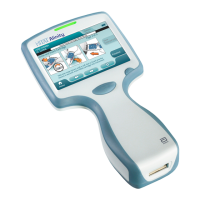
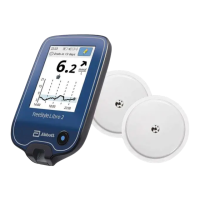
Overview of the Reader device, including USB Port, Touchscreen, and Home Button.

Sensor Applicator Overview

Overview of the Sensor Applicator and its related parts like the Sensor Pack.

Initial Setup Steps

References to key steps: Assemble/Apply Sensor, Start New Sensor, and Check Glucose.

Assemble and Apply Sensor to Your Body

Step 1: Select Application Site

Select site on back of upper arm, avoiding scars, moles, and insulin injection sites.

Step 2: Prepare and Clean the Site

Wash site with soap, dry, and clean with an alcohol wipe. Allow to air dry.

Step 3: Prepare Sensor Pack and Applicator

Peel lid off Sensor Pack, unscrew cap from Applicator. Ensure codes match.

Step 4: Align Sensor Pack and Applicator

Line up dark marks on Applicator and Sensor Pack. Press Applicator firmly.

Step 5: Separate Sensor Applicator

Lift Sensor Applicator out of Sensor Pack. Caution: Applicator contains a needle.

Step 6: Applicator Ready to Use

Sensor Applicator is ready. Do not touch inside or put back into Sensor Pack.

Step 7: Apply Sensor to Body

Place Sensor Applicator over site and push down firmly to apply Sensor.

Step 8: Remove Sensor Applicator

Gently pull Sensor Applicator away from your body after applying the Sensor.

Step 9: Final Sensor Check and Disposal

Ensure Sensor is secure. Discard used Sensor Pack and Applicator per manual.

Start New Sensor with Reader

Step 1: Turn on Reader

Press Home Button to turn on Reader. Follow prompts for date and time if new.

Step 2: Start New Sensor

Touch 'Start New Sensor' option on the Reader's Home Screen.

Step 3: Scan Sensor with Reader

Hold Reader within 4 cm of Sensor to scan. Sensor ready after 60 minutes.

Check Your Glucose

Step 1: Turn on Reader

Press Home Button to turn on the Reader.

Step 2: Scan Sensor

Hold Reader within 4 cm of Sensor to scan.

Step 3: View Glucose Reading

Reader displays Current Glucose, Trend Arrow, and Glucose Graph.

Setting Alarms

Accessing Alarm Settings

Navigate to Settings > Alarm Settings to adjust alarms.

Configuring Alarm Types

Set Low Glucose, High Glucose, and Signal Loss alarms.

Alarm Notifications

Alarms notify you of glucose levels below/above set points or signal loss.

Using Alarms

Alarm Display on Home Screen

Sound/vibration and signal status display on Home Screen when alarms are ON.

Dismissing Alarms

Touch 'Dismiss Alarm & Check Glucose' or Home Button to dismiss.

Alarm Symbol Meanings

Symbols indicate Sound/Vibration status and Sensor communication.

Summary

Setup Overview

Reader Components

Overview of the Reader device, including USB Port, Touchscreen, and Home Button.

Sensor Applicator Overview

Overview of the Sensor Applicator and its related parts like the Sensor Pack.

Initial Setup Steps

References to key steps: Assemble/Apply Sensor, Start New Sensor, and Check Glucose.

Assemble and Apply Sensor to Your Body

Step 1: Select Application Site

Select site on back of upper arm, avoiding scars, moles, and insulin injection sites.

Step 2: Prepare and Clean the Site

Wash site with soap, dry, and clean with an alcohol wipe. Allow to air dry.

Step 3: Prepare Sensor Pack and Applicator

Peel lid off Sensor Pack, unscrew cap from Applicator. Ensure codes match.

Step 4: Align Sensor Pack and Applicator

Line up dark marks on Applicator and Sensor Pack. Press Applicator firmly.

Step 5: Separate Sensor Applicator

Lift Sensor Applicator out of Sensor Pack. Caution: Applicator contains a needle.

Step 6: Applicator Ready to Use

Sensor Applicator is ready. Do not touch inside or put back into Sensor Pack.

Step 7: Apply Sensor to Body

Place Sensor Applicator over site and push down firmly to apply Sensor.

Step 8: Remove Sensor Applicator

Gently pull Sensor Applicator away from your body after applying the Sensor.

Step 9: Final Sensor Check and Disposal

Ensure Sensor is secure. Discard used Sensor Pack and Applicator per manual.

Start New Sensor with Reader

Step 1: Turn on Reader

Press Home Button to turn on Reader. Follow prompts for date and time if new.

Step 2: Start New Sensor

Touch 'Start New Sensor' option on the Reader's Home Screen.

Step 3: Scan Sensor with Reader

Hold Reader within 4 cm of Sensor to scan. Sensor ready after 60 minutes.

Check Your Glucose

Step 1: Turn on Reader

Press Home Button to turn on the Reader.

Step 2: Scan Sensor

Hold Reader within 4 cm of Sensor to scan.

Step 3: View Glucose Reading

Reader displays Current Glucose, Trend Arrow, and Glucose Graph.

Setting Alarms

Accessing Alarm Settings

Navigate to Settings > Alarm Settings to adjust alarms.

Configuring Alarm Types

Set Low Glucose, High Glucose, and Signal Loss alarms.

Alarm Notifications

Alarms notify you of glucose levels below/above set points or signal loss.

Using Alarms

Alarm Display on Home Screen

Sound/vibration and signal status display on Home Screen when alarms are ON.

Dismissing Alarms

Touch 'Dismiss Alarm & Check Glucose' or Home Button to dismiss.

Alarm Symbol Meanings

Symbols indicate Sound/Vibration status and Sensor communication.

Overview

This document describes the FreeStyle Libre 2 Flash Glucose Monitoring System, a device designed for continuous glucose monitoring. The system consists of a Reader, a Sensor Applicator, and a Sensor Pack.

Function Description:

The FreeStyle Libre 2 system provides continuous glucose readings for up to 14 days without the need for routine fingerstick calibrations. It measures glucose levels from interstitial fluid, offering a comprehensive view of glucose trends and patterns. The system is designed to help individuals manage their diabetes by providing real-time glucose data and customizable alarms for low and high glucose levels, as well as signal loss. The Reader displays current glucose, a trend arrow indicating the direction of glucose change, and a glucose graph showing historical data.

Usage Features:

Assembling and Applying the Sensor:

  • Site Selection: Choose a site on the back of the upper arm. It's crucial to avoid areas with scars, moles, stretch marks, lumps, or insulin injection sites. To prevent skin irritation, users should rotate sites between applications. Comfort and activity levels should also be considered when selecting a site.
  • Site Preparation: The chosen site must be washed with plain soap, dried thoroughly, and then cleaned with an alcohol wipe. The site should be allowed to air dry completely before proceeding with sensor application.
  • Sensor Pack Preparation: Peel the lid completely off the Sensor Pack.
  • Sensor Applicator Preparation: Unscrew the cap from the Sensor Applicator.
  • Matching Codes: A critical safety step is to ensure that the sensor codes on both the Sensor Pack and the Sensor Applicator match. This prevents unintended results.
  • Assembling the Sensor: Line up the dark mark on the Sensor Applicator with the dark mark on the Sensor Pack. Place the assembly on a hard surface and press down firmly on the Sensor Applicator until it comes to a stop.
  • Lifting the Applicator: Lift the Sensor Applicator out of the Sensor Pack. At this point, the Sensor Applicator contains a needle, so users are cautioned not to touch the inside of the Sensor Applicator or put it back into the Sensor Pack.
  • Applying the Sensor: Place the Sensor Applicator over the prepared site on the back of the upper arm and push down firmly to apply the sensor. Users are cautioned not to push down on the Sensor Applicator until it is placed over the prepared site to prevent unintended results or injury.
  • Removing the Applicator: Gently pull the Sensor Applicator away from the body.
  • Verification: Ensure the Sensor is securely attached to the body.
  • Disposal: Discard the used Sensor Pack and Sensor Applicator according to the disposal section in the User's Manual.

Starting a New Sensor with the Reader:

  • Turning on the Reader: Press the Home Button to turn on the Reader. If it's the first time using the Reader, follow the prompts to set the date and time.
  • Initiating New Sensor: Touch "Start New Sensor" on the Reader's screen.
  • Scanning the Sensor: Hold the Reader within 4 cm (1.5 inches) of the Sensor to scan it.
  • Start-up Time: After scanning, there is a 60-minute start-up period before the Sensor can be used to check glucose levels.

Checking Glucose:

  • Turning on the Reader: Press the Home Button to turn on the Reader.
  • Scanning the Sensor: Hold the Reader within 4 cm (1.5 inches) of the Sensor to scan it.
  • Displaying Results: The Reader will display the current glucose reading, including the Current Glucose value, a Glucose Trend Arrow (indicating whether glucose is rising quickly, rising, changing slowly, falling, or falling quickly), and a Glucose Graph showing historical data.

Setting Alarms:

  • Default State: Alarms are OFF by default.
  • Accessing Settings: From the Home Screen, press the Home Button, then touch the "Settings" icon.
  • Alarm Settings: Touch "Alarms" and then "Change Alarm Settings."
  • Customization: Users can select and set alarms for:
    • Low Glucose Alarm: Notifies the user when glucose is below a set level.
    • High Glucose Alarm: Notifies the user when glucose is above a set level.
    • Signal Loss Alarm: Notifies the user when the Sensor is not communicating with the Reader, indicating that Low or High Glucose Alarms may not be received.
  • Automatic Activation: The first time a Low or High Glucose Alarm is turned ON, the Signal Loss Alarm will automatically turn on. Users can then touch "Signal Loss Alarm" to turn it off if desired.
  • Saving Settings: Touch "Done" to save the alarm settings.

Using Alarms:

  • Alarm Notification: When an alarm is ON, the Home Screen will display sound/vibration and signal status symbols.
  • Dismissing Alarms:
    • To dismiss a Low Glucose or High Glucose Alarm, touch "Dismiss Alarm & Check Glucose" or press the Home Button, then check glucose.
    • To dismiss a Signal Loss Alarm, the Reader will prompt "Scan Sensor now?". Touch "No" to dismiss the alarm, or touch "Yes" or press the Home Button to dismiss the alarm and scan the Sensor.
  • Symbols:
    • A speaker icon indicates Sound and Vibration ON.
    • A muted speaker icon indicates Sound and Vibration OFF.
    • A Wi-Fi-like symbol indicates the Sensor is communicating with the Reader.
    • A Wi-Fi-like symbol with a cross-out indicates the Sensor is not communicating with the Reader.

Maintenance Features:

  • Sensor Replacement: The Sensor is designed for 14 days of use, after which it must be replaced. The Reader will indicate when the Sensor is nearing its end-of-life.
  • Disposal: Used Sensor Packs and Sensor Applicators should be discarded according to the instructions in the User's Manual.
  • Troubleshooting: If users experience difficulty setting up the system or if symptoms are not consistent with glucose monitoring, they should contact their healthcare professional.
  • User Manual: The User's Manual provides full system instructions and information, and users are encouraged to refer to it for additional symbols and detailed guidance.

Abbott FreeStyle Libre2 Specifications

General IconGeneral
Sensor Wear Duration14 days
Sensor Warm-up Time1 hour
Reader ConnectivityNFC
Operating Temperature10°C to 45°C (50°F to 113°F)
TypeContinuous Glucose Monitoring System
CommunicationNear-field communication (NFC)
Water ResistanceIP27 (water-resistant up to 1 meter for 30 minutes)
Glucose MonitoringContinuous
AlertsOptional glucose alarms
CompatibilityFreeStyle Libre 2 app
Data Storage8 hours

Related product manuals