EasyManua.ls Logo

Abbott e i-STAT Alinity - User Manual

Abbott e i-STAT Alinity
22 pages
Print Icon
To Next Page IconTo Next Page
Loading...
i-STAT Alinity
Quick
Reference
Guide
Question and Answer IconNeed help?

Do you have a question about the Abbott e i-STAT Alinity and is the answer not in the manual?

Summary

INSTRUMENT SETUP (New Instruments)

Initial Power On and Battery Check

Steps for powering on the instrument and verifying battery charge status.

Region Code Configuration

Instructions for locating and scanning the region code barcode for instrument setup.

Screen Configuration (Language, Clock)

How to set the instrument's display language and system clock.

Screen Configuration (Units, Date Format)

Steps to configure measurement units and date/time display formats.

SYSTEM COMPONENTS

Instrument and Base Station

Identifies the i-STAT Alinity instrument and its base station for charging.

Cartridges and Rechargeable Battery

Describes i-STAT test cartridges and the rechargeable battery pack.

Simulator and Printer

Overview of the electronic simulator and portable printer accessories.

ANATOMY OF THE INSTRUMENT

Instrument LEDs and Display Screen

Explanation of the instrument's LED indicators and the main display screen.

Instrument Controls and Ports

Details on power button, barcode capture button, and cartridge/IR ports.

Instrument Battery

Information about the rechargeable battery as the instrument's power source.

SCREEN COMPONENTS AND THEIR MEANINGS

Home Screen Overview

Overview of the Home screen displayed after successful instrument self-checks.

Home Screen Anatomy

Detailed breakdown of the Home screen's header, body, and footer areas.

Alert Screen Overview

Description of the Alert screen, including warning icons, alert indicators, titles, and descriptions.

Pathway Screen Anatomy

Breakdown of a generic pathway screen, including header, message area, body, side tabs, and buttons.

Status Indicator Icons

Meaning of icons related to Wireless Status, Battery Status, and Network Status.

CLEANING & DISINFECTING

Cleaning Procedures

Step-by-step guide for cleaning the instrument, base station, and simulator.

Disinfecting Instrument

Protocol for disinfecting the i-STAT Alinity instrument between patients.

Disinfecting Accessories

Procedures for disinfecting the base station, electronic simulator, and printer.

Approved Disinfectant Products

List of recommended disinfectant products for use with the instrument.

TROUBLESHOOTING

Quality Check Failures

Identification and causes of quality check failures during testing.

Startup Alerts

Information on alerts displayed before the Home screen appears.

Handling Alerts

How to access and understand alert descriptions and indicators.

Summary

INSTRUMENT SETUP (New Instruments)

Initial Power On and Battery Check

Steps for powering on the instrument and verifying battery charge status.

Region Code Configuration

Instructions for locating and scanning the region code barcode for instrument setup.

Screen Configuration (Language, Clock)

How to set the instrument's display language and system clock.

Screen Configuration (Units, Date Format)

Steps to configure measurement units and date/time display formats.

SYSTEM COMPONENTS

Instrument and Base Station

Identifies the i-STAT Alinity instrument and its base station for charging.

Cartridges and Rechargeable Battery

Describes i-STAT test cartridges and the rechargeable battery pack.

Simulator and Printer

Overview of the electronic simulator and portable printer accessories.

ANATOMY OF THE INSTRUMENT

Instrument LEDs and Display Screen

Explanation of the instrument's LED indicators and the main display screen.

Instrument Controls and Ports

Details on power button, barcode capture button, and cartridge/IR ports.

Instrument Battery

Information about the rechargeable battery as the instrument's power source.

SCREEN COMPONENTS AND THEIR MEANINGS

Home Screen Overview

Overview of the Home screen displayed after successful instrument self-checks.

Home Screen Anatomy

Detailed breakdown of the Home screen's header, body, and footer areas.

Alert Screen Overview

Description of the Alert screen, including warning icons, alert indicators, titles, and descriptions.

Pathway Screen Anatomy

Breakdown of a generic pathway screen, including header, message area, body, side tabs, and buttons.

Status Indicator Icons

Meaning of icons related to Wireless Status, Battery Status, and Network Status.

CLEANING & DISINFECTING

Cleaning Procedures

Step-by-step guide for cleaning the instrument, base station, and simulator.

Disinfecting Instrument

Protocol for disinfecting the i-STAT Alinity instrument between patients.

Disinfecting Accessories

Procedures for disinfecting the base station, electronic simulator, and printer.

Approved Disinfectant Products

List of recommended disinfectant products for use with the instrument.

TROUBLESHOOTING

Quality Check Failures

Identification and causes of quality check failures during testing.

Startup Alerts

Information on alerts displayed before the Home screen appears.

Handling Alerts

How to access and understand alert descriptions and indicators.

Overview

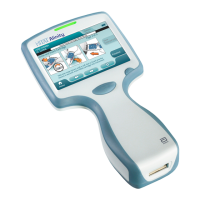
The i-STAT Alinity is a portable, handheld blood analyzer designed for point-of-care testing, providing rapid and accurate diagnostic results. It is used to perform cartridge testing, review test results, and conduct quality control (QC) testing. The instrument is part of a system that includes a base station, test cartridges, a rechargeable battery, an electronic simulator, and a portable printer.

Function Description:

The i-STAT Alinity instrument is a sophisticated diagnostic device that performs a series of self-checks upon power-up to ensure proper functionality. Its primary function is to analyze blood samples using i-STAT test cartridges, which contain sensors and reagents specific to the analytes being measured. The instrument guides the user through the testing process via a display screen and provides prompts for actions such as scanning region codes, entering operator IDs, and filling cartridges. It is capable of displaying test results, managing data, and interfacing with a portable printer for record-keeping. The device's software undergoes periodic expiration, and updates are managed through the System Operations Manual.

Important Technical Specifications:

The i-STAT Alinity operates on a rechargeable battery, which is its sole power source. The battery status is indicated by an LED light and on the display screen, with different colors signifying charging (blue), sufficient charge (green), or the need for immediate attention (yellow or red). The instrument features a barcode capture button and an integrated camera for scanning region codes and other barcodes. An IR port allows for communication with the portable printer. The device's software is designed to perform quality checks throughout the testing cycle, notifying operators of any failures through on-screen alerts. These alerts can indicate issues related to the instrument, cartridge, sample, or software, and provide instructions for resolution. The instrument supports various language, unit, and date/time formats, which can be configured through the "Instrument Settings" menu.

Usage Features:

The i-STAT Alinity is designed for ease of use in a point-of-care setting.

  • Power Management: The instrument is powered on or off by pressing and holding the power button for 2 seconds. Battery charging is performed by placing the instrument on the i-STAT Alinity Base Station. The display screen shows the battery charge level, indicating when charging is needed or complete.
  • Region Code Setup: For new instruments or after software updates, users may need to set the region code by scanning a barcode provided on the "Instructions for Use" document or the instrument's packaging. This process is guided by on-screen prompts.
  • Navigation: The instrument features a touch-sensitive display screen with a clear interface. The "Home Screen" provides access to "Perform Patient Test" and "More Options." The "More Options" menu further branches into "Review Results," "Transmit Unsent Results," "Enable/Disable Wireless," "View Action Ranges and Analyte Info," "Instrument Status," "Quality Options," "Administrative Options," and "Instrument Options."
  • Instrument Settings: Within "Instrument Options," users can access "Instrument Settings" to configure language, clock, units (e.g., Cl, K, Na, BUN, iCa, Glu, TCO2, AnGap, PO2 in mmol/L or mg/dL/mmHg), and date format.
  • Barcode Capture: The barcode capture button, when pressed and held, activates the camera to scan barcodes. Audible cues confirm successful or unsuccessful captures.
  • Alerts System: The instrument incorporates an alert system to notify users of critical issues. Alerts are displayed on an "Alert Screen" with a warning/lockout icon, an alert indicator (number of alerts), an alert title, and a description of the cause and resolution. These alerts can lock the instrument until the requirement is satisfied or indicate a general instrument warning.
  • Troubleshooting: The device is programmed to perform quality checks during testing. In case of failures, the screen displays the type of failure (Instrument, Cartridge, Sample, Software) and provides resolution instructions. Startup alerts and general alerts also guide users through troubleshooting. A comprehensive list of Quality Check Failure Codes and Alerts is available in the i-STAT Alinity Instrument Section of the System Operations Manual.

Maintenance Features:

Regular cleaning and disinfection are crucial for maintaining the i-STAT Alinity instrument, base station, printer, and electronic simulator.

  • Cleaning: The instrument should be powered off and placed on a level surface before cleaning. It is recommended to use CaviWipes. Excess solution from the wipe should be squeezed out. All outside surfaces, including "Sensitive Areas," should be gently wiped until visible soil is removed. This process may need to be repeated. After cleaning, the surfaces should be wiped dry with gauze.
  • Disinfecting: Disinfection should follow immediately after cleaning, especially between patients or at least once a day for dedicated instruments. The same CaviWipes are used. All surfaces (front, back, sides, top, and bottom) should be wiped three times, ensuring they remain wet for 3 minutes. After the required wet contact time, the surfaces should be wiped dry with gauze.
  • Sensitive Areas: Specific areas on the instrument, base station, and electronic simulator require careful attention to avoid forcing liquid into them. These include the cartridge port, 10-pin connector (under the camera and on the base station), gold contacts (on the battery and base station), and the USB port on the base station. On the electronic simulator, the area between the protective cap retaining ring and the white sensor area is also sensitive.
  • Approved Disinfectants: CaviWipes (EPA #46781-13) are an approved disinfectant. Super-Sani Cloth is also an acceptable option for all markets except the United States.
  • Software Updates: The i-STAT Alinity software expires periodically. Users are instructed to check the expiration date via "More Options > Instrument Status" and refer to the System Operations Manual for instructions on updating the software.

Abbott e i-STAT Alinity Specifications

General IconGeneral
BrandAbbott
Modele i-STAT Alinity
CategoryMedical Equipment
LanguageEnglish

Related product manuals