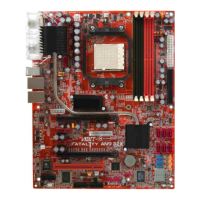
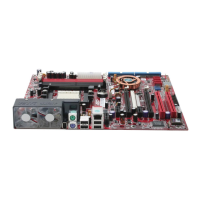
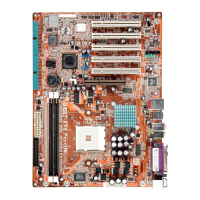
Introduction of AX5/PX5/TX5 Features 1-1
Chapter 1 Introduction of
AX5/PX5/TX5 Features
The AX5/PX5/TX5 have been especially designed for File server,
Workstation and Professional users. It can support a wide range of
processors, including all Intel CPUs (P54C) and Intel CPUs with MMX (P55C),
as well as all AMD-K5/K6 and Cyrix 6x86/6x86L/6x86MX CPUs. It also takes
into account, as much as possible, all future CPUs.
The AX5/PX5/TX5 uses SOFT MENU™ technology, which means that
all the parameters can be configured without using DIP switches or jumpers.
The configuration is entirely achieved through a “Soft Switch” that allows the
user to set CPU speed and operating voltage with ease.
The AX5/PX5/TX5 uses Intel 430TX series chipsets, and has 512K Level-
2 Pipeline Burst SRAM on board.
168-pin DIMM ( Dual In-Line Memory Module ) slots and 72-pin SIMM
(Single In-Line Memory Module )slots meet the requirements for all memory
configurations required by high level computing. The 168-pin DIMM slots
support traditional Fast Page and EDO ( Extended Data Out ) DRAM as a
memory standard for next generation 64-bit systems. The 168-pin DIMM slots
have been reserved to meet requirements for both present and future upgrades.
The AX5/PX5/TX5 also provides two Universal Serial Bus (USB) ports
and meets the Concurrent PCI ( Peripheral Component Interconnect ) Rev. 2.1
standard. It also supports IDE interface for Fast HDD (Mode 0~4) and
Ultra DMA/33 ( Direct Memory Access ), as well as IDE Bus Master.
These features also meet present and future interface standards and needs.
System BIOS features include Plug-and-Play (PnP), Advanced
Configuration Power Interface (ACPI), the newest Desktop Management
Interface (DMI), as well as AX5/PX5/TX5’s unique CPU operating frequency
and voltage setup feature in order to meet modern computing demands.



 To Next Page