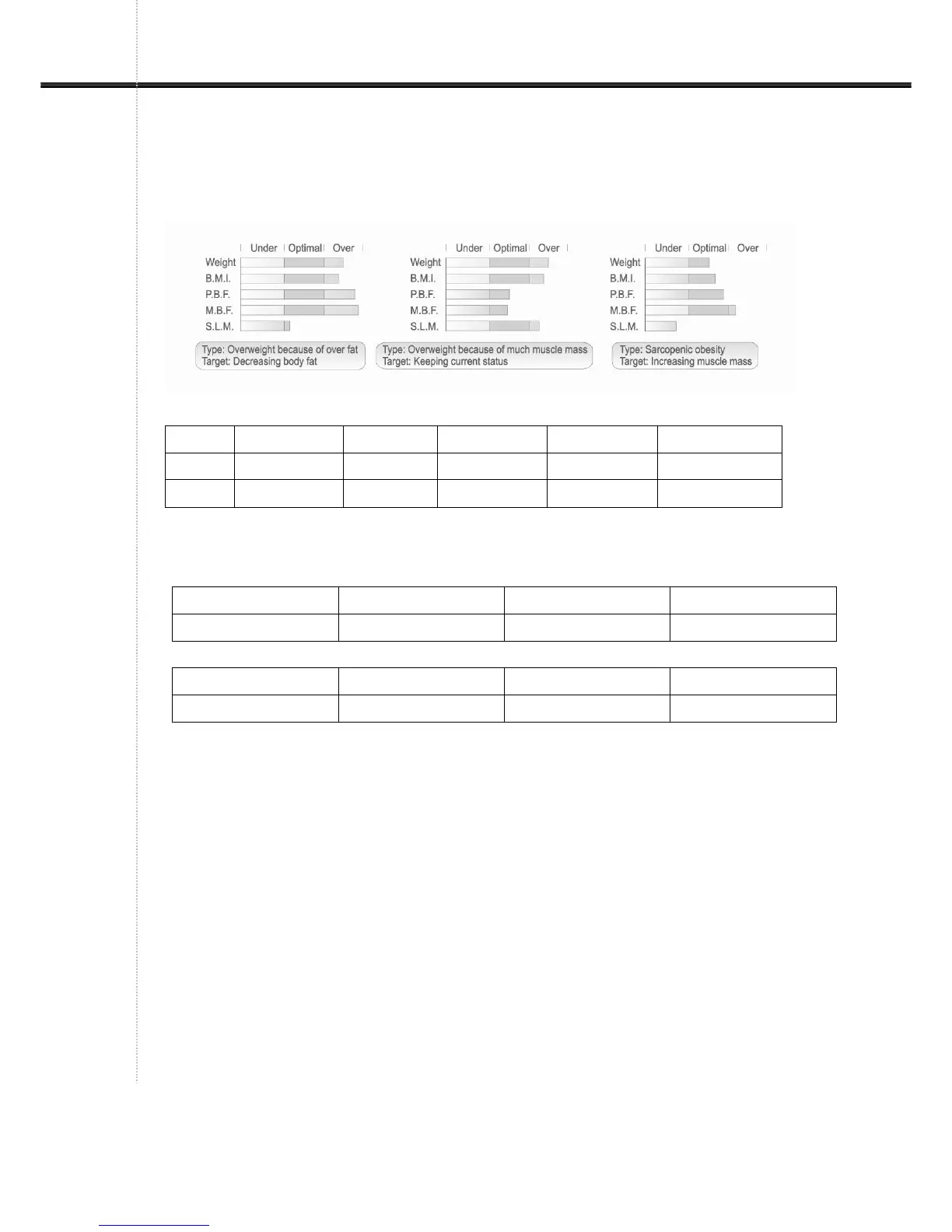
Body Status
Body Status is displayed in a bar graph as shown in the picture.
It is very convenient in recognizing what to do; Increase muscle, Decrease fat, Keep current
status, etc.
1) Percent of Body Fat [%]: for Adults
low fat normal overweight obese severe obese
Male less than 15
20 ~ <30 30 ~ <35 35 ~ <40 over 40
2) Body Mass Index (kg/m
2
): for Adults
*EAST ASIA
thin normal overweight obese
< 18.5 18.5 ~ ≤ 23 23 ~ ≤ 25 over 25
* EU and etc.
thin normal overweight obese
< 18.5 18.5 ~ ≤ 25 25 ~ ≤ 30 over 30
Abdominal Analysis
Abdominal fatness is divided into subcutaneous type and visceral type. When it comes to body
fat, experts say that not only the amount of fat is important but also its distribution. If visceral fat
area is over 100 cm
2,
it is classified as "visceral obesity" regardless of P.B.F., W.H.R. or Body
weight.
Waist-to-hip ratio (W.H.R.) shows the distribution of fat stored in one’s abdomen and hip. It is
simple but useful in assessing fat distribution. Body fat is stored in two distinct ways. They are
often categorized into and called 'apple' and 'pear' type. Apple type shows bigger girth of waist
than hip and pear type has bigger girth of hip than waist. If body fat in abdomen increases, the
risk to cardiovascular diseases, diabetes, etc. becomes higher.


 To Next Page