30 American Dryer Corp. 113403-17
Routine Maintenance _________________
Cleaning
A program and/or schedule should be established for
periodic inspection, cleaning, and removal of lint from various
areas of the dryer, as well as throughout the ductwork
system. The frequency of cleaning can best be determined
from experience at each location. Maximum operating
efficiency is dependent upon proper airflow. The
accumulation of lint can restrict this airflow. If the guidelines
in this section are met, the dryer will provide many years of
efficient, trouble free, and most importantly, safe operation.
!
WARNING
Lint from most fabrics is highly combustible. The
accumulation of lint can create a potential fire hazard.
Keep dryer area clear and free from combustible
materials, gasoline, and other flammable vapors and
liquids.
NOTE: Suggested time intervals shown are for average
usage, which is considered 6 to 8 operational (running)
hours per day.
IMPORTANT: Dryer produces combustible lint and must
be exhausted to the outdoors. Every 6 months, inspect
the exhaust ducting and remove any lint buildup.
Suggested Cleaning Schedule
Every Third or Fourth Load
Clean the lint screen every third or fourth load. A clogged lint
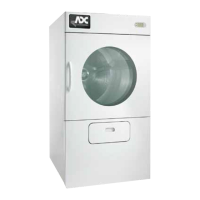
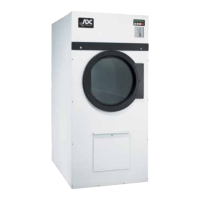
screen will cause poor dryer performance. The lint door/
drawer is located just below the loading door of the dryer.
Open the lint door/drawer, brush the lint off the lint screen,
and remove the lint. Inspect lint screen and replace if torn.
NOTE: To remove the lint drawer from the dryer, pull
drawer out approximately halfway. Press the lint door/
drawer stop downward and pull the drawer out.
IMPORTANT: The frequency of cleaning the lint screen
can best be determined from experience at each location.
Weekly
Clean lint accumulation from lint chamber, thermostat, and
microprocessor temperature sensor area.
!
WARNING
To avoid the hazard of electrical shock, discontinue
electrical supply to the dryer.
Steam Dryers
Clean the steam coil fins. It is suggested that compressed
air and a vacuum cleaner with brush attachment be used.
!
WARNING
When cleaning steam coil fins, be careful not to bend
the fins. If fins are bent, straighten by using a fin
comb, which is available from local air-conditioning
supply houses.
90 Days
Remove lint from gas valve burner area with a dusting brush
or vacuum cleaner attachment.
Clean any lint accumulation in and around the motor(s)
casing opening.
NOTE: To prevent damage, avoid cleaning and/or
touching ignitor/flame-probe assembly.
Every 6 Months
Inspect and remove lint accumulation in customer furnished
exhaust ductwork system and from dryer’s internal exhaust
ducting.
NOTE: To remove the lint drawer from the dryer, pull the
drawer out until it stops. There are two T-20 torx screws on
each side of the lint drawer holding down the lint drawer
catch brackets which must be removed. Once they are
removed the drawer will be able to be pulled completely
out of the machine. To reinstall put the lint drawer back
into the machine, line up the lint drawer catch brackets
with the screws and tighten them down.
The accumulation of lint in the exhaust ductwork can
create a potential fire hazard.
Do not obstruct the flow of combustion and ventilation air.
Check back draft dampers in the exhaust ductwork.
Inspect and remove any lint accumulation, which can
cause the damper to bind or stick.
A back draft damper that is sticking partially closed can
result in slow drying and shutdown of heat circuit safety
switches or thermostats.
When cleaning the dryer cabinet(s), avoid using harsh
abrasives. A product intended for the cleaning of
appliances is recommended.
7 Days After Installation
and Every 12 Months Thereafter
A competent professional should inspect bolts, nuts, screws,
setscrews, grounding connections and nonpermanent gas
connections (unions, shutoff valves, and orifices). Belts
should be examined. Cracked or seriously frayed belts
should be replaced. Complete an operational check of
controls and valves. Complete an operational check of all
safety devices (lint door/drawer switch, door switches, sail
switch, and hi-limit thermostats).



 To Next Page