16 599 519 523 EN
DGS-TDS
21.04.08
4 Pot Detection Information
Suitable pot materials:
• Steel enamel
• Stainless steel (with magnet. bottom)
• Aluminium (with magnet. bottom)
• Cast iron
Unsuitable materials:
• Aluminium (Æ too much power)
• Copper
• Stainless steel (not magnetic)
• Glass
• Ceramic
The pot detection is designed for the following diameters:
Nominal burner ∅ [mm] Minimum pot bottom ∅
instruction manual [mm]
Minimum pot bottom ∅
adjusted with steel plate
[mm]
145 125 100
180 145 120
210 180 140
260 180 180
With regard to Ind. G4, the same diameter is stipulated in the instruction manuals as for the previous
model. However, the real diameter which still functions is much smaller.
The performance for different pots can very by as much as +/- 10-15%.
• As reference pots, we recommend enamelled steel pots (e.g. Silit).
• 2-3 mm thick round steel plates in various diameters are very suitable for testing the pot detection
function.
• Sandwich bottoms can cause very unpleasant noises if they are not correctly pressed. The same
is the case with regard to handles which are a little loose.
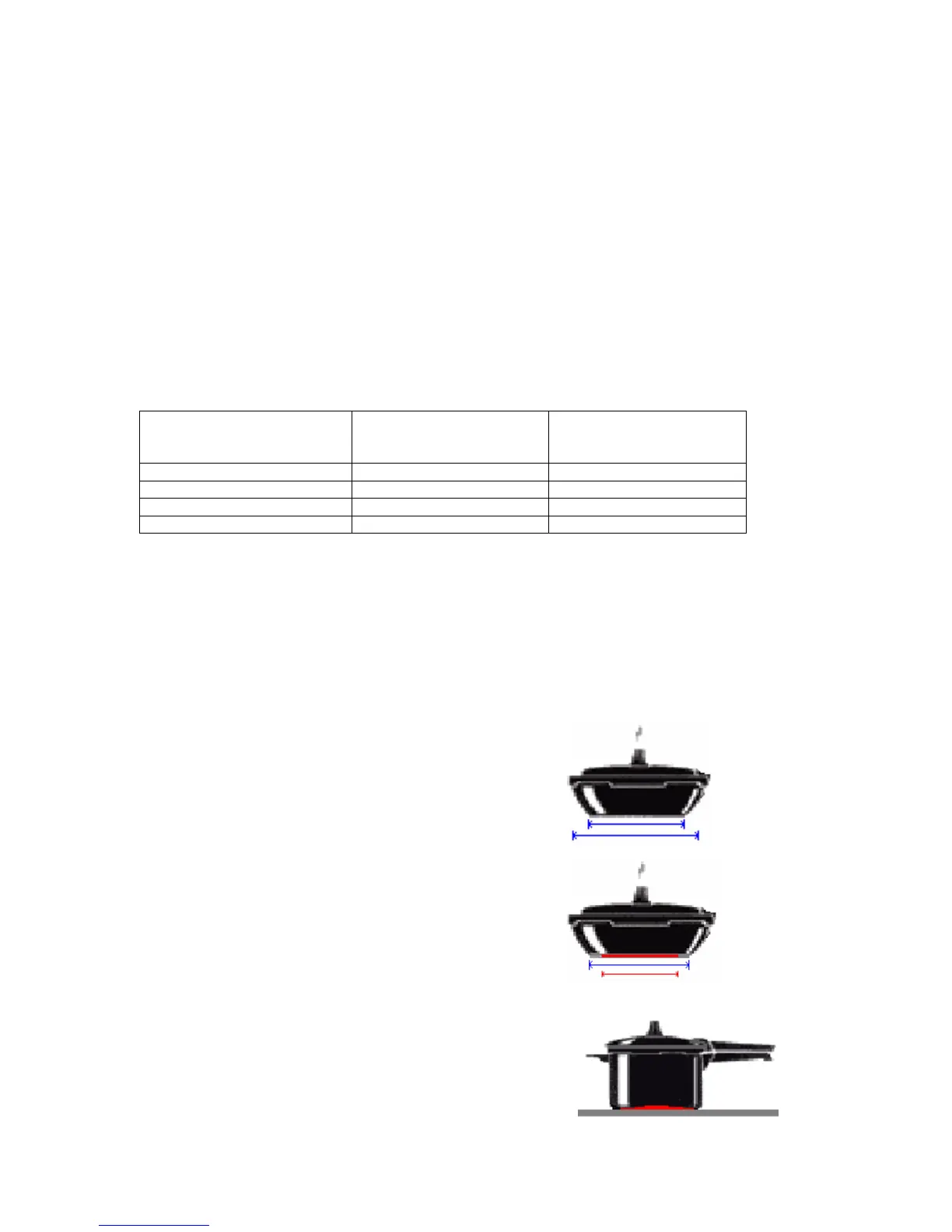
• The bottom diameter of the pot is decisive and not the
exterior diameter.
• With regard to stainless steel pots with sandwich bottoms,
the diameter of the magnetic part of the pot bottom is
decisive.
• an additional influencing factor is the vertical distance from
the coil, i.e. an uneven sandwich bottom has a negative
effect on the power consumption. The effect is exactly the
same if the induction coil is not pressed on the glass
ceramic.


 To Next Page