EasyManua.ls Logo

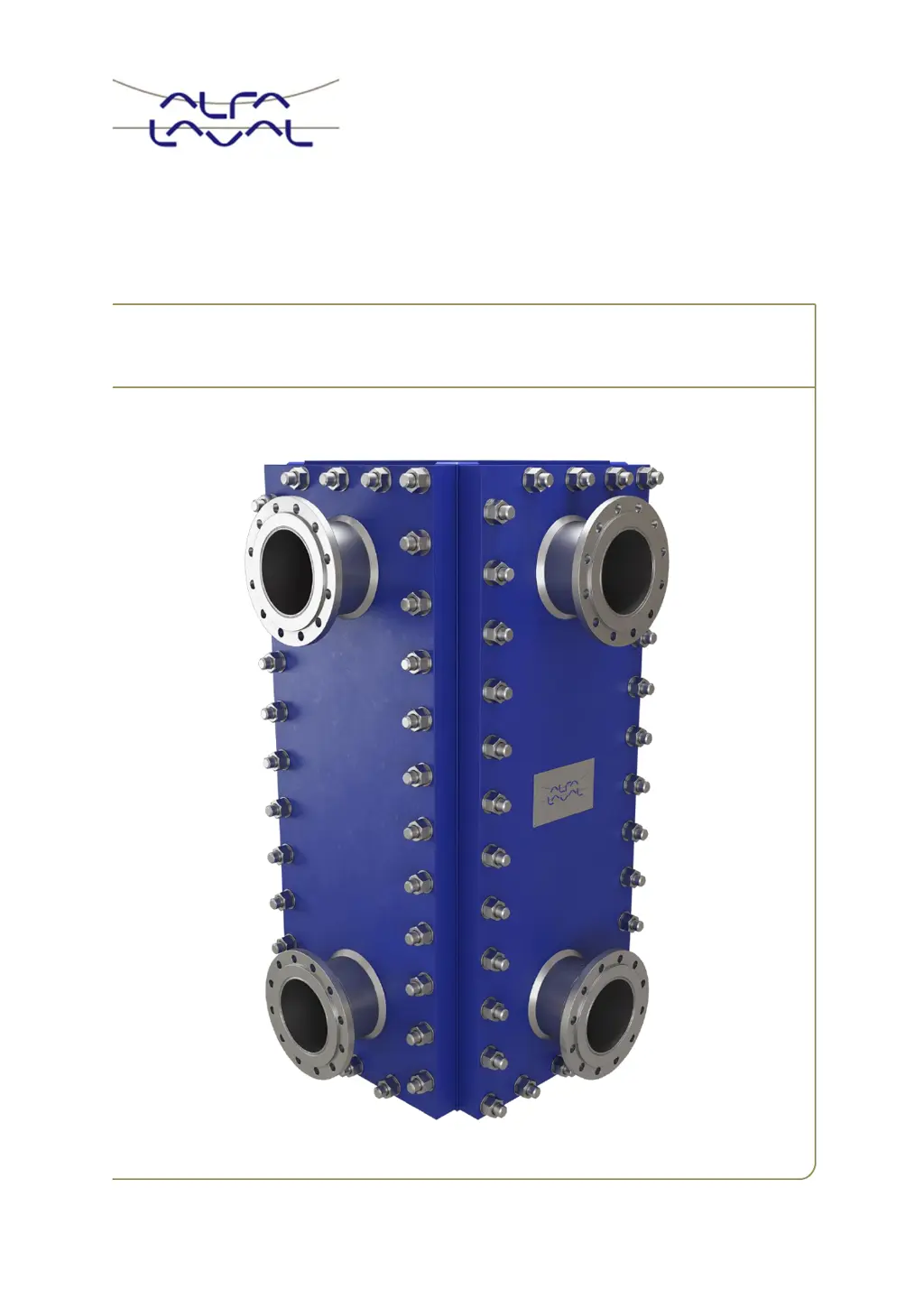
Alfa Laval COMPABLOC CP15 - User Manual

Alfa Laval COMPABLOC CP15
39 pages
Print Icon
To Next Page IconTo Next Page
Loading...
COMPABLOC
Installation, Operation and Maintenance Manual
IMCP0002 Rev. J / ENGLISH

Questions and Answers

  • R
    Robert CoxAug 7, 2025
    How to fix external leakage in Alfa Laval COMPABLOC CP15 Industrial Equipment?
    • L
      Leslie GrossAug 7, 2025
      To address external leakage in your Alfa Laval Industrial Equipment, consider these steps: * Loose bolts: Retighten the bolts according to the torque value in appendix 2. * Damaged panel gasket: If retightening doesn't work, the gasket might be damaged and needs replacement; replace the gasket. * Corrosion/cracks in platepack: Perform a condition audit of the Compabloc, and the solution will be based on the inspection result. * Cracks/pinholes at panel/nozzle lining: Perform a dye penetrant test on the lining and contact Alfa Laval for decision and support. * Cracks/pinholes at endplate: Contact Alfa Laval for decision and support to perform a dye penetrant test on the endplate. * Damaged flange gasket: Inspect the flange gasket condition and replace it if necessary.
  • J
    Jeremy CastroAug 17, 2025
    Why is there internal leakage in my Alfa Laval Industrial Equipment?
    • R
      Richard BallAug 17, 2025
      If you're experiencing internal leakage with your Alfa Laval Compabloc equipment, it could be due to change in fluid properties or poor performance during operation. Perform a condition audit of the Compabloc. The appropriate solution will be determined based on the inspection result.
  • S
    Samuel ThomasNov 26, 2025
    What to do if Alfa Laval COMPABLOC CP15 Industrial Equipment has poor thermal or hydraulic performance?
    • J
      James RobinsonNov 26, 2025
      If your Alfa Laval Compabloc Industrial Equipment shows poor thermal or hydraulic performance, there are several potential causes and solutions: * Air/gas/vapor pocket: Ensure you vent the exchanger correctly during start-up. * Operating parameters: Operate the equipment as close as possible to the design parameters. * Clogging: Clean the Compabloc to remove sludge and debris. When flushing the piping, bypass the Compabloc. * Wrong piping connection: Ensure the inlet, outlet, vent, and drain nozzles on both circuits are correctly connected according to the drawing. * Fouling: Clean the Compabloc and try to run it with parameters close to the design case. * Debris/particles in fluid: Clean the Compabloc and install an appropriate filter. * Changes in operating parameters: Che...

Summary

1 - Description

1.1 - General Description

Explains the Compabloc as a welded plate heat exchanger, its construction, and design compliance.

1.2 - Function & Duty

Details the Compabloc's applications, operating limits, and duty considerations.

1.3 - PED;Risk Analysis

Covers Pressure Equipment Directive (PED) compliance and risk analysis based on fluid and design parameters.

2 - Installation

2.1 - General Requirements & Precautions

Provides essential guidelines for space, foundation, piping, valve selection, pump types, and torque checks.

2.2 - Installation

Covers pipework, bypass, and venting/draining requirements for proper unit installation.

2.3 - Control System

Describes control system strategies for various applications, emphasizing PID and valve sizing.

2.4 - Lifting

Instructions and warnings for safely lifting the Compabloc unit using appropriate means.

2.5 - Storage

Proper procedures for storing the Compabloc unit to prevent corrosion and maintain integrity.

3 - Operation

3.1 - Before Start-up

Covers pre-start-up checks like bolt torques, pressure limits, and personal safety measures.

3.2 - Start Up

Step-by-step guide for a gradual and smooth start-up process, including water hammer prevention.

3.3 - Unit in Operation

General rules for safe and efficient operation, including leak checks, pressure limits, and flow rate maintenance.

3.4 - Shut Down

Procedures for safely shutting down the unit, including handling differential pressure and thermal considerations.

4 - Maintenance

4.1 - Chemical Cleaning

Outlines procedures and agents for chemical cleaning, emphasizing safety and material compatibility.

4.2 - Mechanical Cleaning

Describes methods for mechanical cleaning, including high-pressure water hydroblasting and access to surfaces.

4.3 - Panels Dismantling & Re-assembly Procedure

Detailed steps for safely dismantling and reassembling unit panels, including specific procedures.

5 - Trouble Shooting

6 - Duty Summary for Compabloc

7 - Waste Management and Scrapping

Appendix 1: Panel Weights

Appendix 2: Nominal Tightening Forces

Appendix 3: Compabloc Nameplate

Appendix 4: Compabloc Troubleshooting Questionnaire

Alfa Laval COMPABLOC CP15 Specifications

General IconGeneral
BrandAlfa Laval
ModelCOMPABLOC CP15
CategoryIndustrial Equipment
LanguageEnglish

Related product manuals