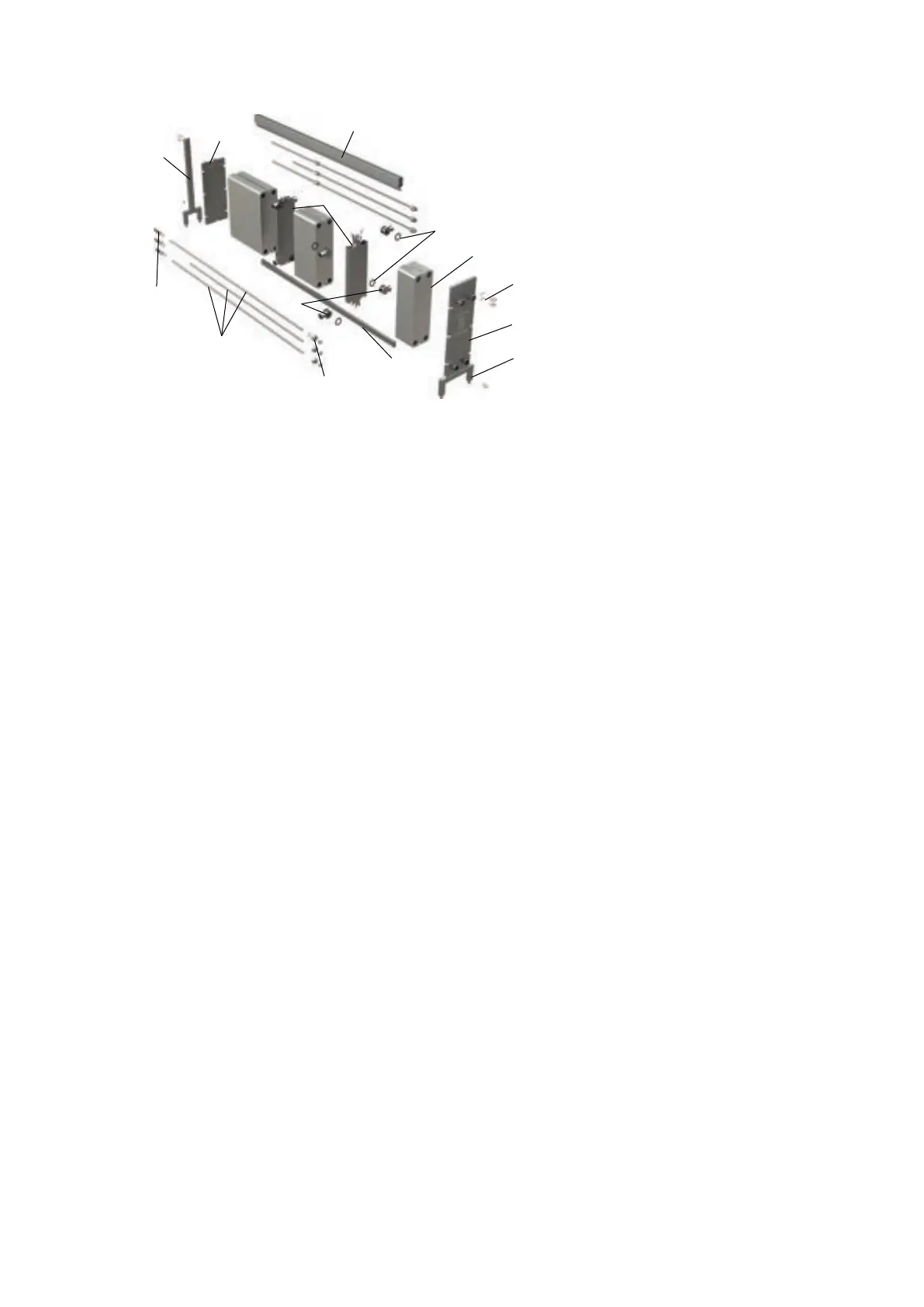
Example of explodede view — Front 8
Support column
Pressure
plate
Carrying bar
Conne
ction plat
e
Ring gasket
Plate pack
Washer/screw
Frame plate
Foot
Guiding bar
Bearing box/lock washer
Tightening bolt
Nut/washer
Corner
Factors effecting efficiency and lifetime
Maintaining heat transfer and sealing ef
ficiencies is vital to pr
oductivity
. Frequent cleaning on regular basis ensures heat transfer
efficiency as well as prevents the buildup of residual material on the plates. Barring the presence of corrosive media, clean plates
effectively limit other factors that may contribute to gasket wear.
A gasket, its material properties and its construction are specifically selected to provide optimal sealing performance for its
intended application. Knowing exactly when to replace gaskets is difficult since the timing varies, depending on the application
But over time, all gaskets wear due to natural aging as well as the temperature, pressure and stress of normal operating
conditions. In extreme cases, gaskets are also subject to blowout due to pressure shock in the system that may damage the
plates. Even despite best practices, leakage can occur.
• Compression
Gaskets are subjected to local stress from the moment you first clip them on to and tighten the plates. Subsequent opening
and closing of any heat exchanger also puts undue stress on the gaskets, causing loss of elasticity and sealing ability. To
prevent unnecessary wear, automatic cleaning procedures, such as cleaning in place (CIP), are recommended
• Cleaning in place
Carefully monitor your cleaning process since the composition of the cleaning solution can, over time, affect the rubber.
Always use the cleaning solutions recommended by your gasket supplier since using substitutes can harm the gaskets.
Some cleaning solution suppliers, for instance, add ozone to the water, which degrades the rubber in gaskets used in
sterilisation processes
• Temperature
Higher operating temperatures cause more wear and tear on the gaskets. So do the temperature swings from hot to cold
that are characteristic of dairy and other sanitary processes. Under these conditions, leakage may occur. Careful monitoring
is key to early detection. Whenever cold leakage occurs, especially at startup, it is time to replace the gaskets
• Pressure
Higher pressure also causes more wear and tear on the gaskets. Therefore, processes operating at higher pressures
generally require more frequent gasket replacement. That’s why plate heat exchangers used to pasteurise beer, for example
require gasket replacement more often than those used for dairy pasteurisation.




 To Next Page