Need help?
Do you have a question about the Altera Cyclone II and is the answer not in the manual?
Explains methods to locate information within the manual, including search and bookmarks.
Provides contact information for Altera Corporation for product support and inquiries.
Details the document's formatting and visual cues for consistent understanding.
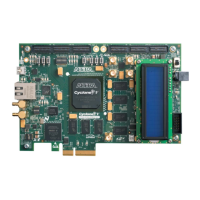
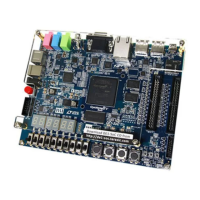
Introduces the Cyclone II FPGA Starter Development Board and its integrated features.
Lists the key hardware components and capabilities of the development board.
Describes the software support, tools, and demonstrations provided for the development board.
Presents a block diagram illustrating the architecture and connectivity of the development board.
Details the methods for configuring the Cyclone II FPGA, including JTAG and Active Serial (AS) modes.
Details the specifications and features of the main Altera Cyclone II EP2C20 FPGA device.
Explains the USB-Blaster controller and EPCS4 configuration device for programming the FPGA.
Describes the on-board memory components: SDRAM, SRAM, and Flash memory.
Details the available clock sources, including oscillators and external clock input.
Covers user input/output devices like switches, LEDs, and seven-segment displays.
Lists and describes all board connectors and ports for connectivity and expansion.
 General
| Category | FPGA |
|---|---|
| Manufacturer | Altera |
| Series | Cyclone II |
| Logic Elements | 4, 608 to 68, 416 |
| Embedded Memory | 119, 808 to 1, 152, 000 bits |
| Operating Voltage | 1.2V |
| Package Type | PQFP, TQFP, BGA |

 To Next Page