
 Need help?
Do you have a question about the Amazon Echo and is the answer not in the manual?
Guide to downloading and installing the Smart Life mobile application via QR code or app stores.
Instructions for creating a new Smart Life account and logging into the app.
Process to add smart devices and rename them for easy recognition within the Smart Life app.
Step-by-step guide to configuring an Amazon Echo device via the Alexa mobile application.
Enabling the Smart Life skill and linking your Smart Life account within the Alexa ecosystem.
How Echo finds and recognizes smart devices previously added in the Smart Life app.
Examples of voice commands to operate smart devices, such as lights and appliances, through Echo.
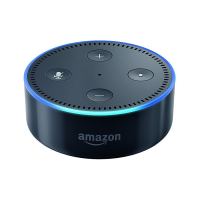
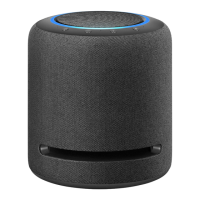
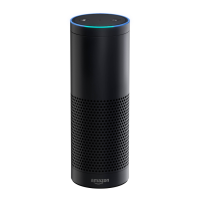
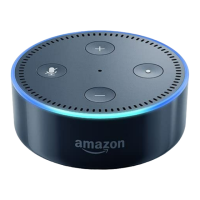
This document provides a comprehensive guide for integrating Amazon Echo with Smart Life smart devices, enabling voice control over various home appliances. The primary function of this setup is to allow users to manage their smart home ecosystem using voice commands through an Amazon Echo device, such as an Echo, Echo Tap, or Echo Dot. This integration streamlines smart home control, offering convenience and hands-free operation.
The core function of this system is to bridge the Amazon Echo's voice assistant capabilities with the Smart Life app's device management features. By linking a Smart Life account to Alexa, users can discover and control their Smart Life-compatible devices using spoken commands. This means that actions like turning lights on or off, adjusting brightness, changing light colors, or setting thermostat temperatures can all be executed simply by speaking to an Echo device. The system supports a wide range of smart devices that are compatible with the Smart Life platform, transforming a conventional home into a smart, voice-controlled environment. The setup process involves downloading the Smart Life app, registering an account, adding smart devices within the app, and then linking this Smart Life account to the Alexa app. Once linked and devices are discovered by Alexa, they become responsive to voice commands. This integration is particularly useful for creating automated routines and managing multiple devices simultaneously, enhancing the overall smart home experience.
The usage features of this integrated system are designed for ease of access and intuitive control.
Voice Control: The most prominent feature is the ability to control smart devices using natural language commands. Users can issue commands like "Alexa, turn on bedroom light," "Alexa, set bedroom light to 50 percent," "Alexa, brighten/dim bedroom light," "Alexa, set bedroom light to green," "Alexa, set bedroom light to warm white," or "Alexa, set air conditioner to 24°C." This hands-free operation is convenient for situations where physical interaction with a device or a smartphone app might be cumbersome, such as when entering a room with hands full or when relaxing on a couch.
Device Discovery: After adding devices to the Smart Life app, Alexa can discover these devices either through a voice command ("Alexa, discover devices") or by tapping a "DISCOVER" button within the Alexa app. This ensures that all compatible devices are recognized and made available for voice control.
Device Naming: Users can assign easily recognizable names to their devices within the Smart Life app (e.g., "bedroom light," "kitchen fan"). This personalization is crucial for effective voice control, as Alexa responds to these specific names. If a device's name is changed in the Smart Life app, Alexa requires a re-discovery process to update its understanding of the device.
App-Based Setup and Management: The initial setup and ongoing management largely occur through the Smart Life and Alexa apps.
Account Linking: A critical step involves linking the Smart Life account to the Alexa app. This process requires users to log in with their Smart Life credentials within the Alexa app, ensuring secure communication between the two platforms. It also requires selecting the correct country/region associated with the Smart Life account.
Wi-Fi Dependency: The entire system relies on a stable Wi-Fi network that can access Amazon servers (especially noted for mainland China users). Both the Echo device and the smart devices need to be connected to this network for seamless operation.
Skill Enablement: The "Smart Life" skill must be enabled within the Alexa app. This skill acts as the bridge, allowing Alexa to understand and execute commands related to Smart Life devices.
Regional Considerations: For users in mainland China, it is suggested to use web configuration for Amazon Echo setup due to the potential unavailability of the Alexa app. This highlights the system's adaptability to different regional access methods.
While the document doesn't explicitly detail "maintenance features" in the traditional sense of hardware upkeep, it outlines several operational and software-related maintenance aspects crucial for the system's smooth functioning:
Network Stability: The continuous operation of the smart home system is dependent on a stable Wi-Fi network. Users are advised to ensure their network is reliable and has access to Amazon servers. Any network issues could disrupt communication between Echo and the smart devices.
Device Naming Updates: If a device's name is changed in the Smart Life app, it's essential to perform a re-discovery process through Alexa. This "maintenance" step ensures that Alexa's understanding of the device names is current, preventing issues with voice commands. Without re-discovery, Alexa might not recognize the new name or might attempt to control a non-existent device.
Account Management: Keeping the Smart Life and Amazon accounts active and correctly linked is vital. If account credentials change or if the link is broken, users will need to re-link their accounts within the Alexa app. This ensures continuous authorization for Alexa to control Smart Life devices.
App Updates: While not explicitly stated, it is generally understood that keeping both the Smart Life and Alexa apps updated to their latest versions is good practice. Updates often include bug fixes, performance improvements, and new features that enhance compatibility and stability.
Troubleshooting Guidance: The document implicitly provides troubleshooting guidance by outlining the correct setup steps. For instance, if devices are not responding, users can re-check network connectivity, account linking, skill enablement, and device discovery status. The note about ensuring device names are "easily recognized" also serves as a maintenance tip for effective voice control.
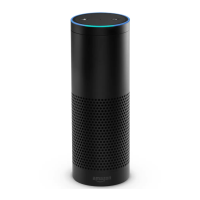
Power Supply: Ensuring the Echo device is properly energized is a basic but critical maintenance check. The setup instructions specifically mention making sure the Echo is plugged into a power outlet and waiting for the orange light ring, indicating it's ready for configuration.
In summary, the Amazon Echo and Smart Life integration offers a powerful and convenient way to manage smart homes through voice commands. Its usage features emphasize hands-free control and app-based management, while its "maintenance" aspects focus on ensuring network stability, correct device naming, and proper account linking for uninterrupted service.
 General
| Speaker | 2.5" woofer and 0.6" tweeter |
|---|---|
| Voice Control | Amazon Alexa |
| Power Adapter | Included |
| Bluetooth Connectivity | Yes |
| Weight | 821 grams |
| Wi-Fi Connectivity | Dual-band Wi-Fi (2.4 GHz and 5 GHz) |
| Microphones | 7-microphone array |
| Bluetooth | Advanced Audio Distribution Profile (A2DP) support for audio streaming from your mobile device to Echo or from Echo to your Bluetooth speaker. Audio/Video Remote Control Profile (AVRCP) for voice control of connected mobile devices. Hands-free voice control is not supported for Mac OS X devices. Bluetooth speakers requiring PIN codes are not supported. |



 To Next Page
